Choosing Secure Pool Shoes for Parents Carrying a Baby
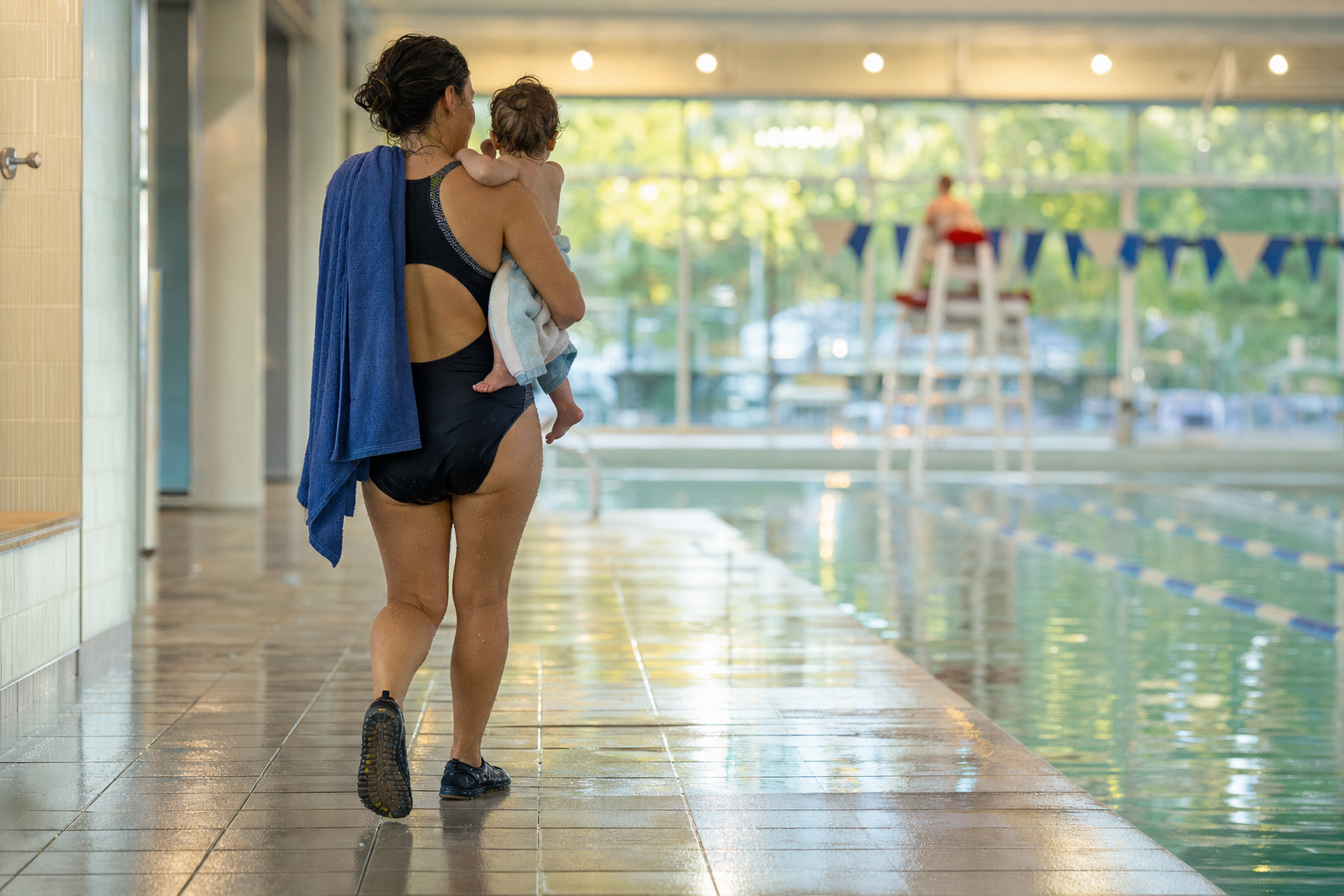
When you’re carrying a wet baby through slippery showers, changing rooms, or pool decks, a misstep can shift you into an awkward one-arm hold—or worse, cause both you and your baby to slip. So what to wear parent baby swim so that your footing stays sure? Here’s what matters most, straightaway.
What Makes Footwear Stay Secure While Carrying Baby
You need shoes that grip well, stay put, and let hands remain free for steadying yourself and holding your infant. First, steer away from drop-and-go flip-flops, smooth soles, and any shoe you need to adjust with your hands. Shoes missing back-straps or heels will slide off your foot, making balance harder. What works better are water shoes or closed-heel sandals with textured, non-slip rubber outsoles that visibly grip wet tiles. Upper materials that dry quickly and let water drain—mesh panels, perforations—and closures like bungee cords, Velcro, or secure straps keep sneakers snug even when wet. A heel strap or locking system is far safer than toe grip tactics. Recent podiatrist-led guides show how such designs reduce slips and protect joints under weight and moisture.(michiganfootdoctors.com)
Why the Right Pool Shoes Help Prevent Injuries and Improve Safety
When your feet have traction, you’re much less likely to stumble. The U.S. Centers for Disease Control and Prevention notes that injuries and drownings are less common where trained staff and safety equipment are present, but slips and falls still happen from wet deck surfaces or poorly draining areas.(cdc.gov) Deck surfaces that refine non-slip surfaces and proper drainage help, but your footwear needs to match the challenge. Shoes designed for pool service technicians are often cited for their slip resistance, full grip on worn, wet surfaces, and ability to shed water fast.(pooldial.com)
If you want a structured way to build water confidence at home, the 10-Week Plan guides you step by step.
Quick Checklist: What to Look for When Shopping Shoes You’ll Wear with a Baby
To avoid loose flip-flops or smooth soles, focus on secure features. Make sure heel retention is solid—back-straps, enclosed heels, or closed-toe clogs with locking mechanisms are best. Soles need deep patterns or siped details that channel water away and grab the surface. Materials should dry quickly and resist absorbing water. Laces or closures should be operable with one hand or minimal effort. Avoid anything that requires you to use both hands to adjust—those moments are when baby is least secure.
[[ctababy]]
Pair Footwear with Skills and Programs
Even the best shoes won’t prevent every slip if you’re not moving carefully or are unfamiliar with pool surfaces. If you’re taking a parent-baby swim class or lessons, ensure your footwear works with aquatic progress and doesn’t interfere with kicking, water entry or exit. Some parents find it helps to follow structured learning—for example the 10-Week Plan from swimy.org—to build up confidence, water safety awareness, and handling routines that include choosing the right footwear.(swimy.org)
Dress Code by Pool Area
Different parts of the pool facility demand slightly different footwear priorities. In changing rooms and showers you need secure grip and water drainage; by the pool deck you need slip resistance, heat protection, and stability. Avoid going barefoot in these areas, especially when carrying a baby—wet tiles, mossy surfaces, chemical residue or loose drains all increase danger of slips and skin injuries.(cdc.gov)
Real-Parent Tips
A mom carrying her crawling 8-month-old noticed she almost slipped stepping off a pool ladder wearing slide sandals—they were flat, had smooth soles, and no back-strap. Once she switched to water shoes with heel straps and grippy soles, she felt much safer. Another UK parent said walking across the locker room in volunteers’ flip-flops had her foot slide, so she invested in closed-toe clogs with Velcro and a solid tread—costing a bit more but giving peace of mind.
Final Thoughts: Keep Hands Free, Feet Sure
Carrying a baby already shifts your center of gravity; the last thing you want is loose footwear or slipping grip making matters worse. So choose shoes with back-straps or enclosed heels, aggressive tread, quick-dry uppers, and easy one-hand closures. That way, carrying baby at pool time stays safe—not a balancing act.
By combining well-designed footwear, attention to deck conditions, and skills built through lessons, you reduce the chance for slips, stumbles, and unsafe one-arm holds. Stay grounded so you can focus on what really matters—cuddles, smiles, and swim time with your little one.
120+ swimming exercises sorted by age — with video and instructions. Developed by swim instructors, completely free.

120+ swimming exercises sorted by age — with video and instructions. Developed by swim instructors, completely free.