When Your Baby’s Regular Swim Instructor Is Away: Keep Routine, Safety, and Calm
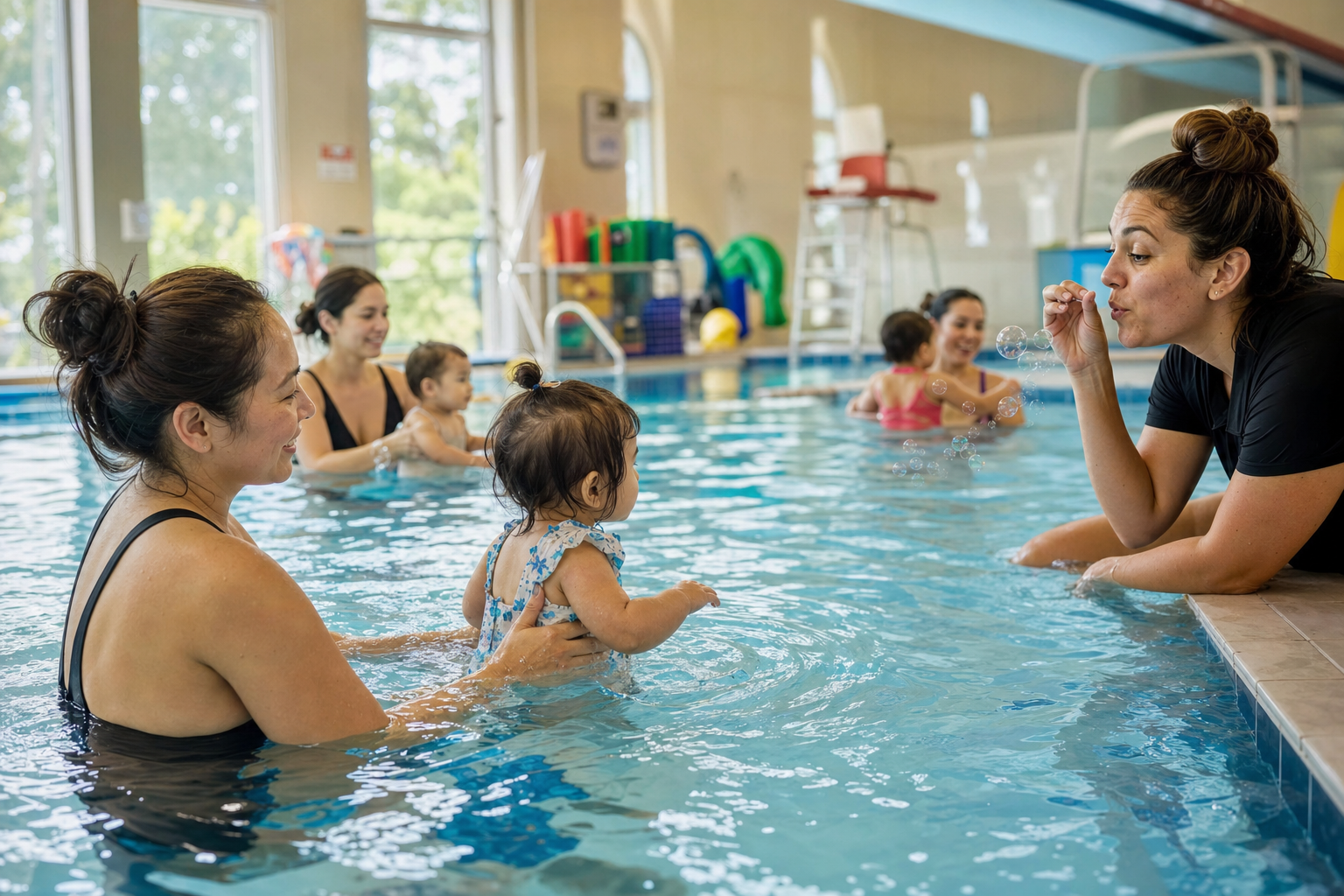
When you step up to the pool and find a baby swim instructor substitute instead of your usual teacher, your heart might sink—will class be chaotic? Will your 18-month-old freak out? Will safety routines slip? With a little preparation, the substitute day can go smoothly, keeping your child grounded in familiar routines, cues, and caregiver involvement.
Why Predictability and Safety Matter
Even tiny swimmers love—and need—structure. Experts at Royal Life Saving Australia emphasize that in classes for ages 6 to 36 months, "parents and carers are an integral part of children’s aquatic education," helping support safety and build confidence through familiar routines.(royallifesaving.com.au) When an unfamiliar instructor takes over, the core of what keeps your child safe and confident—routine, predictable cues, and knowing when to pause—can be disrupted.
The American Academy of Pediatrics (AAP) backs this up. Their July 2026 guidance stresses that swim lessons should come after the first birthday and that “touch supervision”—an adult within arm’s reach—is mandatory for infants and toddlers in water.(healthychildren.org) These guidelines reflect how closely safety and consistency are linked in early aquatic education.
Before Substitute Day: What You Can Do
You can set the stage so that your swim class stays stable even when the teacher changes.
Reach out ahead of time. Ask your swim school to share the regular class plan with the substitute. That includes songs, cues like “face in, breathe out,” or routines like bubbles, kicks, and float time. Just as the 10-Week Plan from Swimy.org can gradually adjust a child’s water confidence by spreading skill changes over time,(swimy.org) using the same cues at home prepares your child so the substitute feels less foreign.
Practice the routine at home. Mimic class cues during bath time or shallow water play: use the same phrases, toy games, holds. This builds muscle memory and emotional anchor points your baby can cling to when things shift. Consistent rituals—packing the swim bag, saying the same “see you at class” goodbye—make changes feel smaller.(swimmerliving.com)
Talk it up and set expectations. Tell your child something like, “Guess what? It’s still swim class tomorrow, but someone new will help us. I’ll stay close, and we’ll do our favorite songs together.” Framing change as adventure keeps anxiety lower for both of you.(kimswim.com.au)
During Substitute Day: Staying Grounded
When the new swim teacher arrives, having your role and routines clear makes all the difference.
Stay fully engaged. Even if you’re not always in the water, parental touch involvement remains central. You are the interpreter of your baby’s fear cues, comfort levels and stress signs. The substitute shouldn’t assume your baby knows how you handle submersion or chin-above routines.
If you want a structured way to build water confidence at home, the 10-Week Plan guides you step by step.
Keep cues consistent. If your regular instructor always says “face in, breathe out” or uses a specific song before floating, ask the substitute to stick with those phrases. These familiar signals help your child anticipate what’s coming, which reduces resistance and confusion. It’s what makes routines like those outlined in the “Practice Between Swim Lessons” plan work—children respond best when cues, takes, and routines don’t suddenly shift.(swimy.org)
[[ctababy]]
Skip surprise submersions. If your regular teacher introduced underwater time by counting, cueing the face, and then going in, make sure the substitute follows that rhythm. Sudden submersion without explanation can spook even a confident toddler. The AAP warns that repeated unannounced submersions can lead to negative aquatic experiences.(publications.aap.org)
Pause if needed. You know your child’s limits. A substitute might push or omit a break because they don’t read fear cues as well. You stepping in—holding off on a skill, returning to a comfort game—grounds the experience in safety. You are central to early aquatic education. Royal Life Saving says carer participation isn’t optional in infant and toddler programs.(royallifesaving.com.au)
After Class: Reinforcing Trust and Learning
The hour following class is when your child builds lasting impressions—about water, teachers, and themselves.
Celebrate efforts, not perfection. Praise something specific (“You did the bubbles even when the music sounded different!”) rather than “You stood in the water well.” Reinforcing effort bolsters confidence.(waterwisekids.com)
Talk with the substitute. Ask what goals they covered, what went well, and what seemed tough for your child. Compare with what the regular instructor has taught before. That shared feedback loop ensures that each substitute doesn’t drift far from the class routine your child expects.
Practice at home. Use the same holds, songs, cues— reinforce what your child saw in class that day. By slowly building skills outside class hours, you help sanity meet progress. The Swimy “Practice Between Swim Lessons Safely” guidance calls this predictable, playful reinforcement the foundation of success.(swimy.org)
Common Pitfalls and How to Avoid Them
Pitfall: assuming the substitute knows your child’s fear triggers. Always share them—does your toddler hate water in ears? Is long-hold-float hard? Do they need to warm up with songs first?
Pitfall: accepting surprise submersion. Even well-trained subs may think pushing forward makes progress—but when it’s forced, it backfires.
Pitfall: skipping or glossing over safety recap. If substitute skips the safety talk or pool rules, speak up. Every teacher should open with “rules, safety, what we’ll do,” just like your regular instructor.
What Great Substitutes & Swim Schools Do
Well-run programs prepare for substitute teacher days. They keep detailed lesson plans, communicate with parents ahead, and train subs to use the same cues, safety recap, and caregiver involvement. Aquatics programs with strong onboarding processes emphasize consistent structure across teachers—even when one is out.(aquaticsintl.com)
They also allow parents to observe or preview. Some swim schools have you meet a substitute beforehand or allow observation so you and your child recognise the new face before full class.(njswim.com)
Substitute days are never perfect, but well prepared and guided, they don’t have to feel jarring or unsafe. When you invest in memorised cues, predictable routines, and working closely with caregivers and substitutes alike, your 6- to 36-month-old can thrive even when their favorite teacher isn’t poolside. The water—and the learning—stay consistent.
120+ swimming exercises sorted by age — with video and instructions. Developed by swim instructors, completely free.

120+ swimming exercises sorted by age — with video and instructions. Developed by swim instructors, completely free.