Swim Class Trial Day: What to Watch
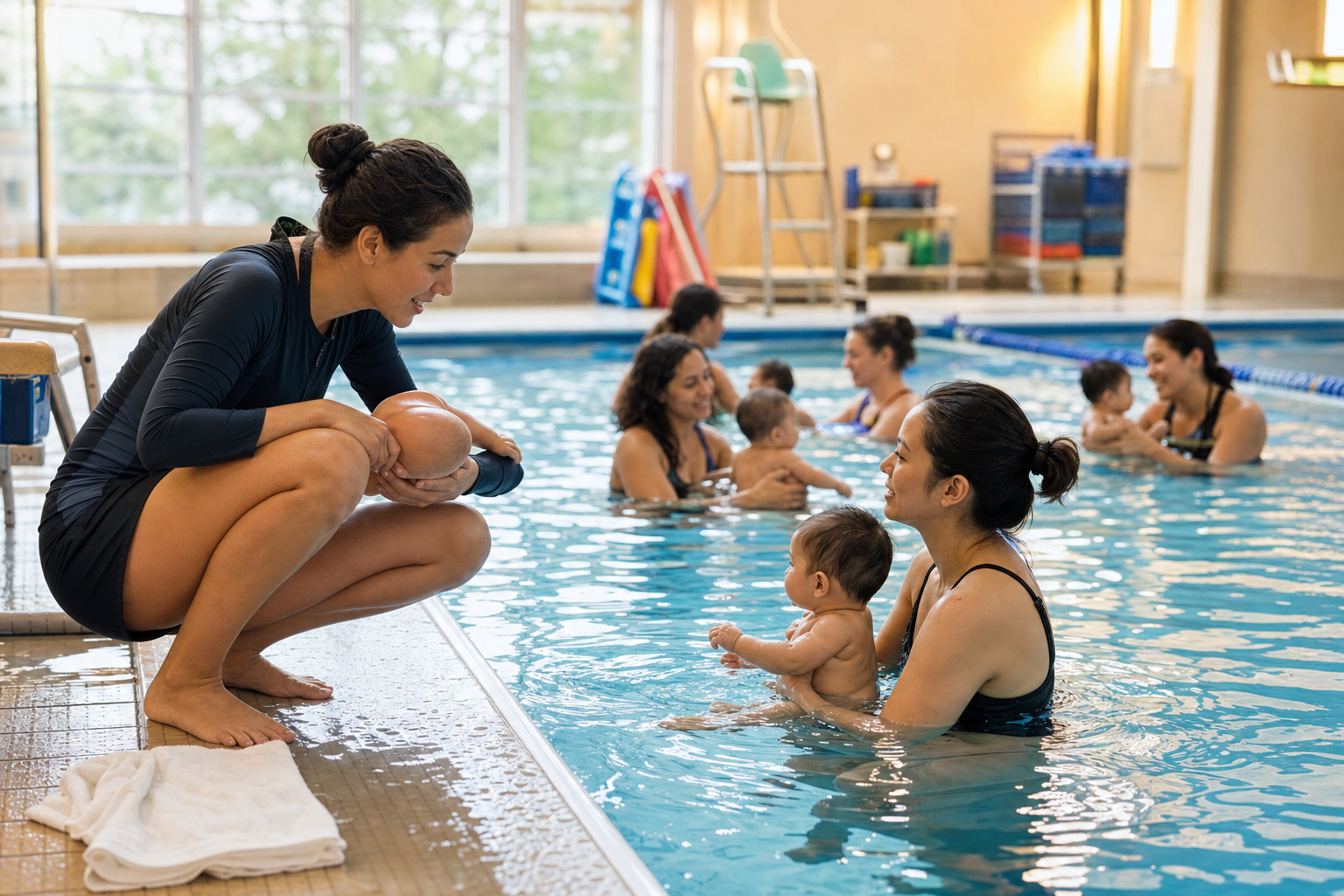
If you’re bringing your baby (2 to 36 months) to a swim class trial, the things you see during that first lesson matter far more than price or how fancy the pool looks. These are the key signals that tell you whether an infant swim program is respectful, safe, and a good fit—especially if you're focused on much more than convenience.
Instructor Communication: Clarity, Calm, and Coaching You Too
Watch how the instructor communicates with you during the trial. A great teacher doesn’t just tell you what to pay; they actually show you how to support your child in the water. They explain why they use certain holds, when they expect babies to show comfort, and how to handle crying. You should feel encouraged to ask questions about safety procedures, pacing, and what comes next.
If the instructor is vague or dismissive—for example, doesn’t explain the safety briefing or assumes every baby reacts the same—that's a red flag. Parent-and-baby swim class trust depends on an instructor who teaches both mother/father/caregiver and child. Healthy Children.org emphasizes looking for certified instructors, someone who knows age-specific developmental stages, whose communication is respectful and supportive. (healthychildren.org)
Water Temperature and Pool Environment
Infants lose heat quickly in water. Many quality infant swim programs keep water temperatures in the range of about 87°F to 94°F (about 31–34°C) for both comfort and safety. (coachslava.com) When the pool is too cold, your baby may seem tense, shiver, have pale lips, or fuss. Warm pools make it easier for babies to relax, which helps them respond positively to instructor cues and trust building.
Also notice pool features: is the space warm air-wise? Is there a draft? Are changing areas baby-friendly? These details often indicate how seriously a school treats infant needs.
Class Pacing and Structure
A trial swim class should feel predictable and calm, not rushed or overly performance-driven. For babies, it's normal if most of the class is about water familiarization—gentle splashes, support on the back, kick encouragement, maybe bubbles or toy play. Full submersions or expectations to swim independently should wait until age-appropriate readiness. (fabulousswim.com)
Some schools offer intensive survival-focused formats—like Infant Swimming Resource (ISR)-style programs—that may go daily for several weeks to teach rolling or float-to-safety. These are very different in feel and intensity from regular parent-and-baby swim classes. If you see a daily 10-minute format and it feels emotional or intense, that may be intentional and valid—but it must be clearly explained up front. (waterwisekids.com)
If you want a structured way to build water confidence at home, the 10-Week Plan guides you step by step.
At around the midpoint through trials or after observing a first class, it’s useful to explore structured multi-week plans—some programs offer something like the 10-Week Plan that outlines skill progressions, safety drills, and comfort moves. Kids develop differently; a plan gives you transparency about what should happen at each stage so you can judge whether your baby is on track. (swim4life.com)
Crying Responses: What to Expect and What Matters
[[ctababy]]
It’s okay if your baby cries during the first few lessons. Many infants do, especially when introduced to new sensations or support changes. What matters most is how the instructor handles crying: do they pause, soothe, try to redirect gently? Do they invite you to help calm your child? If babies are forced into submersion or persistent discomfort without intervention, that’s a warning.
Check what parents are coached to do in those moments. Do they get guidance, or are they left scrambling? Good programs teach you how to support your baby through tears, not measure you against a standard of perfect calm.
Safety Briefings: Non-negotiable
Before the water, your instructor should clearly cover safety rules. These include how to enter and exit the pool safely, signs your baby is cold or tired, hygiene rules (like swim nappies), and emergency procedures. Everyone—from parents to instructors—should understand what to do if a baby is upset or needs first aid.
Equipment like life-guards, CPR/First Aid certificates displayed, transparent class ratios (instructor to babies), and rules about supervision are all signs of a school that takes safety seriously. Healthy Children and other safety guides stress that properly certified staff and robust safety briefings are essential. (healthychildren.org)
Skills vs Age: Matching What Babies Should Be Doing by Their Stage
Babies age rapidly between 2 and 36 months. Look for whether the trial class is age-appropriate. A 3-month-old probably should not be learning full floating on their back by themselves. A 12-month-old might be starting to handle supported floats, gentle submersions, and getting used to bubbles. A toddler closer to 2 or 3 years may begin to respond to verbal cues and move toward independent support toward walls or steps.
Observe the instructor interacting: are they adjusting their expectations based on the child’s age, weight, or developmental stage? If the instructor treats all babies identically—same skills, same pace—that often means the program prioritizes uniformity over your child’s individual comfort.
Avoiding Common Pitfalls
Sometimes a swim school may look perfect on a flashy tour: beautiful décor, smiling staff, strong marketing, but the first trial class reveals issues. Maybe babies are left unsupervised while parents chat, instructors don’t coach parents, or children are pushed too far too fast.
Never enroll only after a glossy facility tour. Always ask to observe a real class with children present. Check how instructors react to crying babies or schedule disruptions. Ask about class size, instructor credentials, safety proof, parent role. If the trial doesn’t clearly address these, you may be making decisions based only on image. That’s risky.
Final Thoughts: What You Should Feel
By the end of the trial lesson, you should feel confident that your baby is safe, seen, and respected. You should understand what your baby will do, how the instructor supports both you and your baby, and how progress is measured.
A high-quality parent and baby swim class isn’t just swimming; it’s teaching you to read your child’s cues, teaching your child to feel secure in water, and doing so in a pace that fits their age. Trust your instinct—if something feels off during the trial (even if everything looks pretty), ask more questions or try another school before enrolling.
Your baby’s comfort, safety, and positive memories should come first. Not just the price, not just the location. That’s what makes a great deal—and a great start.
120+ swimming exercises sorted by age — with video and instructions. Developed by swim instructors, completely free.

120+ swimming exercises sorted by age — with video and instructions. Developed by swim instructors, completely free.