Franchise or Leisure Centre Baby Swim Classes? What Parents Should Look For
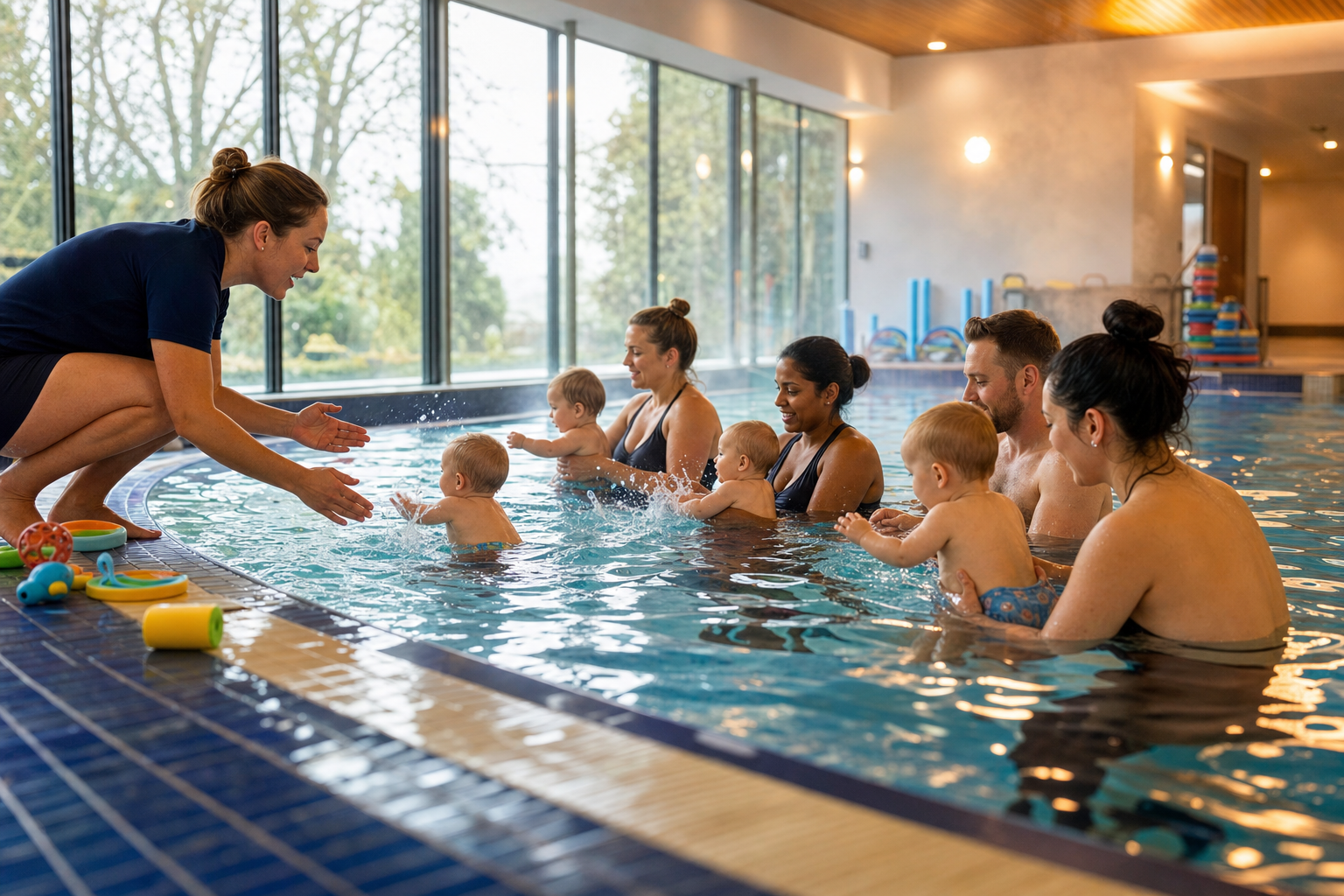
If you’re comparing Water Babies worth it versus local public options, the crucial details are teacher training, class size, pool warmth, make-up rules, and teaching culture. These aren’t just nice extras—they affect your baby’s safety, learning, comfort, and how confident you feel that you’ve made the right investment for ages 4–36 months.
Teacher Training & Credentials
Brands like Water Babies (a baby swim franchise) typically require that franchisees follow their proprietary training program, so teachers or “Aquatic Directors” complete specific certified courses before running classes. In their 2025 Franchise Disclosure Document, Water Babies states that instructors must complete structured training, and that franchisees are responsible for hiring and supervising employees or contractors. (storage.googleapis.com)
Compare that to YMCA/community pools or council leisure centres following national frameworks like Swim England or USA Swimming. These places often require instructors with recognized certifications (such as Red Cross Instructor or WSI in the US) plus CPR/First Aid. (ymcamidtn.org) Independent instructors may show proof of these too—and in many platforms you can check background‐checks, insurance, and formal qualifications. For example, marketplaces like InstaSwim ensure all instructors have current CPR documentation, criminal background checks, and insurance before teaching babies. (instaswimusa.com)
Pool Warmth & Facilities
Very young babies struggle to regulate body temperature. In the UK, council leisure centres often offer warmer dedicated teaching pools (around 30-32°C) for baby swim sessions. As an example, Dover District Leisure Centre aims for 30°C in teaching pools versus 28°C in its main pool. (dover.gov.uk) In Grimsby and nearby areas, some programmes start babies at five months and use warm pools, while specialist classes begin from newborn in even warmer, smaller baby pools. (grimsby.getswimminglessons.co.uk)
Franchise baby swim classes may use either licensed pool-time in existing leisure centres or dedicated baby pools; warmth often depends on the pool partner. YMCA and council pools tend to have more consistency with temperature policies due to regulations or wellness-focused design. Checking the local pool’s temperature policy is non-negotiable.
Class Size & Teacher:Baby Ratios
Safe class sizes matter. Best practice recommendations for 6-36 month olds put the ratio around one teacher per four to six babies (with caregivers) in the water. For infants under one year, fewer babies per instructor is safer. (swimy.org)
If you want a structured way to build water confidence at home, the 10-Week Plan guides you step by step.
Franchise swimming schools often advertise those ideal ratios, but actual class sizes depend on venue constraints, demand, and staff availability. Council leisure centres tend to run larger groups to maximise capacity; some quotes describe class ratios of 10 or more babies per teacher. (swimdesignspace.com)
Independent instructors often offer small, private classes or even one-on-one lessons, allowing very low ratios—but this typically comes at a higher cost and fewer slots.
[[ctababy]]
Make-Up Rules & Session Flexibility
Public options like YMCA or council pools often provide term-based blocks, with limited prospects for make-up classes—missed sessions may be lost or rescheduling complicated. Franchise programmes may require you pay for a full term with limited refund or make-up policy, though sometimes they allow swapping or pausing for brief absences. Many independent instructors offer more flexible scheduling and better cancellation policies.
One global brand programme offers a structured learning path (for instance, a curriculum over time). If you are interested, research models like the 10-Week Plan from swimy.org that show how classes might progress over a fixed term. This gives a clear benchmark when evaluating a provider’s “progress rate,” whether franchise, public or private.
Teaching Culture: Gentle vs. Skills-Focused
For ages 4–36 months, many parents want more gentle immersion than early survival training. Some franchises push submersions or “full dunking,” which not every parent or child is comfortable with. In reddit threads, parents raise concerns that franchises like Water Babies may emphasise “dunking babies under the water” early, while leisure centre classes tend to focus more on water confidence, singing, bubbles, gentle face-washing, and allowing babies to progress at their own pace. (reddit.com)
Independent instructors might tailor the experience most closely to your comfort level, sometimes even offering taster classes so you can see how they handle underwater work, cues, gentle progression, and parent involvement.
Summary: What Parents Should Ask & Prioritize
When you search for baby swim classes near me, here are the most important questions to ask, from a parent-safety perspective:
- What certifications does the instructor hold (Swim England, Red Cross, YMCA)? Are they CPR/First Aid trained?
- What is the teacher-to-baby ratio? How many families are in the water during class?
- What is the pool temperature? Warm teaching pools (~30-32°C) are much better for infants under 6 months.
- What is the missed class / make-up policy? Is there scheduling flexibility?
- What is the teaching style? How much dunking / water in the face, how gentle are transitions, how do they treat scared babies?
So, Is a Franchise like Water Babies “Worth It”?
Yes, if you:
- want highly structured curriculum, with skills-oriented focus
- prefer consistency, brand quality, and perhaps social perks like underwater photos or retail offerings
- do not mind paying higher fees in return for brand support, polished facilities, and potentially smaller class sizes (when the franchise does it well)
But often a local YMCA or council leisure centre can deliver “good enough” safety, confidence-building early on, at a far lower cost. Independent instructors offer flexibility, smaller groups, gentler entry, and personalized attention.
Many parents report that for babies under one year, the bigger differences are warming the pool, caring instructor, class size—not whether it's a premium brand or not. Franchises can be worth it, but only if they genuinely deliver on teacher training, warmth, small classes, reasonable make-ups, and gentle culture. If they don’t, you may be paying a premium for branding.
Final takeaway: Do your homework. Compare local reviews, visit classes, ask pointed questions. Sometimes the “leisure centre baby swimming” class near you will be safer, warmer, gentler—and more than enough to give your little one a head start in the water.
120+ swimming exercises sorted by age — with video and instructions. Developed by swim instructors, completely free.

120+ swimming exercises sorted by age — with video and instructions. Developed by swim instructors, completely free.