Grandparent Water Safety Rules for Babies and Toddlers (0–36 Months)
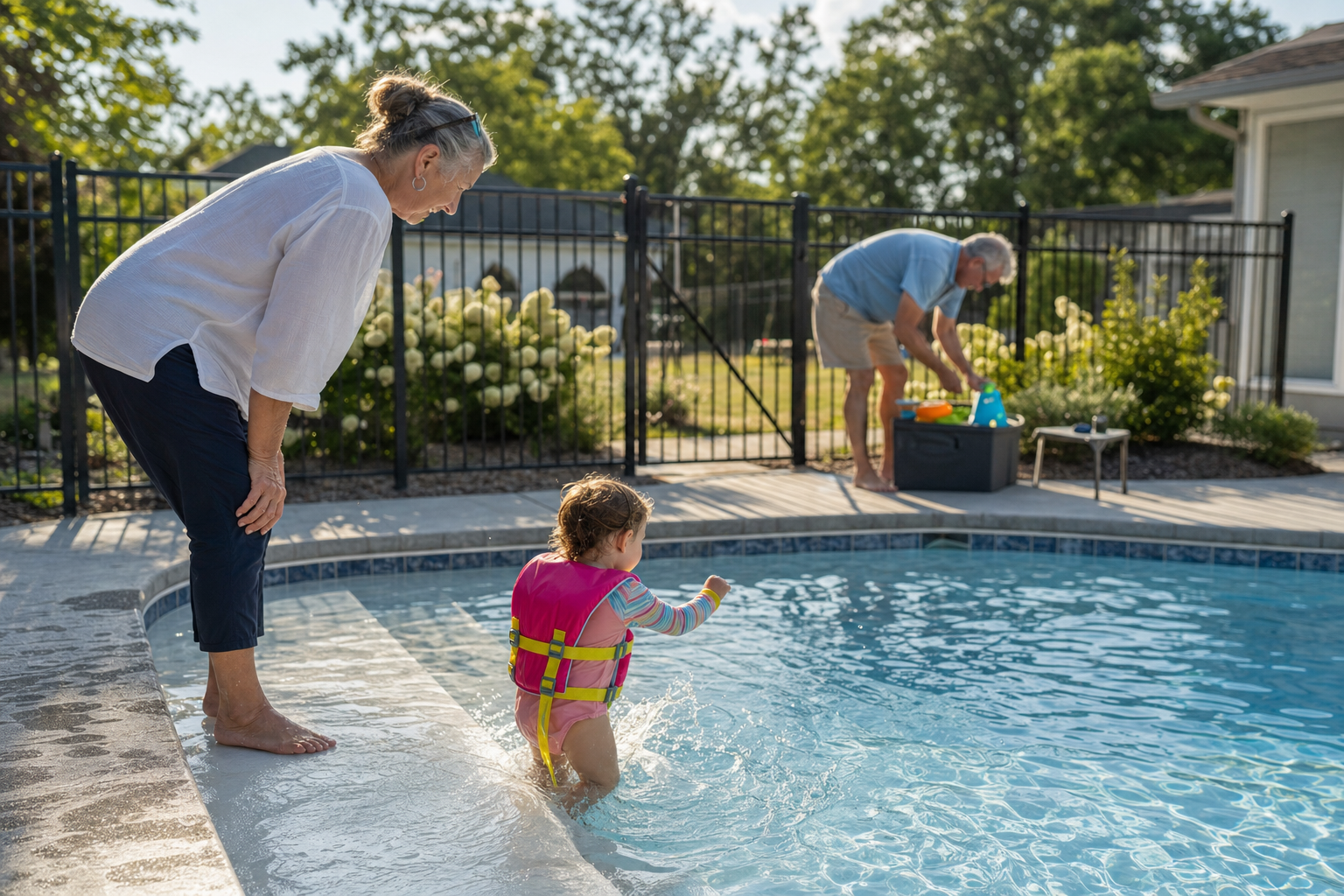
When there’s a pool, spa, lake or even a bathtub around, babies and toddlers (0-36 months) are vulnerable every second. Grandparents, babysitters and visiting relatives need a shared understanding of pool safety or risk turns tragic. Central rule: always have one sober, phone-free adult watcher whenever water is accessible, because seconds matter. According to the AAP, toddlers aged 12-36 months are the highest risk group; many drownings occur at home when a child isn’t expected to be around water. (publications.aap.org)
Why constant, close supervision matters
Toddlers are naturally curious, mobile and unpredictable. Many drownings are silent—no splash, no scream. A single moment of distraction or assuming someone else is watching can lead to tragedy. U.S. Centers for Disease Control & Prevention data show drowning is a leading cause of unintentional death for children ages 1-4, especially in swimming pools, with bathtubs also dangerous for infants under one year old. (cdc.gov)
The American Academy of Pediatrics’ updated policy “Prevention of Drowning” (July 2026) stresses multiple layers of protection including continuous supervision, life jackets, swim lessons when age-appropriate, and physical barriers like fences. (healthychildren.org)
Pool safety rules for grandparents, babysitters, relatives
Set expectations clearly before any visit or holiday together. Everyone caring for little ones should agree on rules—not as alarmism, but as life-saving habits. Here are rules to share and follow:
Everyone agrees on one designated “Water Watcher” whenever babies or toddlers are near water. That person must be sober, phone-free and focused. No reading, texting, chatting while standing half-watching. The watcher gives hand-to-hand supervision, meaning inside the pool or within arm’s reach at poolside. According to the AAP, that type of “touch supervision” reduces risk most dramatically. (publications.aap.org)
Install barriers: four-sided fences that fully enclose pools, with self-closing and self-latching gates. Remove or secure doors, patio gates, and remove toys near water when not in use so toddlers aren’t tempted. The CDC recommends these physical barriers as essential. (cdc.gov)
Swim lessons after the first birthday are helpful—but they don’t replace supervision. The “Prevention of Drowning” policy says teaching young children to swim adds protection, though kids younger than one are not ready for formal swim skills. (publications.aap.org)
If you want a structured way to build water confidence at home, the 10-Week Plan guides you step by step.
Life jackets (US Coast Guard-approved) must be used for boating, open water, and whenever toddler skills aren’t sufficient or supervision may slip. Flotation devices like floaties or puddle jumpers are not substitutes. (cdc.gov)
Everyone on guard: grandparents, aunts, uncles, babysitters. If roles change (meal time, drying off, towel help), pass responsibility explicitly so there are no gaps. One quietly thinks the other is watching? That is often when accidents happen. The CDC speaks of “lack of close supervision” as a major risk factor. (cdc.gov)
[[ctababy]]
Using swim training and tools wisely
You might have heard of special plans or structured lessons for toddlers and infants. While infants under one year can engage with water under adult guidance, formal swim lessons make more sense once they’re over a year old. According to recent AAP guidance, swim lessons for over-ones can reduce drowning risk—but alone they are not enough. (healthychildren.org)
One such helpful program is the 10-Week Plan offered by swimy.org, which teaches water-safety skills and helps parents, grandparents, and caregivers develop consistent routines and goals. This plan supports regular practice, clear rule-setting, and shared supervision habits—all things that reinforce a safe mindset among all adults involved around water.
Also, life jackets must fit well and be US Coast Guard approved. Make sure they float the child face-up, have a crotch strap to prevent slip-through, and are replaced as the child grows. Any open water or boating activity? Jackets are mandatory. (russellmarineshop.net)
How to bring up rules without sounding alarmist
As a parent or host, you want grandparents and babysitters to take water safety seriously without creating tension. Here’s how:
Explain that babies toddle, they slip, doors and gates are easy to open. Use concrete examples: “When my niece was 18 months old she opened the patio door, and we didn’t even know. It took 30 seconds to find her at the pool and by then she’d fallen in.” Use stories people can relate to and show how fast things can unfold.
Set joint agreements ahead of time: “How about we have one Water Watcher rule, so whenever our little one is near water you tell me you’ve got it so I know who is watching.” Make it part of the schedule (swim times, meal times, etc.) so everyone is in sync.
Frame supervision as caring rather than controlling: you’re protecting joy. At holidays, family barbecues, or at vacation houses with pools, having these rules means those moments stay fun.
Practical preparation before events
Before any gathering or travel, check the water environment. Are pool fences intact? Gates latching? Doors to water locked? Do you have rescue equipment: pole, ring buoy, a reachable phone? Is someone present who knows CPR? The CDC and AAP emphasize being ready to act, because quick rescue and early CPR often make a difference if a drowning happens. (cdc.gov)
Make sure tools are ready: life jackets for toddlers, floatation aids are safe and appropriate, swim lessons scheduled if age-appropriate. Remove trip hazards, slippery items, toys around water that lure children. And discuss rules in advance so grandparents, babysitters and relatives are all on the same page.
Bottom line: shared standards save lives
Pool safety, two-word summary: consistent supervision. Keywords like grandparents pool safety, babysitter water safety rules, and toddler supervision around pool aren’t just SEO goals—they reflect the shared responsibility that protects the most vulnerable. Toddlers are fastest at wandering off, infants can slip or tip in moments. No one else steps in automatically unless rules are clear. Commitment to one sober, phone-free watcher, good barriers, proper swim training, ready life jackets and CPR knowledge makes the difference.
When all caregivers follow the same water safety rules every time—whether at Grandma’s, at a babysitter’s, or on holiday—babies and toddlers are safer. And peace of mind spreads: everyone trusts the plan, everyone plays a role. That’s how fun memories stay safe ones.
120+ swimming exercises sorted by age — with video and instructions. Developed by swim instructors, completely free.

120+ swimming exercises sorted by age — with video and instructions. Developed by swim instructors, completely free.