Underwater Breath-Holding: Stop These Dangerous Challenges for Kids
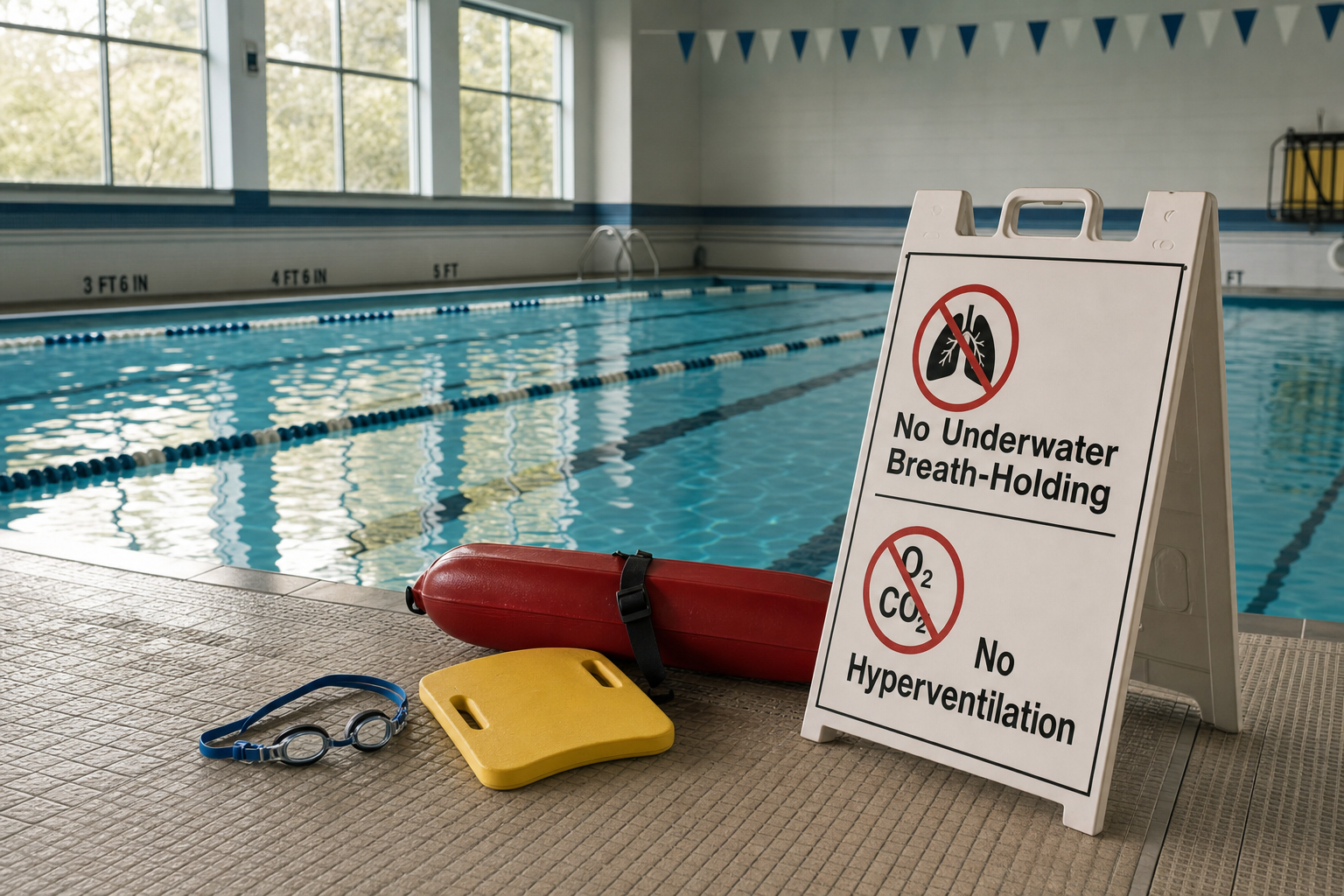
If you’ve seen kids holding their breath underwater, doing long dives, or hyperventilating before a contest, you need to know the real risk: shallow-water blackout in kids. It is not just a scary term—it’s a sudden loss of consciousness under water because brain oxygen gets too low, often when someone has over-breathed, held their breath, and pushed themselves past their body’s warning signals. Knowing why this happens, why hyperventilation and underwater contests are risky, and what to do instead can save lives.
What Is Shallow-Water Blackout (in Plain Language)
Shallow-water blackout happens when someone browns out or loses consciousness underwater. It’s caused by running out of oxygen in the brain—not enough to keep it working—after holding their breath too long. Often, before people dive, they hyperventilate (breathe fast and heavy), thinking they charge up oxygen. The problem is hyperventilation empties too much carbon dioxide (CO₂) but adds very little oxygen boost. CO₂ is what makes us feel the urge to breathe. If it drops too much, the body doesn’t warn you that you need air. You might pass out without feeling like you needed to come up. This is especially dangerous for kids ages 6-12, who may try underwater games or contests without understanding this natural alarm system. Credible sources like the Red Cross explain that shallow-water blackout can happen with strong, fit swimmers—even if they’ve never had trouble before. (redcross.org)
Why Hyperventilation + Breath-Holding Contests Are Risky
When kids (or adults) hyperventilate before diving, they lower their CO₂ level too much. The urge to surface fades, oxygen levels drop, and blackout can occur—even just a few feet underwater. These contests—“who can swim farthest underwater,” “who can stay under the longest”—are especially dangerous. Swim England warns that repeated underwater lengths or breath holds with hyperventilation can lead to unconsciousness. (swimming.org)
Even ordinary pool games or social-media dares can lead to Hypoxic or Shallow-Water Blackout (also called Underwater Hypoxic Blackout, UHB). The United Educators article describes how UHB happens when a swimmer doesn’t get the signal to breathe and slips into blackout—often misinterpreting their lack of air-hunger as "safe enough." (ue.org)
Some coaches or swim clubs may even normalize hypoxic sets—practice underwater swimming meant to improve “lung capacity.” But for children, whose bodies are still developing, the risks of brain injury or drowning are very real. The more repeats, the more danger. (swimming.org)
Safer Skill Swaps: Challenge Without the Risk
You want kids to learn, grow, feel challenged—but not at the cost of safety. Here are safer ways to build swimming skills and confidence without unsafe breath holding.
For structured learning, programs like the 10-Week Plan (swimy.org/10-week-plan) help parents teach their children to swim themselves safely, building stamina, technique, and comfort in water without risky breath holding. Use such progressive programs to avoid falling into hype-driven competitions or dangerous tricks.
Streamline Glides with Immediate Breaths
Instead of seeing who can hold their breath farthest, children can practice streamline glides from the wall. Push off in a tight, “torpedo” position, glide for a short stretch, then take a breath immediately. Build up control, balance, and underwater technique. The challenge becomes: “How good is my glide? Can I stay straight, glide with minimal splash, maintain form?” rather than “How long can I go without breathing?”
[[ctakid]]
Controlled Underwater Skills with Time or Distance Limits
If practicing underwater segments, keep them short—no more than a few seconds or a short distance (for 6-12 year olds, swim England’s recommendation is to limit breath holds: one time only, short distance, never repeated sets). Always supervised. Do not allow hyperventilation, and ensure kids surface well before they feel discomfort. (swimming.org)
Replace Contests with Technique Games
Turn dangerous breath-holding games into technique games: Who can push off the wall the straightest? Who can kick fastest in streamline? Who can cleanly glide without bubbles? These games still feel like contests but keep breathing natural and frequent. Focus on fun, mastering body position, balance, and smooth motion.
Rules and Supervision: Parents Keeping Kids Safe
Parents can set household pool rules: No breath-holding games, no hyperventilation, always surface when you feel like it. Make it non-negotiable. Talk openly with your child about what shallow-water blackout means, how they might feel—or not feel—it coming.
Supervision must always be active. Don’t let children swim alone. When under water, there should be a trustworthy adult or coach watching from above and below if possible, noticing anyone lying still or motionless in the pool floor or wall. Teach young swimmers to come up whenever they need to breathe, never to “stretch” or hold it too long.
What Shallow-Water Blackout Looks Like & What to Do
You may not hear gasps. Often it’s silent. A child swims down, seems okay, then just doesn’t come up. Their lips may be blue, they might spasm. If you see someone motionless, assume something is wrong. Pull them out immediately, call 911, begin CPR if needed. Even if they wake up, medical evaluation matters—water in lungs can cause delayed breathing issues.
Educators and coaches must understand shallow-water blackout risks. Pool rules should prohibit underwater swimming contests that include breath-holding and pre-dive hyperventilation. All staff supervising children should know to enforce these rules. (ue.org)
Final Thoughts: Skills, Safety, and Smarter Swimming
Challenging kids is vital for growth—from ages 6 to 12, children thrive on pushing themselves, feeling proud. But some challenges are dangerous. Shallow-water blackout is preventable.
Replace breath-holding dares with more technical, form-focused skills. Refuse hyperventilation. Set clear, enforced rules: no breath-holding games. Keep supervision close. And use proven structured learning like the 10-Week Plan to build confidence safely.
Breathing is natural. Playing in water should be joyful, not risky. Teach kids to love the water—and to always breathe.
120+ swimming exercises sorted by age — with video and instructions. Developed by swim instructors, completely free.

120+ swimming exercises sorted by age — with video and instructions. Developed by swim instructors, completely free.