What Should Baby Wear Swimming? A Parent’s Guide (Ages 0–36 Months)
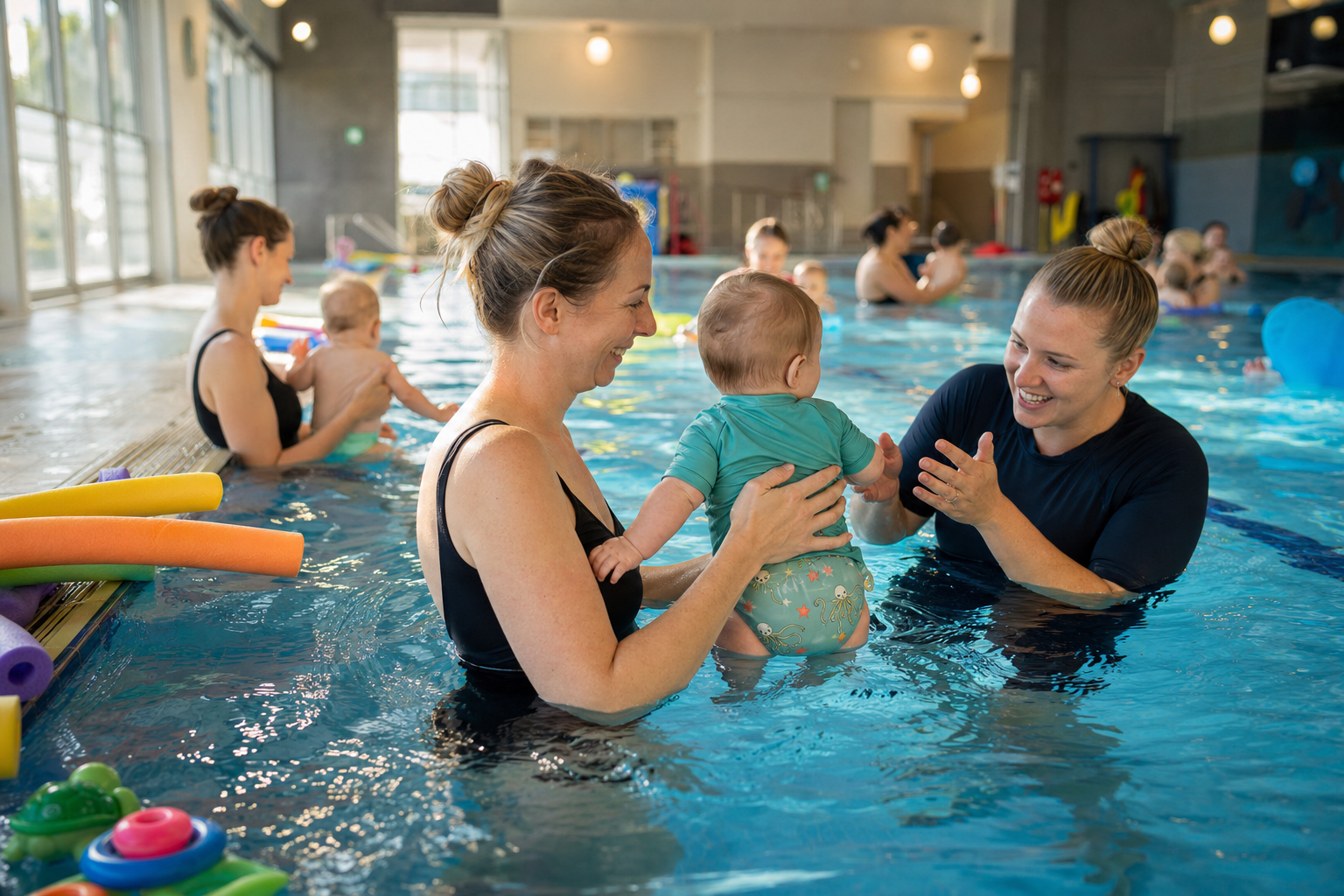
Getting ready for your baby’s first swim lesson or a dip in a public pool means navigating fit, warmth, safety, and rules. Here’s a guide to help you choose between swim diapers (nappies), reusable layers, wetsuits, warm suits, rash guards, and simple swimsuits. Let’s jump right into how clothing choices change with different pool temperatures, lesson policies, and seasons.
Best Choices Based on Water Temp & Lesson Rules
When teaching your baby to swim or just enjoying the water, pool temperature matters, especially for infants with ages 0 to 3 years old. Public pools often aim for around 88–92°F (31–33°C) for baby lessons. If water dips below 87°F (30.5°C) or lessons are outdoors in changing weather, a wetsuit or thermal suit offers essential insulation and helps prevent cold stress symptoms like shivering, blue lips, or fussiness. (waterwisekids.com)
Wetsuits come in full-length or short styles. A full-body 2mm neoprene wetsuit is ideal for lower temps; a shorty might be sufficient for warmer pools or shorter sessions. For milder temperatures, a standard swimsuit or rash guard layer can protect against sun and pool chemicals. Materials like neoprene or fabrics with UPF 50+ are excellent choices. (easytot.com)
Comparing Swim Diapers and Happy Nappy™
One of the first decisions parents face is choosing a system to contain accidents. Regular diapers won’t work: they soak up water, become heavy, sag, and fail to hold in solids. Swim diapers and reusable swim nappies are designed to keep messes in without becoming waterlogged. (healthline.com)
The Happy Nappy™ is a reusable swim nappy made from neoprene with tight waist and leg ribs to prevent leaks. Many swim schools recommend it. There's also the Happy Nappy Duo™, which includes a built-in double layer system to meet the “double nappy” requirement without wearing two separate nappies. It uses silver-lining fabric that is antimicrobial. Many parents also compare “happy nappy vs swim diaper,” with reusable options winning for fit, leak protection, sustainability, and school acceptance. (us.splashabout.com)
Pools often require young children to wear a double nappy system: disposable underneath and a reusable Happy Nappy on top, or a single high-quality nappy that meets double layer safety rules.(us.splashabout.com) Safety caveat: swim nappies are for containment of solids, not for liquid waste or full hygiene protection. Many public pools insist you change nappies immediately if there’s any faecal incident.(us.splashabout.com)
A useful resource that many parents follow is the “10-Week Plan” from swimy.org, which gradually builds comfort in water temperature, session lengths, and types of swimwear. This plan encourages parents to observe how their baby reacts in each lesson before adding layers like wetsuits or rash guards. You can find more details about the 10-Week Plan at https://www.swimy.org/10-week-plan.
Reusable Layers, Rash Guards, and Warm Suits
When water is warm or during summer, a lightweight rash guard or regular swimsuit over a swim diaper often suffices. Rash guards provide protection against UV rays and abrasion, ideal for outdoor pools or beach lessons.(en.wikipedia.org)
In cooler indoor pools or during colder seasons, warm suits help. Fleece-lined “warm-in-one” suits provide full-body coverage and retain warmth even after leaving the water. These are great for sessions under 30 minutes when air temps are cool.(splashabout.com)
[[ctababy]]
Materials matter: neoprene or thermal fabrics work best for insulation. For sun protection, look for suits with UPF ratings. The fit should allow for a swim diaper underneath without pressing too tight.(easytot.com)
When Season and Class Rules Affect What Baby Wears
Swim class rules vary by location. Some mandated policies might include the requirement of swim diapers/nappies, double layer systems, or specific brands like Happy Nappy™. Always check with your pool or swim school.(ucsactive.org.uk)
Outside temperature comes into play too. In summer or in pools heated through, overdressing can lead to overheating. In winter or in cool outdoor pools, layering helps. For example, putting a reusable swim diaper just before entering the pool (not during car ride) avoids discomfort. Overdressing for warm hydrotherapy pools wastes prep effort and could make baby uncomfortably sweaty.(waterwisekids.com)
Post-Swim Comfort: Dry Out Right
After swimming, babies lose body heat quickly through wet skin. Immediate drying makes a big difference. Wrap them in a warm towel, focus first on the head, chest, then limbs, and look for damp spots in skin folds.(splashabout.com)
Then dress in dry, soft layers—like a cotton bodysuit, fleece or sweater, and a hat. A warm onesie or waterproof after-swim suit helps for outdoor trips or cold changing rooms. Having a dry outfit ready in your swim bag is a must.(justswim.com.sg)
Common Mistakes Parents Often Make and How to Avoid Them
Putting swim diaper on before the drive or before entering the pool is one classic misstep—regular diapers trap water, become heavy, and can make baby cold. Only put on swim nappies just before plunge time.(us.splashabout.com)
Another is overdressing in warm indoor pools. If water is heated (e.g. 30-32°C), a wetsuit or thermal layer may not be necessary and may lead to overheating. Monitor baby’s comfort: signs like fussiness, flushed skin, blue lips? Those are cues to remove layers.
Forgetting a dry change of clothes rarely goes unnoticed—cold rides home become uncomfortable. Pack extras: dry nappies, socks, onesie or warm outfit. Having wet bags helps keep damp items separate.(justswim.com.sg)
Lastly, assume that swim diapers cover hygiene fully—most are for containment of solid waste only; liquid wastewater can still float and chlorine won’t remove all pathogens. Pools often require rules around illness, poop incidents, etc.(healthline.com)
Choosing what your baby should wear swimming (whether swim diapers or reusable nappies, wetsuits, rash guards or simple costumes) depends on water temp, rules, and comfort. Prioritise safety by following pool policies; watch for cold signs; dress warmly for cool water; and always have dry clothes ready. With the right outfit, your baby can enjoy lessons or fun dips from newborn to toddler days.
120+ swimming exercises sorted by age — with video and instructions. Developed by swim instructors, completely free.

120+ swimming exercises sorted by age — with video and instructions. Developed by swim instructors, completely free.