First Surf Lesson (Ages 8–12): Safer Schools, Gear, and Spots
What Parents Should Check Before Booking
When your child is ready to try their first surf lesson, ages 8 through 12, the most important things happen before they even hit the water. Start by choosing a surf school based on safety-first credentials. Ensure instructors hold qualifications such as national lifeguard certificates, senior first aid, or Surfing Australia credentials (when in Australia), or those from UK bodies like Surfing England. For example, some schools accepted children from age 6 and require an instructor-to-student ratio of about one instructor per eight students to keep supervision tight. (surfgroms.com)
Check if there’s an age minimum—some schools require children to be water-confident swimmers and may set age limits (often 6 or 7 years and older) when dealing with open ocean surf. Make sure that the school offers a private or family lesson option. Private lessons give your child undivided attention, faster learning and safer supervision, which are especially valuable if this is their first time in waves. When group sizes get too large, key safety briefings are likely to be rushed or skipped, and instructors can’t watch everyone as closely—for ages 8-12 this is a red flag.
Soft-Top Boards & Gentle Breaks: Gear and Spot Matching
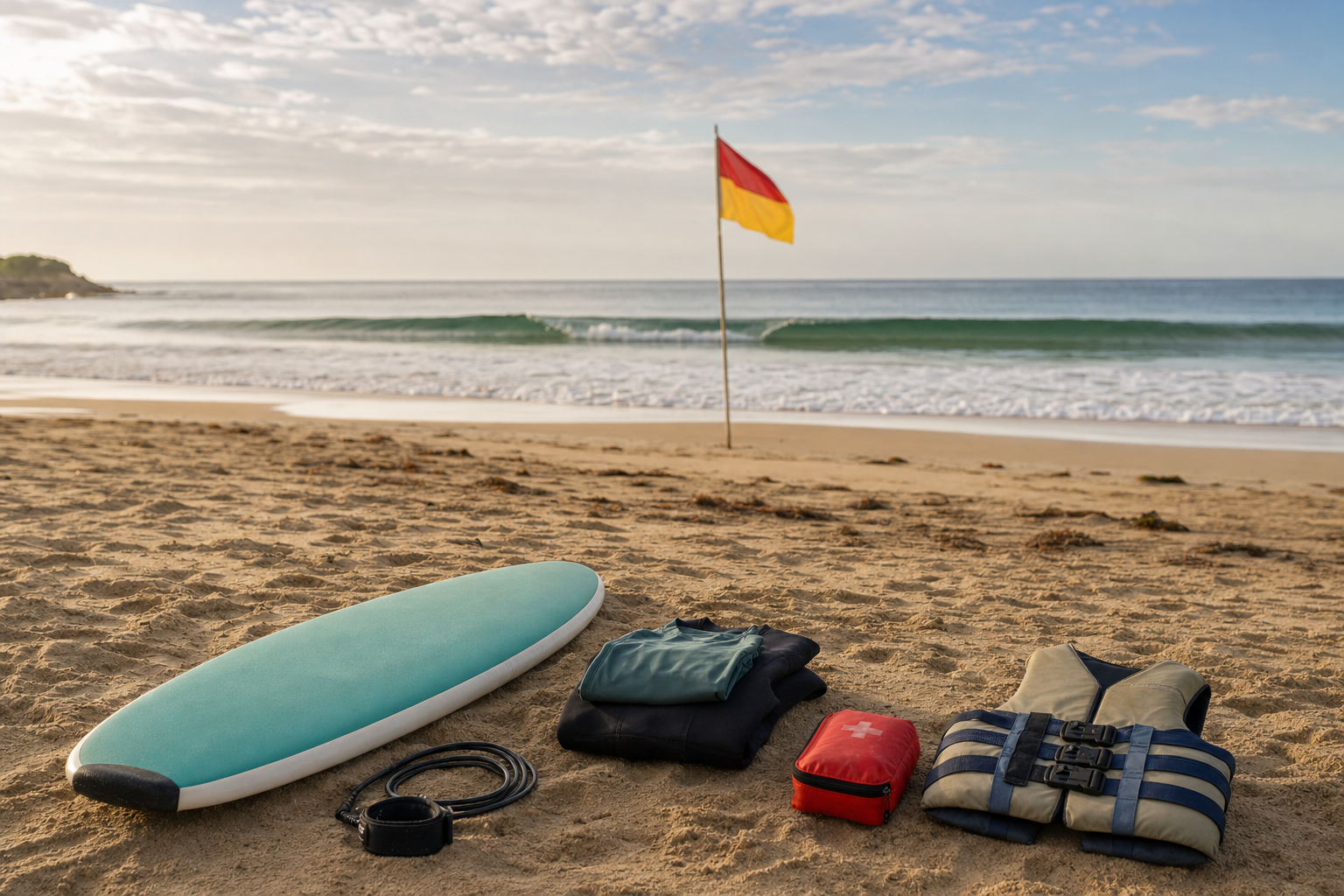
The right gear matters hugely. A soft-top surfboard (foamie) offers cushioning during wipeouts and forgiving buoyancy when catching basic waves. These boards are safer for kids: fewer sharp edges, less chance of cuts or bruises, and more float to build confidence in balance and paddle strength. (mundo-surf.com)
Pick gentle breaks over dramatic crests. Look for spilling waves over sandy bottoms, where waves break softly. Avoid reef breaks or heavy shorebreaks which can slam kids hard. Lifeguarded beaches are essential—always surf between flags if that’s an option. Consult local surf-forecast or lifeguard advice to avoid strong winds, rips, or unexpected hazards. (oceantoday.noaa.gov)
What To Expect: On-Sand Safety Talk & Red Flag Signs
Before your lesson starts, expect a comprehensive orientation on shore. This on-sand safety talk should cover:
- Identifying rip currents, how to avoid them, and what to do if caught in one. Swim parallel to shore, stay calm, float if needed. (oceantoday.noaa.gov)
- Recognizing flag systems and warning signage at lifeguarded beaches—know what red, yellow, and black & white flags mean. Schools tied to Surfing England or other national bodies often enforce strict flag interpretations. (surfingengland.org)
- Understanding instructor-to-student ratios and boundaries: how many kids per instructor, how far into the surf your child can go, rescue protocols. If a school doesn’t commit to a clear ratio in advance, consider that a red flag.
- Gear checklist: board type (soft top), leash, wetsuit or rash guard, life vest if required, sun protection. Ensure that all gear is good quality and appropriate.
If you want a structured way to help your child progress at home, the 10-Week Plan guides you step by step.
[[ctakid]]
Safety briefings are not optional—they lay the foundation for trust and learning. Schools that skip them or rush them often display a lack of respect for risk, especially for younger learners.
Best Age to Start Surfing & Why Ages 8-12 Hit Sweet Spot
Many experts agree that age 8 to 12 years is an excellent time to begin surf lessons. At this stage, kids often have strong enough swimming skills, better motor coordination, and the ability to follow safety instructions reliably. Earlier than that, like under age 5 or 6, kids may become scared in the surf or can’t yet understand or act on complex safety rules.
Being a confident swimmer is non-negotiable. It means being comfortable in waves, able to float or tread water, and willing to follow directions. Schools like SurfGroms expect water confidence as a pre-requirement for ages as young as 5-12. (surfgroms.com)
Private or Family Lessons: What Parents Gain, What To Watch
Private or family surf lessons offer more than just fewer kids in the water. They allow instructors to adapt the pace, select gentler breaks especially tailored for your child, give immediate support when needed, and closely monitor fatigue or fear—things that get lost in larger group settings.
Cost is higher, but for many parents the added safety, personalized teaching, and faster progress are worth it. Watch for schools offering family lessons where siblings or parent and child learn together under the same instructor—this builds confidence and bonding.
Expect during your booking to ask: What’s the instructor’s certification? How many kids per instructor? What safety equipment is provided? What’s the cancellation policy if surf conditions are unsafe?
Fast-Parent Checklist: Spot Red Flags & Know What to Ask
When you’re doing your homework, here are warning signs that a surf school may not be suitable:
- No lifeguard on duty or lack of clarity about patrol hours.
- No safety briefing or vague answer when asked about rip currents or flag systems.
- Instructor credentials are not verifiable or they seem casual (“a surfer” instead of certified rescue/safety training).
- Age minimums and swim confidence aren’t clear or required.
- Group sizes are large (greater than 8 kids per instructor for this age group) or equipment is flimsy or worn.
On the flip side, look for schools that offer structured progression, include beach safety education in addition to wave riding, use soft-top boards, maintain small ratios, and stay on lifeguarded, gentle beaches. Many surf-school programs balance practical skills with confidence-building in the water.
In some swim-surf hybrid programs or pre-surf prep plans, schools may refer to the 10-Week Plan of swimy.org to build water comfort, stamina, and basic skills before moving to open-water surf. This helps beginners develop readiness without rushing in. hyperlink to the exactly URL.
When ages 8–12 children learn surfing under the right conditions—with well-credentialed instructors, age-appropriate gear like soft-tops, life-guarded gentle beaches, small group or family lessons—they build ocean confidence securely. As a parent, asking the right questions ahead of time not only safeguards your child’s first surf, but sets them up for joy, growth, and lifelong respect for the sea.
120+ swimming exercises sorted by age — with video and instructions. Developed by swim instructors, completely free.

120+ swimming exercises sorted by age — with video and instructions. Developed by swim instructors, completely free.