Borrowed Baby Swimwear: What to Check
Fit First — Don’t Trust Just the Label
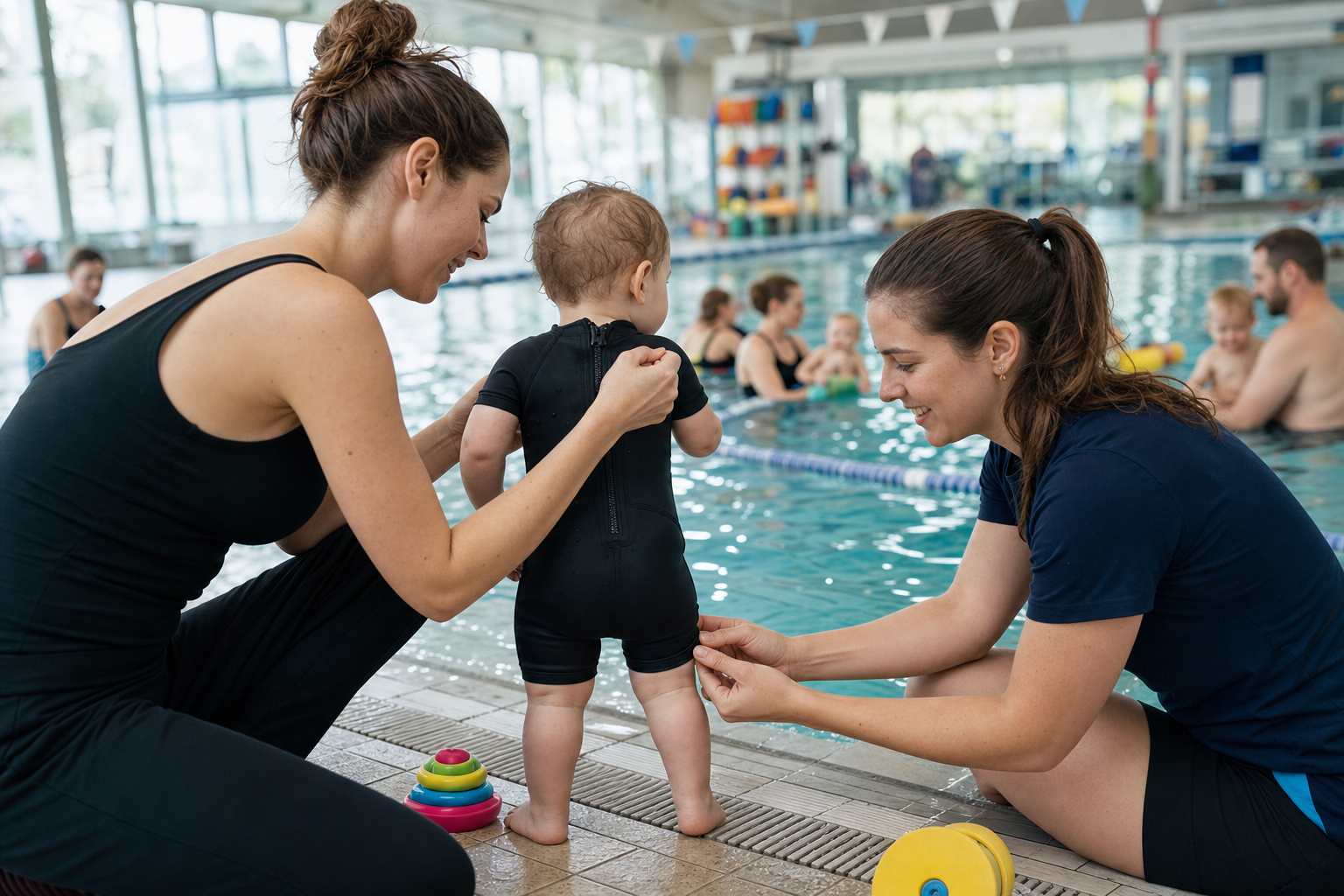
With babies growing rapidly from 0 to 36 months, relying solely on size labels is a common mistake—what matters more is how the gear matches your baby’s current body shape. When you try on a second hand baby wetsuit, check that sleeves reach wrists, legs hit ankles, and the neck fits flush without squeezing. You should just be able to pinch a little neoprene material at the shoulders; any wrinkles or large folds means it’s too big, and no material at all suggests it’s too tight. The same rules of fit apply to a used swim diaper reusable or neoprene swim nappy—leg and waist elastics must sit snugly against the skin without creating deep red lines. Experts warn that when seals are loose, leaks are almost guaranteed and comfort drops fast. (us.splashabout.com)
Elastic Wear & Zipping: Inspect Closely
Borrowed wetsuits or swim nappies will often show wear in areas you’d least expect. The elastic seals around the legs and waist are critical—they must stretch but still bounce back, without sagging or showing permanent grooves. If elastic is loose, stretched flat, or pinned out of shape, it won't contain solid waste or keep water out. With wetsuits, checks on zippers are also vital. Broken or rusted zippers, missing teeth, or floppy sliders can let in cold water, cause discomfort, or even open unexpectedly. Look for clean, functioning zips and try moving them—if they snag or separate under gentle tension, it's better to replace the suit. (blog.wetsuitwearhouse.com)
Hygiene & Sanitation: Keeping Things Safe
Borrowed swimwear has done hard work already, so hygiene matters double. For used swim diaper reusable gear, wash between uses in cool or warm water, with mild soap, avoiding fabric softeners that ruin waterproof fabrics. Many reusable swim diapers last up to ten uses before elastic starts wearing out. Drying in shade preserves materials and limits mold or mildew buildup. Never use regular nappies in water—classic disposables or cloth nappies swell up, lose seal, and may leak or restrict movement. Pools often require a double-layer system: a disposable swim diaper underneath and a snug reusable cover on top. (swimoutlet.com)
Another hygiene check: after wearing borrowed swimwear—even if it looks clean—rinse it in cold fresh water immediately after pool time. Chlorine dries out neoprene, damages elastic, and dulls dyes. Always turn suits inside-out before drying, and never leave zips closed on wet wetsuits when you store them in bags or tight spaces. This prevents mildew and reduces stretching. (waterwisekids.com)
Mid-way through your collection of checks, it helps to have a learning plan: if you're new to baby swim or you borrowed multiple items, following something like the 10-Week Plan from swimy.org can guide you step by step to build confidence, assess early rash or fitting issues, and decide what gear must be replaced. Keep resting periods, air-drying, and skin checks as part of that plan.
Warmth & Thermal Protection: When Wetsuits Really Matter
Babies lose heat much faster in water than older children. If lessons happen in water below about 87°F (30.5°C), or in open water or outdoors, a wetsuit becomes essential. A well-fitting wetsuit traps a thin layer of water warmed by the body—this helps babies stay comfortable and swim longer. If the wetsuit is too loose, water flushes through constantly making it feel colder. If it’s too tight, it can restrict arm or leg movement. Neoprene that feels stiff or brittle, fabric that has faded heavily, and elastic that won’t bounce back are all warning signs that the wetsuit’s warmth protection is compromised. (waterwisekids.com)
[[ctababy]]
Safety Caveats: When to Reject the Gear
There are some clear red flags. Reject a borrowed swim nappy or regular swim diaper if the elastic is irreversibly stretched—if it sagged badly or has lost most of its tension, it’s no longer safe. Tight necks are another no-go; if the wetsuit pulls in around the neck and you see bright red marks or the baby seems uncomfortable, go bigger or choose a different cut. Broken zips—missing teeth, rust, or sliders that split—must be replaced. Loose buoyant panels inside wetsuits can shift and cause imbalance or restrict the baby’s freedom of movement. Always check inside lining, seams, and panels; tug gently but firmly in several directions to test integrity.
Also, pool rules matter. Some swim schools or public pools refuse swimwear that isn't in excellent condition. Many require swim diapers (disposable or reusable), sometimes even with a cover over a reusable diaper or double-layered swim nappies for infants. Clean, leak-proof, well-fitted gear protects not just your baby—but everyone in the pool. (swimoutlet.com)
Final Tips: Making Borrowed Swimwear Work
Before using borrowed gear, wash the wetsuit or swim nappy thoroughly. Check every elastic: thighs, waist, wrists, ankles. Zip up and test only after the gear is dry or near dry as wet straps and fabric stretch more and may mask defects. After swim sessions, rinse and dry fully—heat and strong sunlight are the biggest enemies of second hand neoprene and disposable swim diaper inserts alike. Keep a soft towel between skin and any rough seams during early checkouts.
Above all, comfort is your guide. If your baby shivers, cries, or is tense in the water, something is off. Replace or reject swimwear that causes red marks, feels damp to the touch hours later, or leaks even when everything seems right. Borrowed gear can save money, be eco-friendly, and serve many babies—but only if you check carefully to ensure health, warmth, and safety.
By following all of the guidance above—fit, hygiene, elastic and zip integrity, warmth testing, and safety caveats—you can make second-hand and used swimwear function just as well as new. Safe, warm, comfortable swimming should be the standard for every baby, regardless of whether their wetsuit or swim nappy was handed down or brand new.
120+ swimming exercises sorted by age — with video and instructions. Developed by swim instructors, completely free.

120+ swimming exercises sorted by age — with video and instructions. Developed by swim instructors, completely free.