Prescription Glasses for Pool Parents: Seeing Clearly When It Matters Most
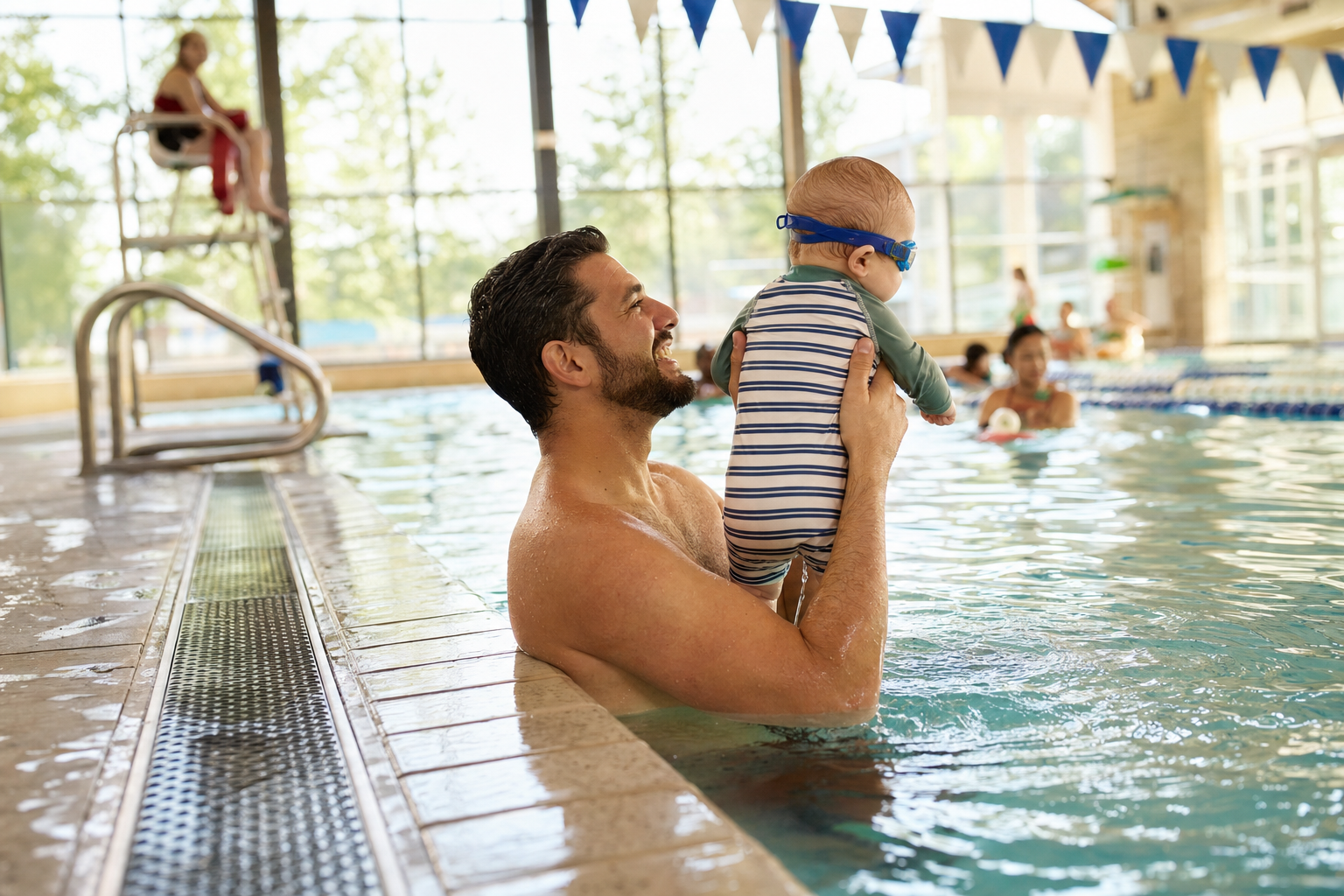
If your vision is blurry, you might miss that critical moment—a baby slipping under water, your toddler clutching a marker on the deep end, or the exit sign in a crowded pool. For parents of little ones aged 0–36 months, supervision must be clear, constant, and up-close. Below are the most effective ways to stay sharp-eyed and safe while supervising your baby in the pool.
Why Glasses Matter When Supervising Babies
Blurry vision can blur your ability to spot danger early. Without clear sight, you might misjudge depth markers, miss visual cues, or fail to see exits or other hazards. The CDC states that infants and toddlers require “touch supervision,” meaning a responsible adult must be within arm’s length for safety. (publications.aap.org) Restoring vision with glasses, goggles, or other tools ensures you can meet this emergency-critical standard.
Real Options: How to Correct Vision Without Compromising Safety
Prescription Swimming Goggles
These are goggles built with your exact prescription lenses so you can see clearly under water. Brands like Speedo offer optical goggles that match both minus (nearsighted) and plus (farsighted) prescriptions in each eye. (speedo.com) UK retailers also stock custom prescription goggles and masks. (prescription-swimming-goggles.co.uk) Using prescription goggles means you don’t have to wear your regular glasses in risky, wet pool environments.
Contact Lenses + Swim Goggles
Wearing prescription lenses (usually disposables) under tight-fitting goggles is an option, but it comes with risks. Pool water can expose lenses to bacteria and microbes like Acanthamoeba, which can lead to serious infections if not handled properly. The AOA and other expert bodies recommend removing all contact lenses before any water exposure. (aoa.org) If you absolutely need to use them, wear goggles, discard lenses promptly after the swim, and rinse your eyes afterward.
Regular Glasses + Retainers or Straps
If prescription goggles aren’t feasible, use your regular glasses fitted with retainers or straps designed for water. Make sure the frame and lenses are waterproof and won’t shift or fall off quickly. Use them only when you’re not immersed fully—you’ll need something stronger if you plan to swim yourself.
If you want a structured way to build water confidence at home, the 10-Week Plan guides you step by step.
How to Stay Close and Read the Rock: Supervision Tips
Clarity of vision corrected or not, staying close to your baby is essential. The CDC recommends that for young children—especially infants and toddlers—supervisors remain within arm’s reach at all times. (publications.aap.org) Blurry or not, distance reduces your ability to act quickly.
[[ctababy]]
Timing & Learning
Enroll Early, Learn Together
Most babies can begin parent-assisted swim lessons around 6 months old. (health.clevelandclinic.org) Jumping in early helps both you and your child become familiar with cues, exits, and safe behaviour in the water.
If you’re part of a structured swim class, whether parent-guided or instructor-led, check whether you’ll need to be in the water and alert instructors in advance if you need vision correction tools. That way, they can accommodate you safely.
Use Structured Programs That Include Parent Training
Some courses include dedicated parent or caregiver supervision guidance. A full schedule like that laid out in the 10-Week Plan by swimy.org helps you build skills week by week. (en.wikipedia.org) This kind of structured support gives you clarity on what to expect and how you’ll supervise moment by moment.
What Your Eyes and Your Gear Need to Withstand
- Choose goggles or glasses with optical lenses made from polycarbonate to resist breakage and protect your eyes. (nei.nih.gov)
- Anti-fog coatings and strong seals will help you retain clarity even when water splashes or fog builds.
- Regularly inspect and replace aging equipment; a cracked lens or loose strap can cost you precious response time.
Risks and Caveats
Corrected vision should never be used as an excuse to supervise from afar. Being able to see clearly doesn’t replace physical presence. The American Academy of Pediatrics urges that infants and toddlers always have “touch supervision” — arms-length — regardless of vision. (publications.aap.org)
Contact lenses used for swimming carry heightened risks of eye infection. The best option is prescription goggles. The CDC warns: avoid exposing lenses to water, never use them overnight if exposed, and always follow strict hygiene. (healthline.com)
Final Actions You Can Take Today
If you wear glasses and attend swim classes with your baby, get your eyes tested and acquire prescription swim goggles. If those aren't immediately available, strap your regular glasses securely (only if you won’t be submerged). Stay within arm’s reach. Test exits, depth markers, and watch from the pool deck or while in shallow water—you deserve to see hazards clearly. This kind of supervision directly impacts your child’s safety and your confidence.
Remember: drownings happen fast and silently. Clear vision gives you a better chance to prevent a tragedy before it begins.
120+ swimming exercises sorted by age — with video and instructions. Developed by swim instructors, completely free.

120+ swimming exercises sorted by age — with video and instructions. Developed by swim instructors, completely free.