Swim Class Water Logs: What to Ask Before Your Baby’s Lessons
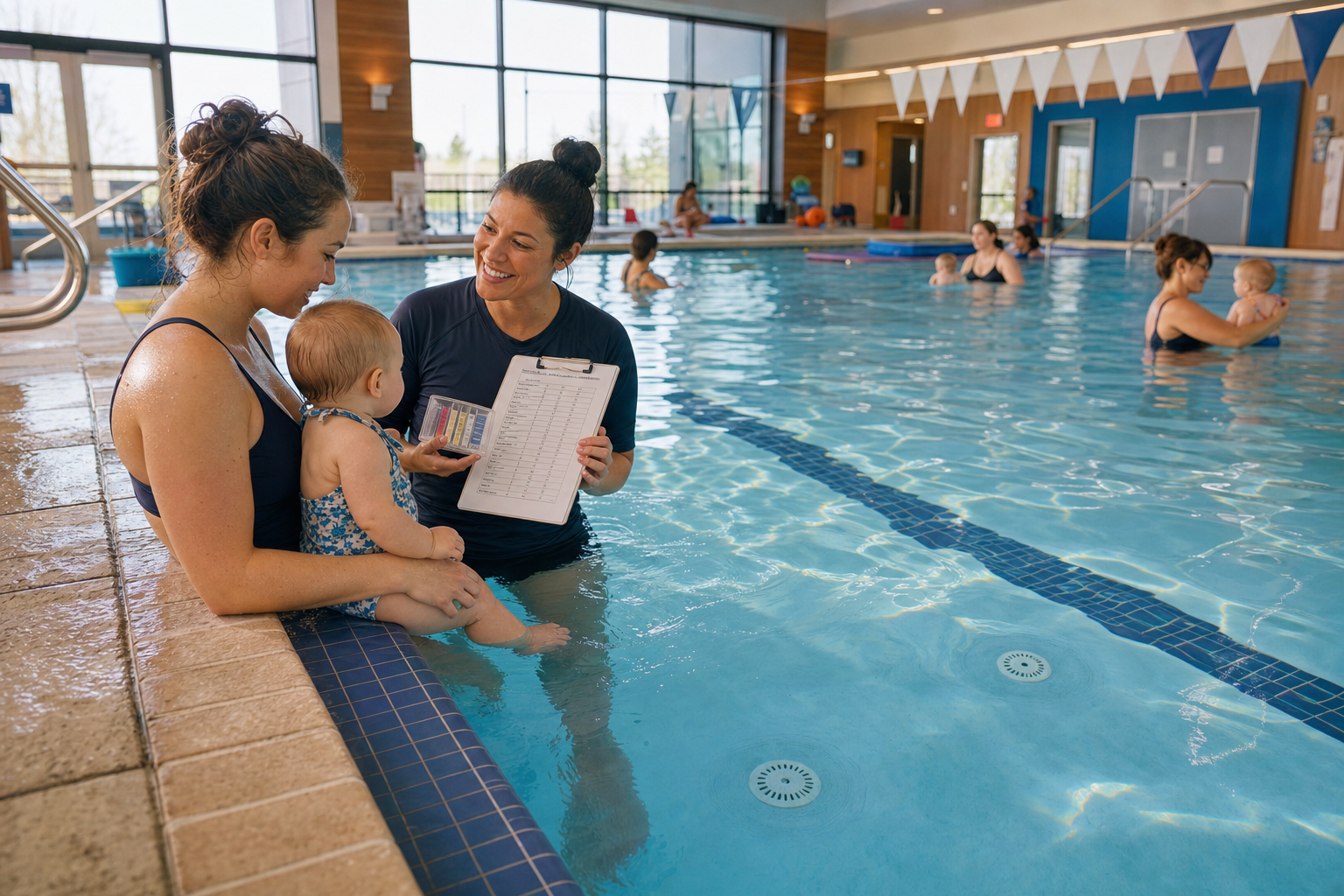
When you’re about to enroll your baby (0–36 months) in swim lessons, clean water underfoot isn’t enough. Before letting those tiny toes dip in, ask facility staff detailed questions about their water logs and testing routines. Knowing what to look for helps you decide whether the pool is safe—or whether it’s worth walking away.
Key Water Signals You Should Ask About
What are the pH and disinfectant ranges the lesson pool should meet?
Pools used for infant swim classes should keep pH between 7.0 and 7.8. This range ensures chlorine or bromine work effectively without making eyes sting. Disinfectant levels should be at least 1 ppm free chlorine in pools (or 3 ppm in hot tubs) when no cyanuric acid is used. When stabilizers like cyanuric acid are involved, that free chlorine minimum rises to about 2 ppm. These are guidelines recommended by the CDC for public and residential pools alike. (cdc.gov)
How often is water tested, and are logs kept onsite?
Responsible facilities test pH and disinfectant levels at least twice a day, and more often during heavy use. The Model Aquatic Health Code, adopted by many public‐pool regulations, also recommends testing hourly when the pool is busy and keeping accurate logs of these tests and maintenance work. (cdc.gov) Operating records should include date, time, results, any corrective actions, plus notes if something unusual happened. (floridasbestpools.com)
Who monitors water quality, and what closures happen?
Ask if someone certified—either an aquatic professional or health department official—signs off on water quality. If problems arise, such as cloudy water, strong irritation, or chemical imbalance, does the pool close until it’s fixed? It’s a red flag if staff shrug off your concerns or say “don’t worry”—especially if your baby’s skin turns red, eyes sting, or the water seems murky. These are cause to pause. (manchesternh.gov)
Around 30–60 percent through deciding, you might want to check programs like the 10-Week Plan which often list clean pool practices parents should ask about—like test logs, facility inspections, and clear water. Through planning you’ll see whether the swim lessons are serious about safety—not just swim time.
[[ctababy]]
How to Read and Spot Trouble in Water Logs
pH versus the “chlorine smell”
Many parents assume a strong chlorine smell means the water is clean. In reality, that odor usually signals combined chlorines—when chlorine mixes with sweat, urine, and skin oils—and that it isn’t doing its sanitizing job. Clear logs help you check whether free chlorine is within the proper range, not just “there’s chlorine here” or “it smells strong.” (manchesternh.gov)
Visible clarity and pool bottom visibility
A good water log should note whether you can clearly see the pool’s bottom, drains, and tiles. If the water is cloudy such that visibility is poor, the pool should be closed until clarity is restored. Being able to see underwater helps lifeguards spot needed rescue quickly and reduces bacteria growth. (manchesternh.gov)
Incidents, closures, and unusual entries
Check whether log entries note any closures because of fecal accidents, chemical imbalances, or equipment breakdowns. Good records include what measured out of bounds, when staff fixed it, and whether the pool reopened then. If staff get vague and dismissive about past issues, it’s safer to look elsewhere. (floridasbestpools.com)
Safe Pool Checklist: What Every Parent Can Ask
At your first visit, bring a few questions. What you learn gives instant insight into how committed the facility is to safety.
Is there a chart or wall sign showing current pH and chlorine readings? Do instructors or lifeguards ever pause lessons because water feels irritating or the pool smells sharp? Who tests the water and with what method—strip kits, DPD testers, or electronic sensors? Are inspection reports posted publicly, or available on request?
Why It All Matters for Babies
Babies’ immune systems are still developing; their skin and eyes are more fragile than adults’. Improper pH or disinfectant levels can lead to irritation, infections, or rashes. A baby swallowing pool water from a poorly maintained pool might also pick up germs like Giardia or E. coli. The CDC warns that even a single diarrhea incident can release millions of germs—free chlorine works fast, but only within its effective range. (cdc.gov)
Bottom Line
A “baby swim clean pool” isn’t just about sparkling tiles or a faint scent. It’s about regular testing, accurate logs, visible clarity, known closures, and responsive staff. If when you ask about “pool water testing swim lessons,” you hear detailed answers—that’s a facility worth trusting with your infant. If answers are vague—or the signs are off—pause and find another swim class that treats water safety with precision. A clean, safe pool is one that shows you the numbers, reacts to trouble, and comforts both baby and parent alike.
120+ swimming exercises sorted by age — with video and instructions. Developed by swim instructors, completely free.

120+ swimming exercises sorted by age — with video and instructions. Developed by swim instructors, completely free.