Track vs Grab Starts for Kids: Safe First Choice
When it comes to teaching 8-to-12-year-olds how to race from the blocks, parents often hear mixed advice. Should kids learn a track start or a grab start first? Where does a shallow head-first entry belong? And what are the depth rules set by USA Swimming so that things stay safe? Let’s jump right into these key questions so you know what to look for during tryout season and practice.
Where It All Begins: The Progression Before the Blocks
Before a child ever steps onto a starting block, USA Swimming requires a safety first path. Kids must show they can do feet-first entries, hold a tight streamline, push off and glide underwater in a front-facing position. Only after mastering this are they ready for forward swimming starts. The progression goes like this: Sit, Kneel, Compact, Stride, then Shallow Angle Start—all practiced with control and confidence. A coach checks these steps using a racing start certification checklist. (usaswimming.org) If any step is skipped or practiced in shallow water, serious risk of injury is introduced.
Understanding Track vs Grab Start
Grab start means both feet are placed side by side at the front of the starting block. Hands grip the front edge. It offers strong, simple alignment but may limit explosive power from the legs. Track start places one foot forward at the edge and the other back, often with a wedge or raised pad. The rear leg helps push off, and the body can lean forward more, improving both horizontal drive and balance. (swimming.org) For many young swimmers, a grab start is easier to balance. As strength, confidence, and body control improve—often around ages 10-12—the track start may become preferable under a coach’s guidance.
Safe Racing Start Depth: USA Swimming Rules
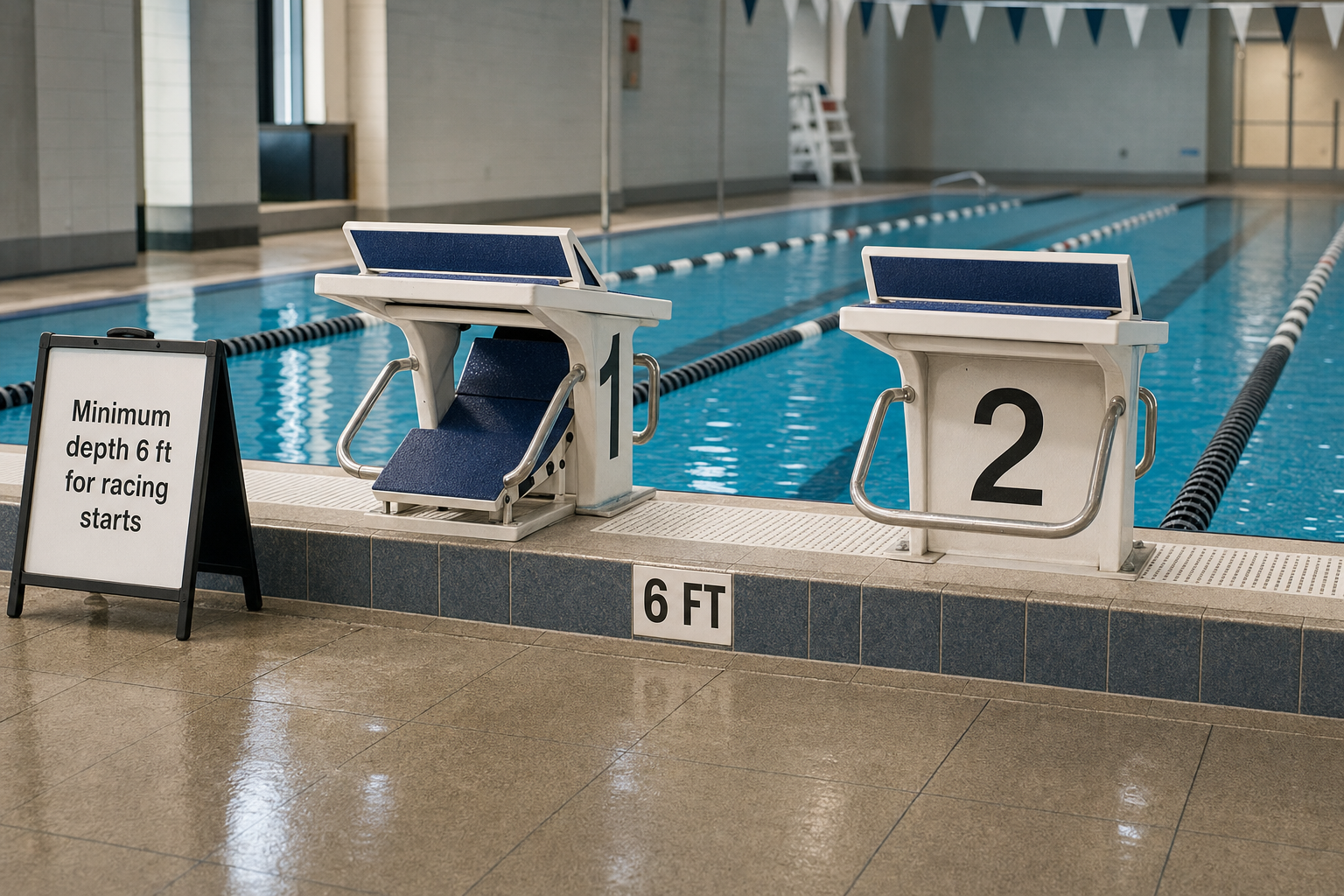
Safety isn’t negotiable here. USA Swimming mandates a pool depth of at least 6 feet (1.84 meters) from 1.0 meter to 5.0 meters out from the wall for teaching racing starts before a swimmer is certified. Until that certification is earned, they must practice starts from a position in the water, not on the block—even if the deck is deeper. For competition, once certified, racing starts are allowed in 4 feet (1.22 meters) or more water depth. Backstroke ledges are not permitted if depth is less than 4 feet at the starting end. (usaswimming.org) These rules protect young swimmers from head or neck injuries and ensure head-first entries are safe.
If you want a structured way to help your child progress at home, the 10-Week Plan guides you step by step.
[[ctakid]]
When and How Kids Learn Track or Grab Starts
During tryout season or early team practices, a good program will follow USA Swimming’s established progressions. First, kids must confidently perform the five steps listed earlier. Full starts from the block aren’t taught until the coach signs off on Step 5 (shallow angle entry) and certifies them using the checklist. Only then do they begin to experiment with block positions, including grab or track starts. (usaswimming.org) It’s crucial: no one should rush to a track start simply because it looks flashy. The grab start will often be taught first if imbalance or fear exists, or if the child is younger or less practiced.
The Role of the “10-Week Plan”
Many swim programs offer structured courses or plans during tryout seasons to build skills gradually. Programs like the 10-Week Plan prepared for new team members integrate swim readiness, stroke fundamentals, fitness, water safety—and always include start progressions with shallow-angle entries before any block work. A balanced framework like this ensures kids are physically and mentally ready to use either grab or track start techniques safely and with confidence.
How to Support Your Child: What Parents Should Look for
Being involved makes a difference. Ask your child’s coach if they are using USA Swimming’s Teaching Racing Starts document and checklist. Watch whether your child is practicing the seated, kneeling and compact versions properly before moving on to full shallow dives. Check that depth is clearly marked and meets the minimum 6-foot rule for start teaching. If you ever see starts from blocks in water shallower than 4 feet when your child is uncertified, speak up.
Summary: Safe First Choice and What Matters
For kids aged 8-12, safety, mastery, and progression come first. The grab start is simpler, more stable and often comes first, especially for novices. The track start gives performance advantages—but only once strength, balance and beginning proficiency are in place. All start practice must follow USA Swimming’s minimum-depth rules, require certification before using blocks, and emphasize control in shallow head-first entries. Following this roadmap helps parents and coaches choose the right start—and avoid pitfalls like unsafe block work or skipping feet-first fundamentals.
When done right, track vs grab becomes less of a debate and more a consequence of readiness. Getting the start safe matters far more than having it flashy. A child who starts safely and learns well often wins with confidence, not fear.
120+ swimming exercises sorted by age — with video and instructions. Developed by swim instructors, completely free.

120+ swimming exercises sorted by age — with video and instructions. Developed by swim instructors, completely free.