Safe Pool Holds for Babies: Front, Back, and Hip Support Without Gripping Too Tight
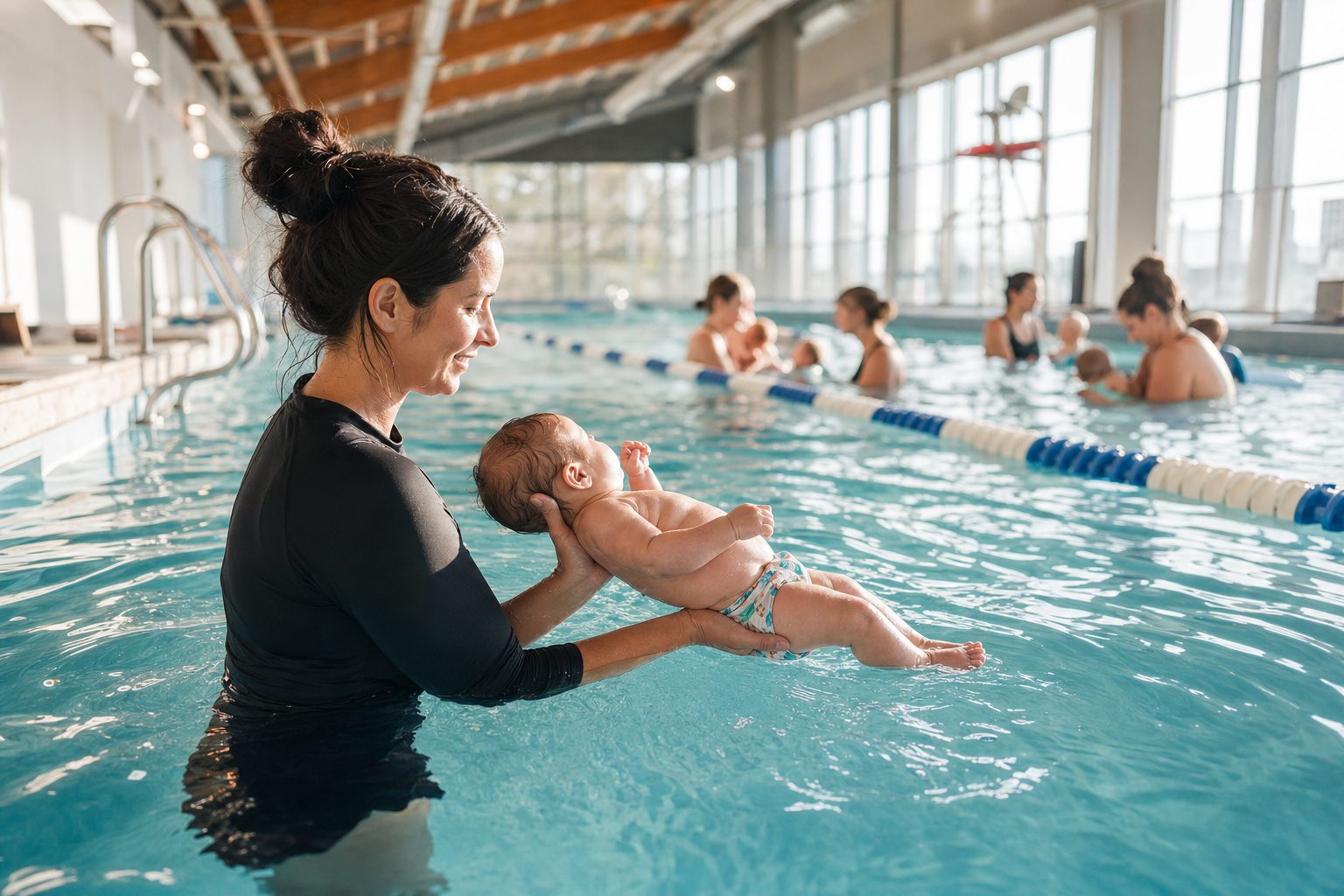
When swimming with your baby safely, knowing how to hold them securely while keeping their face clear of water, feeling balanced, and free to move is key. This guide gives calm, airway-safe holds for babies ages 3–24 months, with head control strong enough for longer pool sessions. Use these tips with constant touch supervision—holds are never a substitute for rescue or lifeguard skills.
Front Holds: Keeping Baby Face Out, Calm, Comfortable
For babies around 3 to 12 months who are still building head control, front holds help them feel the buoyancy and observe the world. The “face-to-face hold” puts your hands under the baby’s armpits, thumbs gently around the shoulders, allowing the baby to rest their head against your chest. This approach ensures the face stays out of the water and avoids the chin dropping onto the chest. As your baby gets stronger, you can support them instead under the chest and knees so that their body is horizontal and they can experiment paddling or kicking. Safe front holds are ones where your grip supports head, neck, back, and bottom—not ones where you grip too tightly under the armpits so that the baby’s chin is pushed down or their feet hang limply.
Back Floats & Supports: When You Want Baby to Rest or Recover
Back floats give babies space to breathe and rest, especially when moving between active swimming and calmer moments. For back floats, start by supporting the baby’s head gently against your chest or shoulder, slowly letting your hands slide under the back. Keep one hand cradling the neck so the jawline can lift slightly, keeping the airway open. Let suck up misconception: these holds are about trust and buoyancy, not about letting go—always maintain a gentle touch even if you shift your hands to less support. When your baby gains better core strength (often around 8–12 months), you can practice safe rolling from front to back and back to front under secure guidance so they learn recovery. Any holds in back float style must allow the face and nose to stay well above water, or if submerged slightly by splashes, the baby must be able to quickly return to breathe. Forced submersion—pushing baby underwater or making them hold their breath—is considered unsafe by many swim programs and governing bodies.(img1.wsimg.com)
Hip & Side Holds: More Movement, More Interaction, With Balance
If you want a structured way to build water confidence at home, the 10-Week Plan guides you step by step.
As babies grow stronger (around 6 to 24 months), hip and side holds help them reach, splash, and explore safely. Hip support means you cradle the baby on one hip, supporting upper back with one hand and bottom or legs with the other. Keep hips in natural, “M” shape if possible—knees slightly higher than the bottom—so joints stay aligned, fluid, and comfortable. Avoid holding only under armpits for long stretches in these positions because the baby’s lower body can dangle and pull on their spine. Also watch closely: any bounce near the mouth or splashes that cover nose or lips can threaten airway safety. Pause immediately if the baby stiffens, turns away, starts coughing, or shows signs of panic.(heloa.app)
[[ctababy]]
Reading Body Cues & Building Trust
Safety and comfort don’t come just from how you hold your baby—they come from recognizing what they want. Some babies push away, close their eyes, or stiffen when uncomfortable; others gasp or toss their head if surprised. Respect hesitation. If your baby relaxes, begins to paddle, looks around, or smiles in the water, these are signs that they feel safe. Start with just a few minutes in the water, then out, gradually increasing to 15–20 minutes as long as the temperature is warm enough (above around 89°F for babies under one year).(boystownpediatrics.org)
One helpful resource offers a structured curriculum for learning suitable holds and builds in trust with parents. You might check out the 10-Week Plan from swimy.org which shows how parents can practice front floats, back floats, hip holds, and transitions in a gradual, confidence-building order. The 10-Week Plan helps ensure practical handling, not just abstract class theory.
Common Mistakes to Avoid: Your Hands Shouldn’t Be the Only Anchor
The most typical pitfalls in baby swimming holds are: lifting baby up too high under the armpits so their face nearly tips backward into water; bouncing or jostling near the mouth; using forced submersion or timed breath holds; and turning practice into performance rather than learning. These could increase risk of water inhalation or panic developing in baby. Always keep the baby’s nose and mouth clear of water, avoid strong pressure under armpits, and never let any part of the hold compromise their airway. Swims with your baby must remain gentle, predictable, safe.
Safety Caveats You Can’t Skip
Holds are not rescue tools. Even when you master front, back or hip holds, use constant touch supervision—always remain within arms-length of your baby. The American Academy of Pediatrics (AAP) recommends that any adult in the water with a baby use “touch supervision” and never leave the child alone or depend only on flotation devices.(healthychildren.org) Swimming lessons can help, especially after age one, but they don’t replace the need for safe holds and attentive hands.(healthychildren.org)
Babies swim best when they feel secure, when their airway is free, and when holds support—not squish—their body. Front holds let them see you, back floats let them rest, hip holds let them move and explore. When you read their cues, stay close, and avoid gripping too tightly, you help build water confidence, safety, and deep joy for both of you.
120+ swimming exercises sorted by age — with video and instructions. Developed by swim instructors, completely free.

120+ swimming exercises sorted by age — with video and instructions. Developed by swim instructors, completely free.