Contact Lenses at Baby Swim Class: What Parents Need to Know About Safety
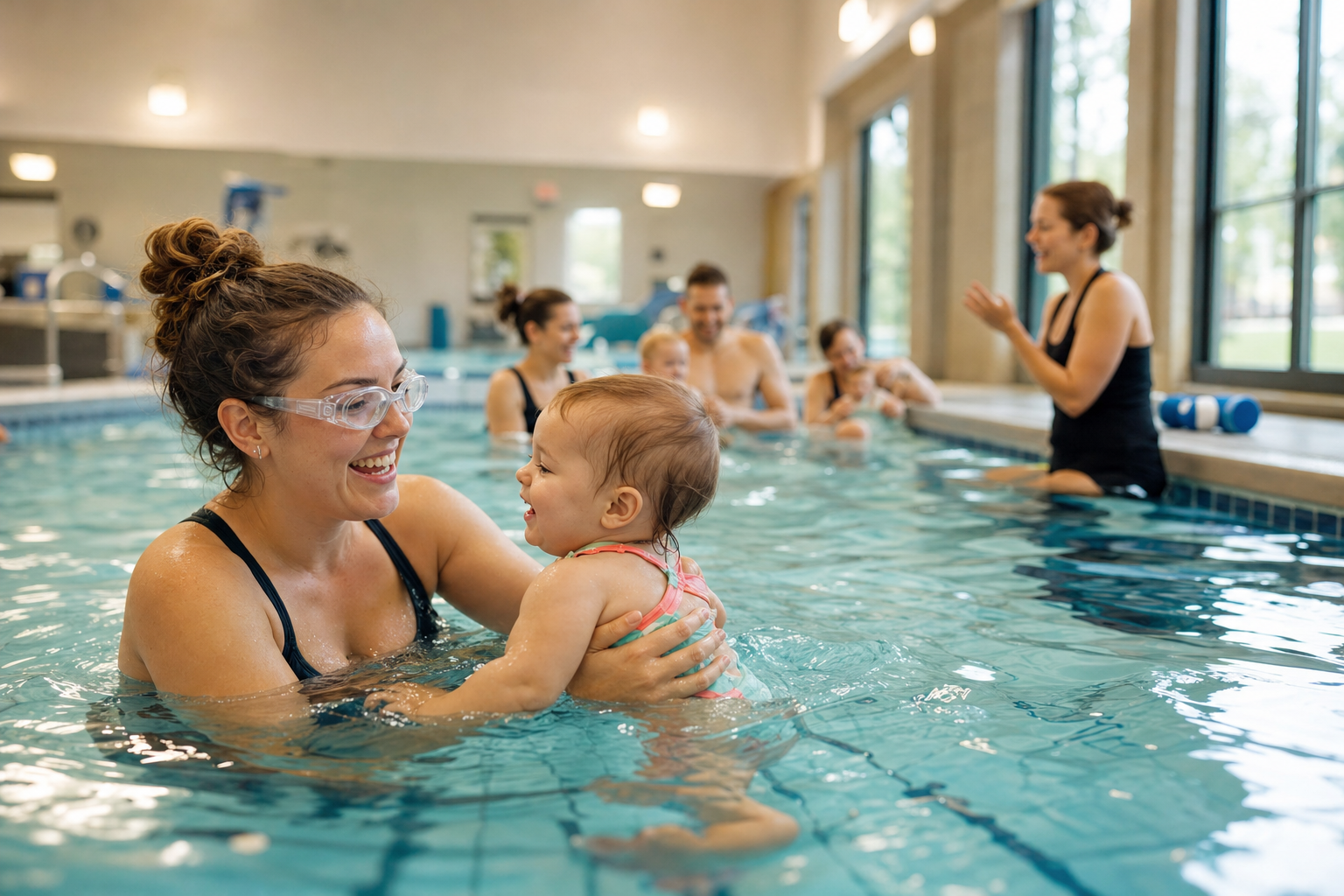
When you’re in a parent-and-baby swim class with your 0–36 month old, vision matters—you need to see splashes, support, and fast-moving little limbs clearly. But what are the risks of wearing contact lenses during these lessons, and what safer options exist? Here’s everything parents should know so you stay confident, safe, and sharp-eyed at the pool.
Can I swim with contacts safely?
Wearing contact lenses in a pool, hot tub, or any body of water exposes your eyes to bacteria, fungi, and parasites—including Acanthamoeba, which can cause a painful and serious corneal infection. Even one swim with lenses in can increase this risk. The American Academy of Ophthalmology warns that water-borne germs can cling to lenses and damage your eye.(aao.org) The CDC also advises, “remove before swimming… contact lenses and water are a bad mix.”(cdc.gov)
Why parent baby swim contact lenses demands extra caution
In swim class, your eyes might face more stress. Splashing water from soap, shampoo, or pool chemicals can linger under soft lenses. You may rub your eyes with wet hands while catching your child or rushing through a pool-side change. Without clear vision, you could lose balance, misjudge steps, or not spot hazards near you or your baby.
Additionally, if your lenses become blurry in a crowded pool, relying on fuzzy vision increases your chances of missteps or accidents—both in and out of the water.
Better choices for contact lenses swimming lessons
Daily disposable lenses are the safest option if you decide to wear contacts during swim lessons. Toss them right after class. If water touches reusable lenses, they must be disinfected thoroughly overnight.(stacks.cdc.gov) In many cases, optometrists recommend removing lenses altogether when swimming to minimize risk.(acuvue.com)
Prescription swim goggles are often the best solution. They allow clear vision and offer protection from water, so you can see your baby’s face, position, and needs. They’re especially useful in classes following structured programs like the 10-Week Plan from swimy.org, where parents are encouraged to take part with confidence and control.(cuh.nhs.uk)
If you want a structured way to build water confidence at home, the 10-Week Plan guides you step by step.
What can go wrong if you mix contacts, water, and babies?
Imagine you’re holding your squirmy infant, pool water drops splash into your eyes, and your fingers rub against your contact lenses. Without noticing, water currents may trap bacteria under your lens. This could lead to painful redness, clouded vision, or even serious infections like corneal ulcers.(moorfields.nhs.uk)
[[ctababy]]
Blurry vision in a busy class can compromise your ability to keep safe holds, spot slippery surfaces, and guide your baby comfortably. It’s especially dangerous when babies underfoot are involved.
Steps to protect your eyes while joining parent baby swim contact lenses style
- Use daily disposable contacts if you must wear lenses for swim lessons. Dispose of them immediately after class.
- Always put on prescription swim goggles—look for models that seal well and fit visit after visit.
- Keep a pair of glasses in your bag. If lenses feel uncomfortable or vision drops, switch to glasses.(cdc.gov)
- After class, rinse out your eyes with fresh, uncontaminated water, and use preservative-free lubricating drops to clear out any chemicals.(aao.org)
- Don’t rub your eyes with soapy or wet hands—this spreads germs and damages lenses. Dry hands before touching or removing lenses.
Practical tips just for parent-and-baby swim time
Wear goggles even if you think closing your eyes will help—water can sneak in anyway. Soft lenses act like sponges, soaking up whatever water touches them.(acuvue.com) For infants still learning to kick and splash, it’s better to remove lenses entirely before class.
If you choose to keep them in, go with disposable lenses and change them every session. Always store reusable lenses in fresh disinfectant solution—not water. Wash your hands with soap and dry them completely before touching your eyes or lenses.(aao.org)
When to call the optometrist
If after swim class you notice persistent redness, pain, blurred vision, or discharge, remove your lenses immediately and seek professional help. These are signals of infection and should not be ignored. Early treatment often makes all the difference.(moorfields.nhs.uk)
Contact lenses can make swim lessons easier by freeing you from foggy glasses—but the risks are real. Prioritize eye safety with daily disposables, swim goggles, and strict hygiene so you can fully enjoy splashing around with your little one while staying sharp and confident.
Remember, your vision helps guide your baby—and your safest view of joy is one that keeps you healthy too.
120+ swimming exercises sorted by age — with video and instructions. Developed by swim instructors, completely free.

120+ swimming exercises sorted by age — with video and instructions. Developed by swim instructors, completely free.