Baby Swim Confidence After a Long Cry: A Calm Recovery Plan for Parents (Ages 4–36 Months)
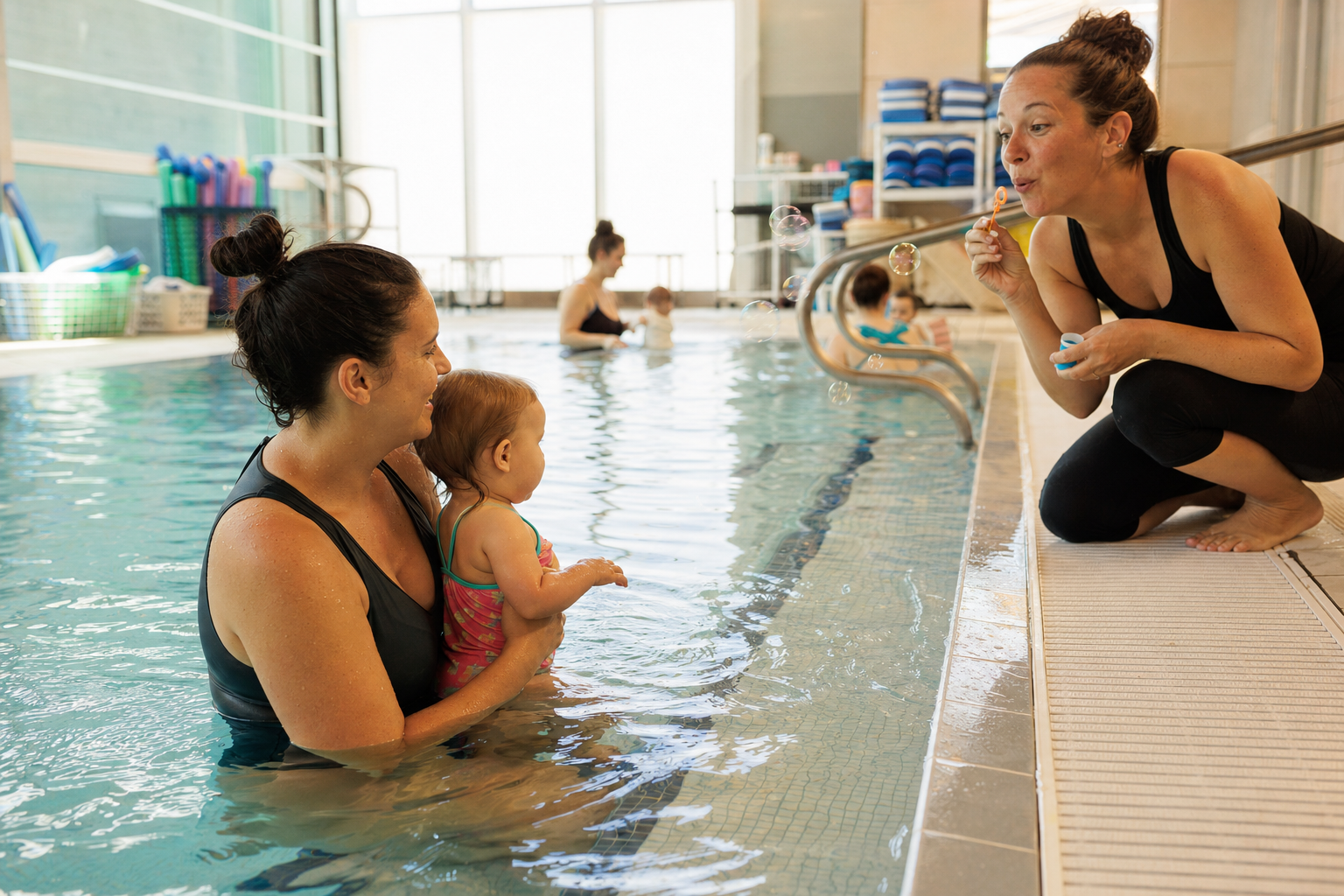
If your baby cried through a swim lesson and you left the parking lot wondering, “Should I stop baby swimming?”—this guide is for you. It’s not about quick fixes; it’s about preserving trust, lowering negative water associations, and giving both you and your child a calm path forward when a lesson has ended in tears.
Why Tears Don’t Always Mean “It’s Over”
Crying during a swim lesson—whether your baby cried during swim lesson yesterday, or now your toddler hates swim lessons suddenly—is common. Babies and toddlers cry to communicate discomfort: unfamiliar environments, loud noise, cold water, hunger, or even the submersion style used by the instructor. It’s not blameworthy. The problem arises when parents force through every time, or quit without trying to identify the triggers. According to Swim Carolinas, many children start to adjust in 4 to 6 weeks when the instructor is kind, consistent, and patient. (swimcarolinas.org)
When to Pause, How to Observe, What to Ask
Pay attention to patterns and subtle cues
Watch when the distress starts. Is it as soon as you walk in? Only when asked to submerge? At loud splashes? If your toddler hates swim lessons suddenly, chances are something changed in the setting: a new pool liner, a colder hour, or a different instructor.
Talk with instructors openly
Tell your child’s teacher what you’ve noticed. Mention whether hunger, cold, fatigue, or stranger anxiety seem to make things worse. Ask how much submersion is expected and whether it’s gentle. The American Academy of Pediatrics (AAP) guidelines warn that repeated submersions in infants (under age 1) may not reduce drowning risk—but may contribute to negative aquatic experiences. (highpointswimclub.org)
Crafting a Calm Recovery Plan
Resist deciding in the parking lot. Instead, use the moment to build a recovery plan that keeps your child’s water relationship positive—and strengthens confidence.
Step 1: Pause strategically
If tears remain intense week after week, or your baby cries while simply entering the pool, it's reasonable to pause. Choose a time frame—two to four weeks—and plan on low-pressure water exposure instead of formal lessons. Casual open swim, splash pads, or play in warm bath water can help rebuild comfort. Swim schools and parenting guides encourage this rather than quitting cold turkey. (bestswimschools.org)
Step 2: Shift the routine
Introduce short, gentle warm-ups before each lesson: singing a familiar song, blowing bubbles in bath, barefoot walk to the pool. If they seem calm, gradually move into class. Avoid plunging them into anything too demanding too fast. If you want a structured way to build confidence, consider following the 10-Week Plan from swimy.org, which lays out progressive exposure week by week, combining familiar cues, warm-ups, and swimmer-friendly skills. (swimy.org)
Step 3: Build trust and communication
Sit with your child in the water if possible. Keep your voice calm; use consistent cues like “ready,” “set,” “go” before transitions. Celebrate even tiny wins like touching the water, blowing bubbles, or simply following directions. Avoid comparing to other toddlers or expecting instant progress. These steps rebuild trust and let your child see the pool as safe again. (sgsinkorswim.com)
What to Avoid, What to Monitor
When you think, “Maybe I should stop baby swimming,” consider whether any of these pitfalls are part of the problem first:
[[ctababy]]
- Pushing through every time—forcing face dips or submersions when the baby isn’t ready drives anxiety deeper. AAP technical report comments that infants are unable to coordinate advanced motor skills and that forced submersion can reduce confidence and competence. (publications.aap.org)
- Quitting too fast without identifying why—often it’s something you can adjust.
- Blaming the baby—when conditions like cold water, noise, hunger, or even timing of the class set them up for distress.
Monitor for red flags: distress that shows no signs of easing after multiple weeks, panic, refusal to enter water even in playful settings, persistent avoidance or sleep/eating disruption. If you see these, consult your pediatrician or a mental health professional specializing in child anxiety. (safesplash.com)
What About Age 4–36 Months Specifically?
For babies under one year, the AAP notes that swim lessons may help with water comfort and bonding—but there’s no proof they prevent drowning. They also suggest limiting repeated submersions in infants because this can lead to negative experiences. (publications.aap.org) Toddlers (12–36 months) can learn survival skills and benefit from lessons, but only when the pace, cues, water temperature, and handling feel appropriate to their developmental stage. (highpointswimclub.org)
Safety Caveat
Distress during repeated submersion or harsh handling deserves immediate boundary-setting. If swimming lessons involve pushing the child underwater, harsh dunking, or ignoring cries, you have the right to stop that and switch to a more gentle teacher or different program. The AAP technical report emphasizes water competency for child and caregiver, and insists on qualified, patient instructors. (highpointswimclub.org)
When Is It Time to Revisit Lessons—or Try Something New?
After your pause or recovery plan, check in: Is your baby calmer entering the pool? Smiling in the shallow end, touching water without fear of submersion? If yes, try again—perhaps with a new instructor or smaller class, or even private sessions.
If they still resist, act on your observations. Change class format or time, or take more time with open play. If none of it improves, it’s okay to stop formal lessons for a while. Sometimes waiting a few months, letting maturity, size, coordination, and comfort build naturally, makes a big difference.
Key Takeaways
You don’t need to decide in the parking lot whether to quit. A calm recovery plan helps preserve trust and reduce negative associations with water. Observe what triggers tears, talk with instructors, and gradually build routines that feel familiar and safe. Use structured plans like the 10-Week Plan to guide exposure. Blaming the child or pushing through every breakdown often makes things worse. But with patience, adjustments, and listening, most babies aged 4–36 months can regain—or build—their swim confidence. Safety always comes first: distress from repeated submersion or rough handling is not part of a healthy swim lesson. Your goal isn’t just lessons—it’s helping your child feel safe and loved in the water.
120+ swimming exercises sorted by age — with video and instructions. Developed by swim instructors, completely free.

120+ swimming exercises sorted by age — with video and instructions. Developed by swim instructors, completely free.