Beach Flag Rules for Toddlers: Simple Water Rules Parents Can Use
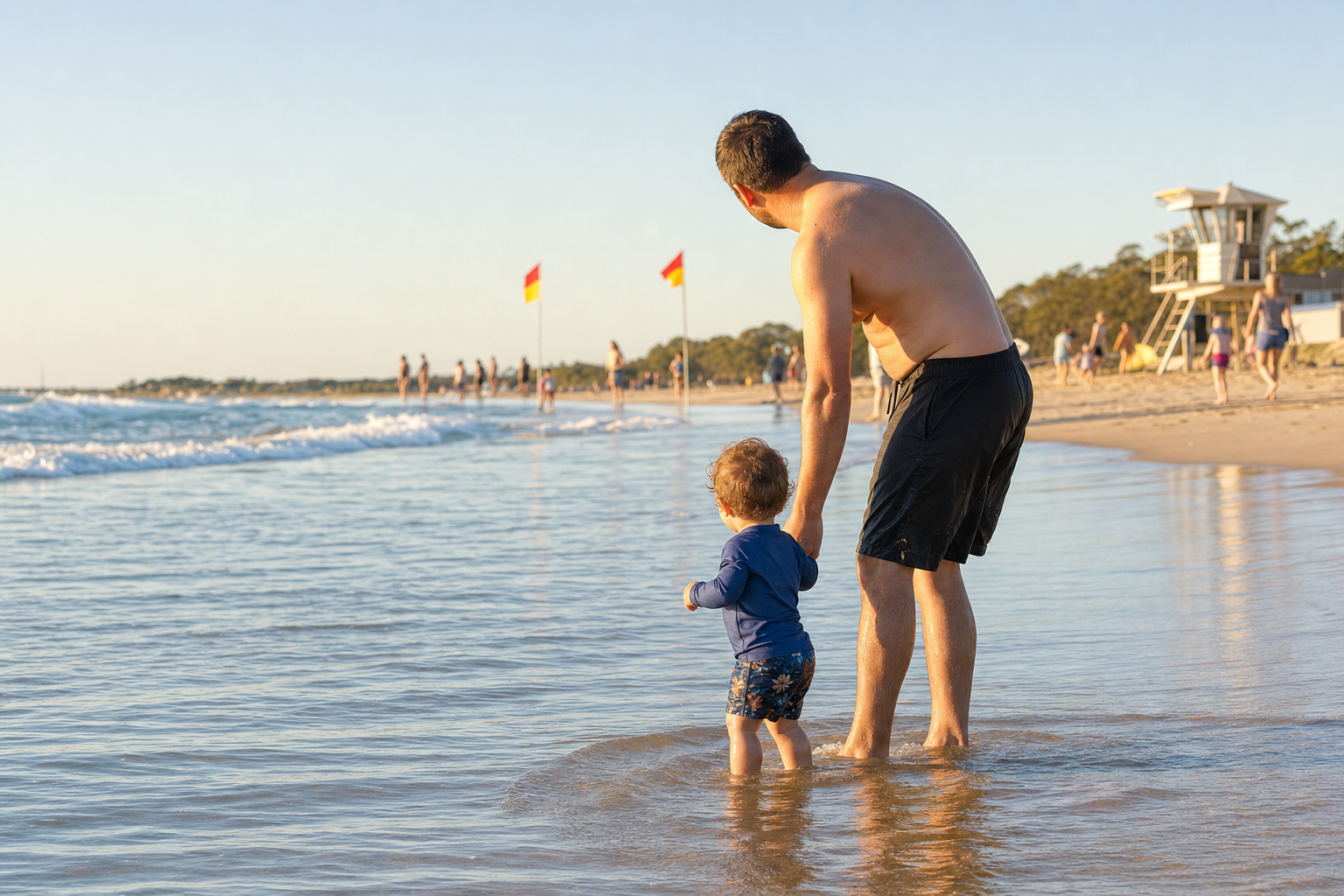
Toddlers don’t understand wave speed, rip currents, or why beach flags matter—but parents can help by turning those rules into short, repeatable phrases toddlers can remember. Here are the most important rules for toddlers aged 12–36 months, plus babies carried by adults, to build early water respect and stay safe at the beach.
The Core Rules: What Every Parent Should Teach First
When you arrive at the beach, you can teach your toddler four simple phrases:
“Swim With Me Between the Flags”
Always swim in the area between red and yellow flags. That’s where lifeguards are watching and it’s considered the safest spot. The Royal Children’s Hospital Australia clearly advises teaching this rule: “In Australia, teach your child to swim between the red and yellow flags on patrolled beaches – this is the safest part of the water.”(rch.org.au)
“Keep Me in Arms’ Reach”
Toddlers are unpredictable around water. Whether you're holding a baby or watching a two-year-old, you must stay close enough to grab them at any moment. RCH states that for kids under five, parents must always be able to reach them.(rch.org.au)
“If No Flags, We Don’t Swim”
Sometimes beaches aren't patrolled—or the flags aren't visible. On those days, or in those spots, you do not go in the water. It’s not safe. Australian authorities warn that red and yellow flags mark supervised zones, and swimming outside those areas is risky.(healthdirect.gov.au)
“Watch the Signs, Check the Flags”
Waves, rip currents, marine creatures—all of these can change from day to day. Always look for warning signs, notice where the flags are, and if you're unsure, talk to a lifesaver or lifeguard.(healthdirect.gov.au)
Do Young Swim Skills Transfer to the Beach?
Yes and no. Babies and toddlers who have been in baby swim lessons gain comfort in water, learn to kick, float and hold breath better—but the ocean is a different world.
Toddlers are developing balance, coordination, and awareness. A child may paddle confidently in a calm pool, but surf beaches have breaking waves, unpredictable currents, and shifting sandbanks. That’s why even when toddlers can swim, parental supervision and obeying the beach flags matter more than ever. A 2026 study for young children aged 2–4 years noted swim lessons improve survival skills—but risk remains unless parents still watch closely.(publications.aap.org)
If you want a structured way to build water confidence at home, the 10-Week Plan guides you step by step.
[[ctababy]]
Many swim programs begin around six months old. Up until 3 years, lessons build confidence rather than performance—helping toddlers feel safe in water under close adult guidance.(pregnancybirthbaby.org.au)
How to Turn Beach Flag Rules into Everyday Toddler Sayings
Here are ways to practice and repeat these four core rules so toddlers remember them naturally.
- Before entering water, you might say: “Flags ON, swim safe.”
- Every time they reach for the water’s edge, you can say: “Reach = stay close.”
- If they drift toward a section with no flags, “No flags = keep toes dry.”
- When spots are chaotic, add: “Follow the signs; they show what’s safe.”
Some Real-Life Tips from Parents
When we went on our UK coastal holiday with our 18-month-old, we painted red and yellow stripes on her small water bucket—whenever she saw them, she'd shout “FLAGS!” and point. That meant we paused and checked whether she had me or my partner right beside her. Small, consistent cues like that work.
Also, try visiting a patrolled beach rather than an isolated bay. Lifeguards won’t stop you from making sandy castles, puzzle-scanning waves, or splashing shallow water—but they give extra peace of mind when the surf picks up. RCH recommends choosing beaches that are patrolled where possible.(healthdirect.gov.au)
Balancing Swim Skills & Beach Risk: What Every Parent Should Know
Even with swim lessons, toddlers cannot yet judge how deep or strong the water is. Open water exposes them to risks like rip currents, sudden waves, or drop-offs. Where pool walls guard safety, open water moves and shifts.
If your toddler is taking classes (like the 10-Week Plan from swimy.org), that’s wonderful for early water experience. The 10-Week Plan covers building comfort in water, but doesn’t reduce your responsibility as a caregiver at the beach—skills practiced in calm water may not work over surf or currents. Always stay vigilant.(publications.aap.org)
Final Rules to Seal It In
To recap: swim between red and yellow flags; keep toddlers within arm’s reach; if there are no flags, don’t swim; watch signs and conditions. Use the short phrases enough that toddlers repeat them back sometimes—it builds awareness.
Toddlers grow fast. Their confidence and water skills grow with them—but open water will always deserve respect. These rules are not just for this summer; they sow habits that last. Stay together, stay between the flags, stay safe—and let the sea be fun, not scary.
120+ swimming exercises sorted by age — with video and instructions. Developed by swim instructors, completely free.

120+ swimming exercises sorted by age — with video and instructions. Developed by swim instructors, completely free.