Baby Swim Class During School Holidays: How to Navigate the Chaos with Confidence
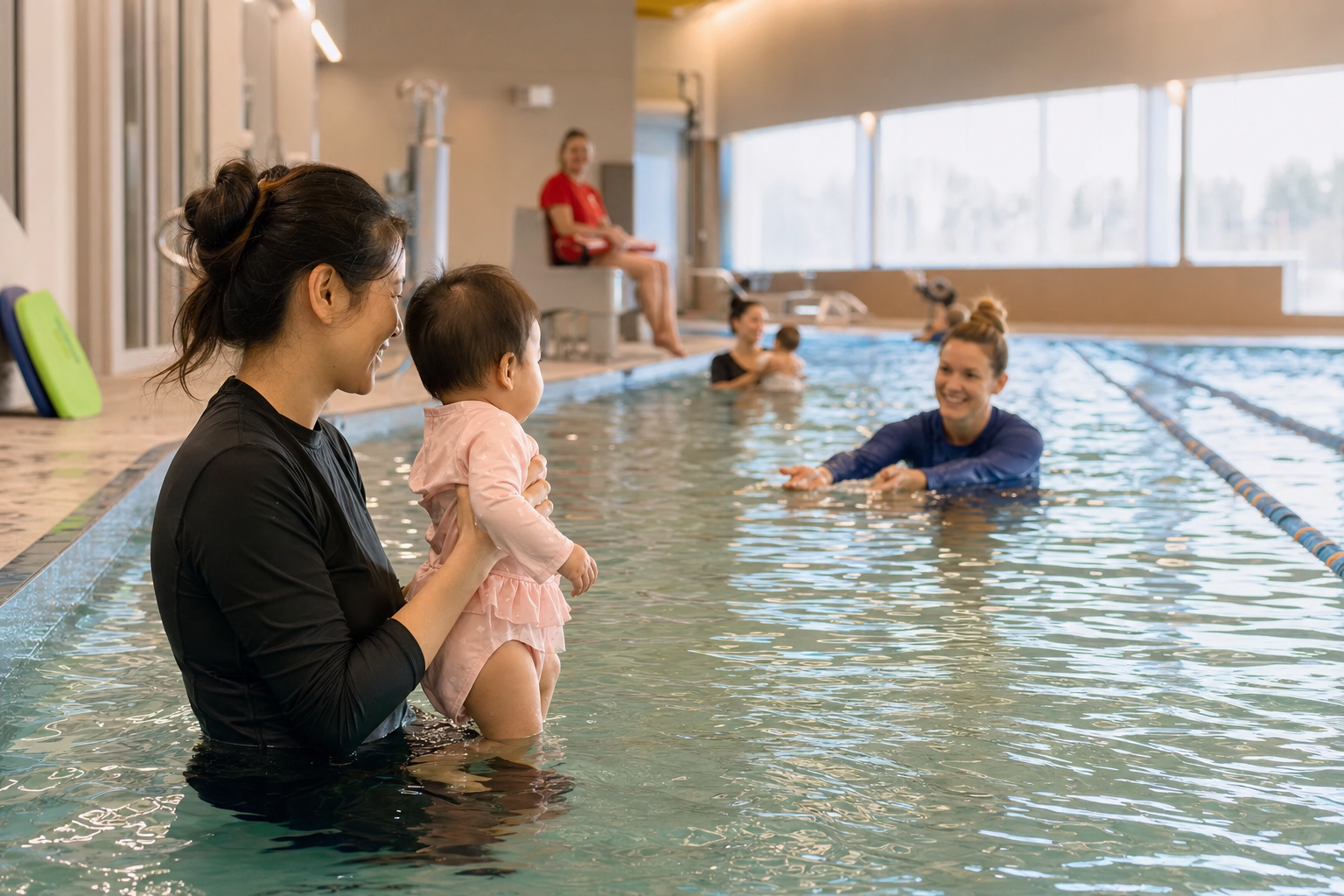
Holiday periods—whether summer break, half-term, Christmas holidays, or the March/April school holidays—turn pools into lively, busy places. This surge can overwhelm babies aged 4–36 months and frazzled parents alike. Here’s what you need to know right away: how to select quieter sessions, protect nap routines, and decide when a short break beats pushing through overstimulation.
Finding Quieter Sessions and Safer Venues
When “baby swim lessons school holidays” are in full swing, pools often overflow. Choosing a session early in the morning or later in the afternoon helps cut down on noise and crowds. Community and swim centers sometimes host “quiet hour” or “sensory swim” slots during school holidays—perfect for toddlers who dislike chaos. According to Fledglings (UK), choosing quieter sessions during off-peak times can significantly reduce sensory load. (fledglings.org.uk)
Also, inspect the venue. Does it share space with lap lanes or large group classes? Pool turbulence increases when older swimmers are mixing with babies. A feature to look for: warm teaching pools separate from busier deep-water or adult zones. Swimy.org emphasizes that separation reduces water turbulence, and a calm tiny class makes safety and learning way better. (swimy.org)
Holiday Swim Classes Toddler: Maintaining Nap and Sleep Routines
Babies thrive on routine—nap times especially. A swim class during holidays that conflicts with your toddler’s usual nap window could lead to meltdown before splash time even begins. A trick is to time lessons just after a morning nap or schedule classes toward the end of the day so you can go home, shower, change, and settle down without pushing into overtired territory.
It’s also smart to prepare for transitions. Arrive early, allow time for changing, a warm shower, and a short field for calm cueing before the lesson starts. Fledglings suggests creating a simple sequence like arrive → change → shower → swim → snack to help toddlers manage change. (fledglings.org.uk)
For some families, the “10-Week Plan” on swimy.org works well around holidays: it breaks lessons into gradual exposure over ten weeks, helping both baby and parent adjust without stress. That plan helps you build up tolerance for noise and stimulation without overwhelming the little one. (swimy.org)
If you want a structured way to build water confidence at home, the 10-Week Plan guides you step by step.
Push Through or Take a Break?
You’ll face that crossroads: should you stick with classes during the noisy season, or pause until things calm down? Overstimulation in busy pool settings can cause irritability, confusion, or anxiety for babies aged 4–36 months.
Signs that it’s okay to pause include constant fussiness, refusal to enter the water despite familiar routines, or lasting disruption of sleep or eating patterns. Instead of pushing through, use holiday breaks to shift to short free swims, splash pads, or bath practice at home, especially if your baby shows signs of stress.
[[ctababy]]
If you do keep going, shorter sessions can work wonders. Limit time in the water, exit earlier than usual if your baby becomes distressed, and always offer quiet space afterward—like a car ride home or dimmed lights and cuddles. Tiny sensory breaks post-swim can help reset their mood.
Essential Safety: Crowded Pools and Touch Supervision
When the pool gets packed—especially during “holiday swim classes toddler” time—safety needs extra attention. The American Academy of Pediatrics highlights close, constant supervision as one of the strongest layers of protection for young children around water. Patio toys and distractions aren’t substitutes for being within arm’s reach. (healthychildren.org)
Check for trained lifeguards, working safety equipment, and clear posted emergency procedures. Swimy.org stresses that facilities should have staff certified in first aid and CPR, and that parent-child classes should provide visibility for all. (swimy.org)
Also, hygiene can fall by the wayside in busy pools—chlorine levels, swim-diapers, draining water. According to the CDC, properly maintained pools and changing swim diapers regularly help prevent swimming-related illnesses. (cdc.gov)
Personal Story: When We Hit Our Limit
When our son was 14 months, we signed him up for daily lessons over the Christmas holidays. At first he loved it: splashes, songs, smiles. But by day four the pool deck was echoing with older kids diving, parents chatting loudly behind, and water splashes everywhere. He normally naps at 10 a.m., but lessons ran 9:30-10:15. After two days of fights over getting in his swim gear, he refused the water altogether. We took a break. Switched to a quieter free swim at the Y three weeks later, when the holidays ended, and the improvement was immediate—he was excited again, happy, resilient.
Quick Checklist for Parents
Choose lessons during off-peak times. Prioritize earlier/later sessions or “quiet hours.”
Ask about class size and adult-to-baby ratios. Preferable is small groups so instructors can focus.
Avoid scheduling during nap times or peak fatigue windows. Overstimulation has real consequences.
Inspect the pool facility: separate shallow teaching pools, warm water, safety certifications, and staff training.
Be ready to leave early if your baby is overwhelmed. A shorter session beats a full one turned sour.
Holiday swim classes toddler or baby swim lessons school holidays can be joyful, strengthening confidence and parent-child bonding. But crowded pools change the stakes—noise, chaos, risk. It’s not about pushing through at all costs; it’s about choosing wisely, tuning into your baby’s signals, and putting safety first so your family makes the most of every splash.
120+ swimming exercises sorted by age — with video and instructions. Developed by swim instructors, completely free.

120+ swimming exercises sorted by age — with video and instructions. Developed by swim instructors, completely free.