Fix Scissor Kicks: Hip Alignment Drills for Kids (Ages 6–12)
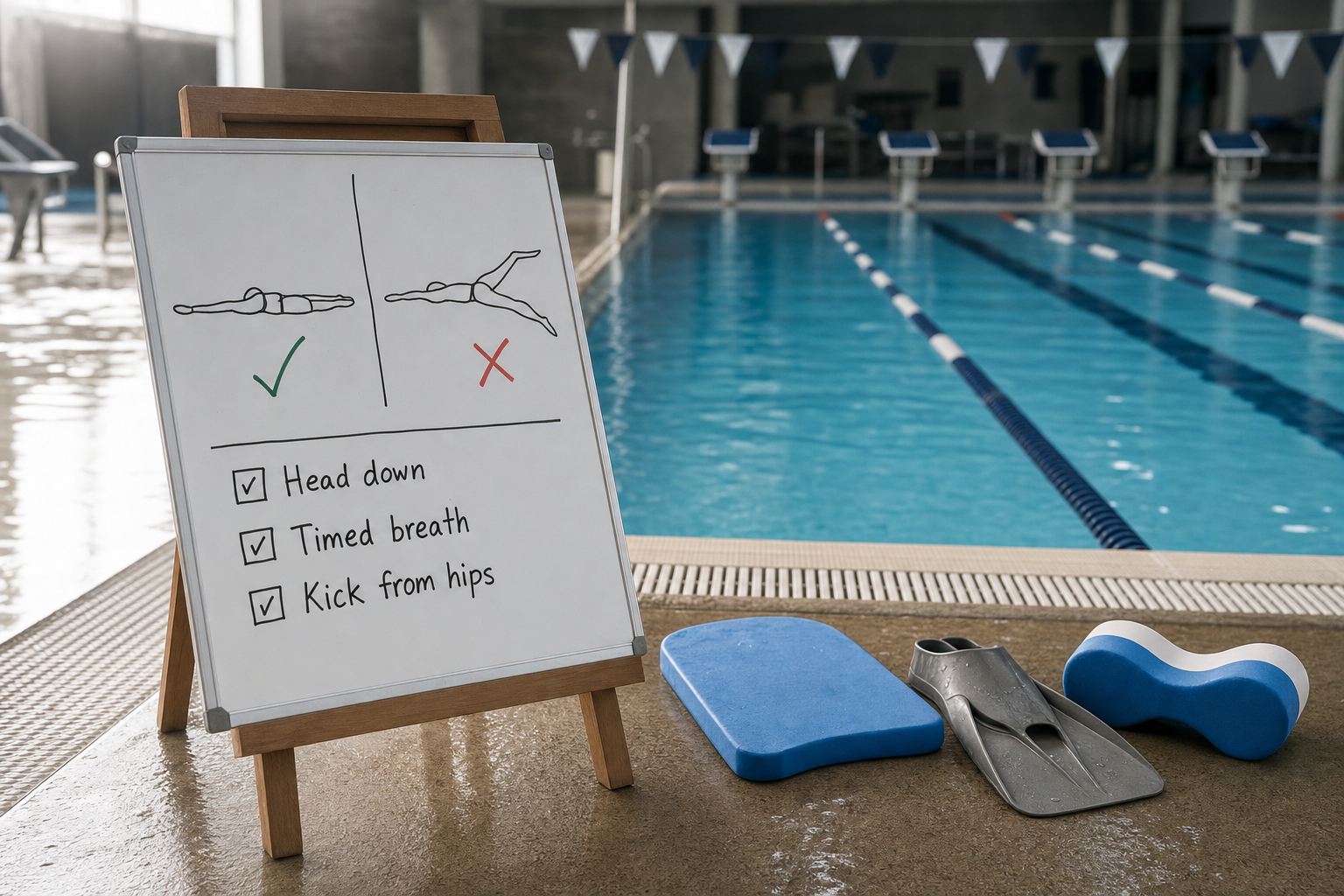
Some kids start to scissor kick because their hips are out of alignment—and often you’ll spot it in the video from the pool deck. Notice if your child’s legs split apart during freestyle or backstroke, or if their body twists sharply just as they turn to breathe. These are signs of head lift, late breathing, or body roll problems, all of which feed into that unwanted scissor kick. Let’s break down why this happens fast, how you check progress from the deck, and two playful alignment drills that really work for ages 6–12.
Why Scissor Kicks Appear: Head Lift, Breath Timing & Body Roll
Breathing late often forces kids to lift their head. When the head lifts, the hips sink. To compensate, legs try to split or move in a wide, scissoring motion to keep afloat. Video from the side will show hips dropping the moment breathing starts. If you see water spilling into your child’s face or ears when they breathe, that’s a red flag—head lift leading to dropped hips and a scissor kick.
Head lift often comes hand-in-hand with breath timing errors. If the child waits too long to turn for air—maybe as they’ve just finished pulling with one arm—they struggle to rotate their shoulders and hips in sync. In proper freestyle, shoulder roll, hip roll, and kick timing are linked. Skilled swimmers roll both shoulders and hips together, then kick strongly just after the hand enters the water. Unskilled kids often roll hips first, then shoulders, or delay the kick too long, which throws off balance and causes scissor-like leg splits. Studies show that late kicks and misaligned body roll lead directly to inefficient movement and scissor motion.
Locked or over-bent knees also exaggerate the problem. When knees are too bent, kick motion comes from the wrong place (knees instead of hips), legs fan apart, creating more drag. Relaxed ankles become floppy, toe points drop, and it’s all visible from pool deck video clips.
What “Good” Looks Like: Pool Deck Checks
Stand sideways on the deck and record a short video, from the moment your child pushes off the wall to about 5 strokes in freestyle or backstroke. Watch for:
Horizontal body line—in front view, head, spine, and hips should stay nearly level. From the side, hips should not drop.
Head position—eyes looking down (freestyle) or up (backstroke), chin tucked. No lifting forward.
Hip and shoulder roll—see shoulders roll first, hips follow. Strong beat kick comes just after arm entry.
Leg alignment—legs stay close together, only small bend at knees. Toes point, ankles loose. No wide splits.
If you want a structured way to help your child progress at home, the 10-Week Plan guides you step by step.
Make one change at a time (e.g. focus on breathing timing first). Short video sessions each week are enough to track real progress—within 2–3 weeks you’ll start seeing improvements if the drills are consistent.
Two Playful Alignment Drills to Fix Scissor Kicks
These drills are fun, age-appropriate, effective for fixing leg splitting and improving freestyle kick alignment. Each one focuses on hip-led kicking, relaxed ankles, and proper breath timing. Perfect for pool time with your 6–12 year old.
[[ctakid]]
Drill One: Streamline Side Kicks with Feathered Breaths
Cue: “Kick from your hips, toes pointed back, eyes down or up.” Child pushes off the wall in streamline (arms overhead, body tight), then rolls onto one side to kick. One arm extended forward, other along their side. They breathe only when that arm is up and shoulders rotate. Let them clear 3 kicks per side, switch sides. Use this drill for backstroke and freestyle. It forces head stays in line with spine, hips stay high, legs stay tight.
Drill Two: Seated Splash & Wall Push Kick
Seated side: Child sits on pool edge or shallow step with legs in water. They do flutter kicks: long from the hip, knees only slightly bent, trying to splash gently (to see movement) but not wildly. Cue: “Splash with control.”
Wall push-off: child pushes off the wall in streamline, then kicks while either vertical (holding wall with hands overhead) or on side. Important: toes pointed, ankles loose, knees under water. This drill reveals too much knee bend, too much leg spread—visible from deck video.
You can alternate these drills during swim practice; just 5 minutes each is enough to make a difference. If you want a structured way to help your child progress, the 10-Week Plan of swimy.org guides you step by step.
Drop Kickboard Overuse & Other Pitfalls
Kickboards feel helpful, but using them too much can harm alignment. When kids spend long stretches holding kickboards, they often tilt their hips, lock knees, and let head lift because the board supports their hands—not their core. Over time this teaches bad habits: scissor kicks from misaligned body, locked knees, weak ankles. Swim Coach Wiki notes that boards can distort natural streamline and body alignment.
Breathing late: waiting too long to turn for air drives all alignment flaws. A late breath causes head lift, sloppy body roll, uneven kick. Good breath timing (turning before arm enters, returning head before arm passes) keeps hips up and legs together.
Locked knees: full extension might look neat, but over-locking stiffens the leg. Kite-like movement at knees or bouncing kick sets the stage for split legs and extra drag. You want soft knee bend, kick powered from hip.
Fix Scissor Kick with Alignment: Putting It All Together
Start each swim session by warming with side kicks and streamline drills—these awaken hip awareness. Add in the Wall Push-Kick drill and Seated Splash early, before swimming full laps. Focus on one cue only (e.g., “head down” or “kick from hip”) so your child isn’t overwhelmed. After drills, swim short freestyle or backstroke while holding that cue. Record video every week to check hip line, leg split, knee bend.
Progress shows up when hips stay high, legs stay together, head stops lifting, breath comes just before arm entry, and body rotation becomes smoother. Most parents notice these changes after 2–3 focused sessions a week for a few weeks.
If you follow the cues for head alignment, breathing timing, hip-led kicking, and avoid too much board work, your child won’t just stop legs splitting—they’ll swim freestyle and backstroke cleaner, faster, and with more joy.
120+ swimming exercises sorted by age — with video and instructions. Developed by swim instructors, completely free.

120+ swimming exercises sorted by age — with video and instructions. Developed by swim instructors, completely free.