Lifeguard Whistles, Decoded: Teach Kids to Respond Fast at the Pool
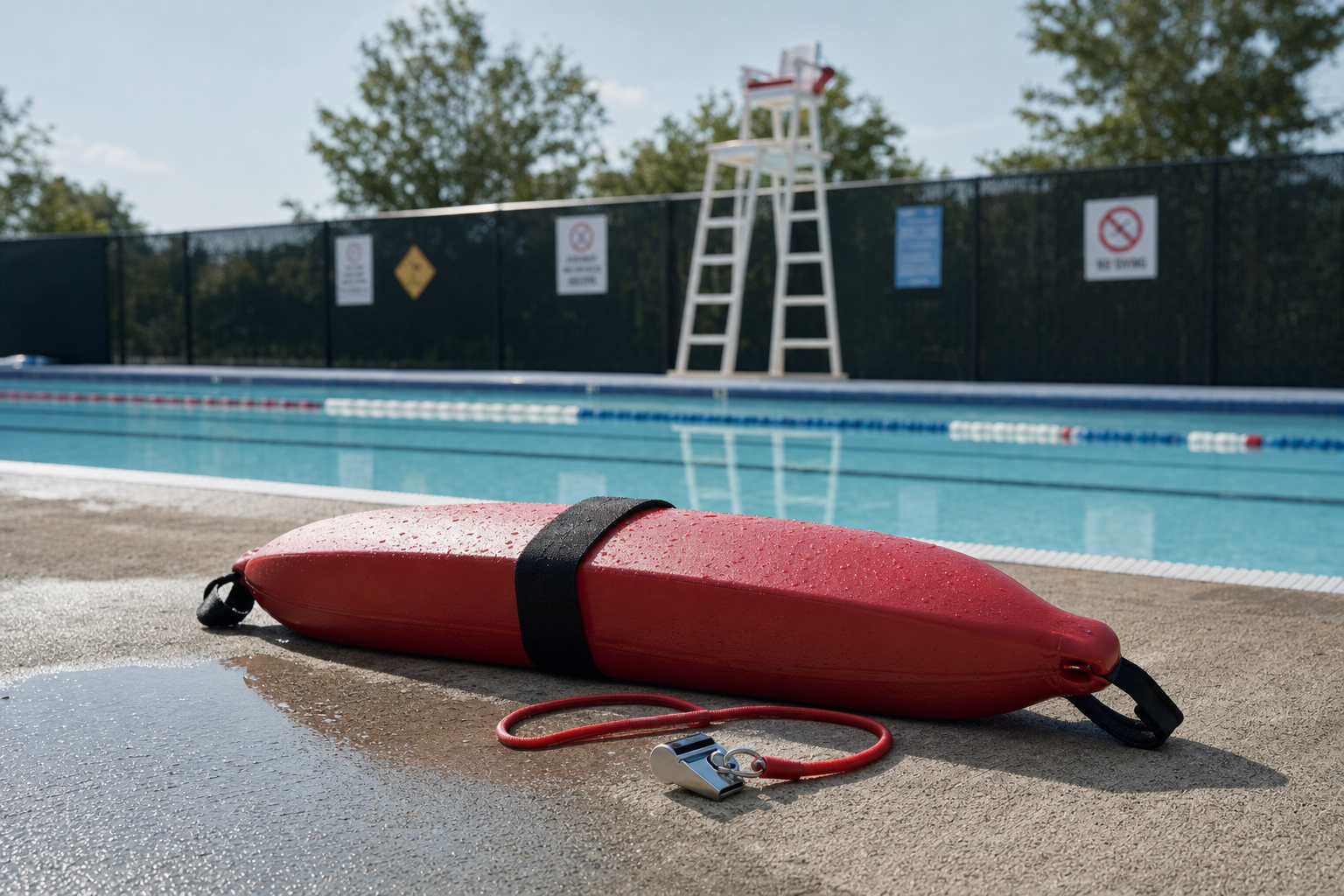
Every time a lifeguard blows a whistle, it’s more than just noise—it’s a command. For children ages 3–12, understanding the lifeguard whistle meaning and how to respond to pool emergency signals could save precious seconds. Here’s what parents need to teach their kids—and what to do if the signals at your pool are unfamiliar.
What Parents Need to Know Right Now
When your child hears a lifeguard whistle, there’s one rule that never changes: stop, look to the guard, and follow instructions immediately. No racing across the deck. No splashing over to see what’s happening. Kids shouldn’t try to guess or ignore a whistle—they must freeze and look at the lifeguard, waiting for verbal or gesture instructions. That simple, universal rule matters more than any specific whistle pattern.
Common Whistle Patterns and Their Usual Meanings
Different pools use slightly different codes, but many share patterns. Learning these will help your child react faster—and stay safer.
One Short Blast
Used to get attention. Could be directed at a single swimmer who’s breaking a rule, wandering out of safe zones, or ignoring lifeguard warnings. The child should stop what they’re doing and look directly at the lifeguard. (sanramon.ca.gov)
Two Short Blasts
Meant for lifeguard-to-lifeguard communication or to alert supervisors. This might also indicate a minor issue that requires guard attention, like someone who looks tired at poolside. Swimmers still need to pause and wait for guard instructions. (fcgov.com)
One Long Blast
This typically means “clear the pool”—for a break, for a serious problem (like pool fouling or major medical emergency), or when conditions are unsafe. Playtime stops now; everyone exits the water or stays out until the lifeguard gives the all-clear. (lifesaving.org)
Three Short Blasts (or a Series of Shorts)
Used in an emergency. Something important is happening—perhaps a rescue or serious incident. Everyone must stop, look to the guard, and comply. Sometimes this activates the pool’s Emergency Action Plan (EAP). (fcgov.com)
If you want a structured way to help your child progress at home, the 10-Week Plan guides you step by step.
Why Patterns Vary and Why It Matters
Assuming every facility follows the same whistle signals is risky. A pool in your town might use three short blasts for clearing the pool, while another might use one long blast. Even within one nation—US, UK, Australia—codes can differ depending on local regulations, staffing, facility age, or the organization in charge. Many lifeguard certification manuals emphasize that each facility must share its own pool emergency signals with patrons so everyone knows what to do. (lifesaving.org)
[[ctakid]]
Teaching Kids What to Do: Practice Makes Perfect
A great way to build confidence and habits is role play at home. Use a whistle (or use your voice) and pretend you’re a lifeguard. Signal “whistle,” and have your child immediately freeze, look at you, and wait for instruction. This mimics real pool situations.
Parents should also talk with staff at your local pool and ask directly: “What does each whistle mean here?” Then practice with your child what to do, so when “lifeguard whistle meaning” matters most, they’ll know.
If your child takes swimming lessons, try a structured program like the 10-Week Plan from swimy.org to build safety habits including listening to instructions quickly and confidently. Link such training with quiet drills about whistle response. Learning includes stops, focus on guard, following directions—just like in the plan.
Pitfalls: What Kids Often Get Wrong
Kids sometimes race toward the lifeguard or peer over railings to see what’s going on when they hear loud whistles. That’s dangerous. Running can cause slips, and being hyper-curious might get them in deeper water—or deeper trouble.
Another issue: ignoring whistle warnings because they’ve heard a whistle before and nothing serious happened. That reduces trust. That’s why your rule (stop, look, follow instructions) is so important—to reinforce that every whistle matters, no matter the pattern.
Six Key Actions Parents Should Take
At poolside, between swim lessons, or at home:
- Ask the lifeguard each pool’s whistle codes.
- Teach your kids: stop, look to the guard, and follow instructions immediately.
- Practice with “freeze drills” where you pretend and practice the rule.
- Role-model respect—when you hear a whistle, stop what you’re doing, look, listen.
- Reinforce that whistles are signals, not games.
- Praise calm, obedient responses so kids see this as powerful, not scary.
Final Takeaway
The lifeguard whistle meaning may differ from one pool to another—but the one rule you teach your child should never change: when that whistle blows, stop what they’re doing, look toward the guard, and follow instructions right away. It might feel like just sound, but for safety, it’s so much more. Encourage your kids; role-play often; and always ask your pool what each whistle pattern means.
That clarity could make all the difference if a pool emergency arises.
120+ swimming exercises sorted by age — with video and instructions. Developed by swim instructors, completely free.

120+ swimming exercises sorted by age — with video and instructions. Developed by swim instructors, completely free.