Baby Swim Benefits Beyond Swimming: What Lessons Deliver at 0–36 Months
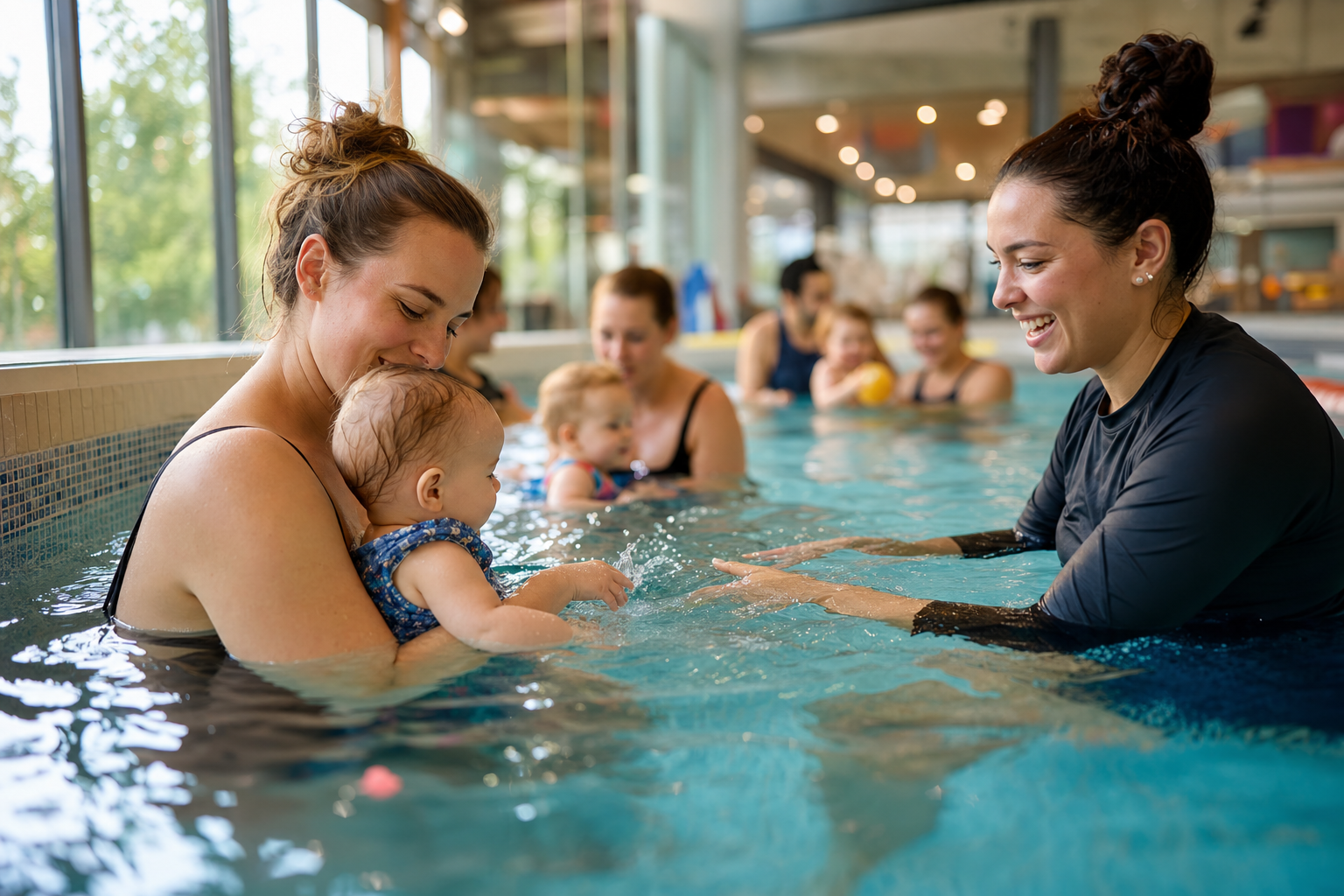
Parents often ask, “Are baby swim lessons worth it?” especially when their infant isn’t swimming independently. The truth is, for babies aged 0–36 months, these classes aren’t about mastering strokes. Instead, they offer huge benefits in water comfort, bonding, body awareness, and helping parents develop safety skills. Let’s dive into what realistic outcomes to expect at each age without believing these lessons make a baby “drown-proof.”
What the Experts Say: When Lessons Really Kick In
According to the American Academy of Pediatrics (AAP), formal swim lessons can begin for many children starting at age 1. While under-1 programmes can be fun and helpful, there is no scientific evidence that infant swim lessons reduce drowning risk until after the first birthday.(healthychildren.org)
For ages 1-4, however, swim lessons become an important layer of protection. These children can start learning water survival skills like back floating, getting to safety, or reaching the pool edge. The AAP stresses that lessons alone are not enough—constant adult supervision and safe boundaries are equally critical.(publications.aap.org)
Realistic Outcomes by Age: 0–12, 12–24, 24–36 Months
Young Infants (0-12 months)
Baby swimming and aquatic therapy studies show clear gains in motor development even among infants as young as 3-6 months — improvements in reaching, grasping, rolling, kicking. But cognitive skills like swimming effectively or surviving if they fall into water? Not reliably achieved during this age.(pmc.ncbi.nlm.nih.gov)
These classes are fantastic for getting your baby used to being in water, improving body awareness, breathing out gently when splashed, and growing comfortable with the feel, temperature, and sound of water. It’s about minimizing fear, not about survival training before your baby can safely control their head or hold themselves in water.(scienceinsights.org)
Toddlers (12-24 months)
From age 1, babies can begin learning more structured skills—it might be floating with support, reaching for pool edges, and listening to simple instructions. You’ll notice increased strength, coordination, and perhaps tiny water habits like kicking or small paddles. Still, full strokes or solo swimming aren’t realistic until later.(healthychildren.org)
Older Toddlers (24-36 months)
Between 2 and 3 years, many children become more physically able and emotionally ready for formal swim strokes, treading water, and better flotation techniques. Their brain development supports following directions better and remembering what they've been taught. Skills continue to build gradually.(healthychildren.org)
Around 50-60% of your baby swim journey happens in those early stage classes—water play, floating, tactile experiences. Later, structured lessons build on that foundation. If you try something like the 10-Week Plan offered by swimy.org, you can follow a progression that nurtures comfort first, then basic water skills. That helps avoid rushing into techniques too early and supports gradual confidence. (Here’s the 10-Week Plan for reference) https://www.swimy.org/10-week-plan
[[ctababy]]
Benefits Beyond Swimming
Water Comfort & Body Awareness
Regular time in warm, gentle water helps babies learn about balance, buoyancy, movement with support. It’s like a sensory playground—arms and legs moving, feeling water resistance, hearing water sounds. These early experiences are closely tied to improvements in visual-motion perception, gross and fine motor skills in infants. For example, a recent systematic review showed that baby swimming between 0–36 months is linked to better overall motor development and cognitive flexibility.(pmc.ncbi.nlm.nih.gov)
Bonding and Emotional Safe Space
When parent and baby are together in water, skin-to-skin contact, eye contact, trust build in a special way. Class times become moments of warmth, consistency, snuggles and praise. Even studies observe that these sessions are not focused on teaching swimming, but rather on social-emotional interaction, games, songs—all of which strengthen bonding.(healthline.com)
Parent Skills & Water Safety Awareness
Classes for babies are as much for parents as little ones. You learn how to support safely, stay calm, react when baby slips or gets startled. You’ll practice supervising, recognizing signs of fatigue or cold, entering and exiting safely. The AAP makes this clear: even after lessons, parents should supervise constantly and never assume skills equal safety.(healthychildren.org)
Where Swim Lessons Fit into Your Baby’s First Three Years
Why Some Parents Feel Lessons Aren’t “Worth It”
Often because expectations don’t match reality. If you expect an infant to swim like a toddler, you’ll feel disappointed. Also, fees, travel to the pool, getting babies dressed, wet, cold etc. add time and stress. Plus, some classes use too much emphasis on performance instead of comfort.
Still, many parents say that what they did get were priceless: a baby who isn’t afraid of water, who loves splashing, who sleeps well afterward, stronger coordination, and a parent who feels more confident and not panicked near pools or even bathtubs. Those “side-benefits” can justify the time and cost, especially when you view lessons not as lifesaving guarantees, but as part of a layered safety and development plan.
Bottom Line: Are Baby Swim Lessons Worth It?
Baby swim lessons aren’t ticket to drowning-proofing your infant. But beyond swimming, they are worth it for:
- building water comfort and early body awareness;
- strengthening parent-baby bonding and emotional security;
- teaching parents vital safety behaviors;
- supporting motor, visual, and cognitive development in babies and toddlers aged 0–36 months.
If you're realistic about goals—comfort before skills, gradual progress, plenty of parent involvement—then classes can be a wonderful investment for your child’s growth, confidence, and your peace of mind. Always pair lessons with strong supervision and other safety steps: fences, life jackets, watching the water, staying present. That’s where the real value lies.
120+ swimming exercises sorted by age — with video and instructions. Developed by swim instructors, completely free.

120+ swimming exercises sorted by age — with video and instructions. Developed by swim instructors, completely free.