Math Splash: Times‑Tables Laps for Ages 6–10
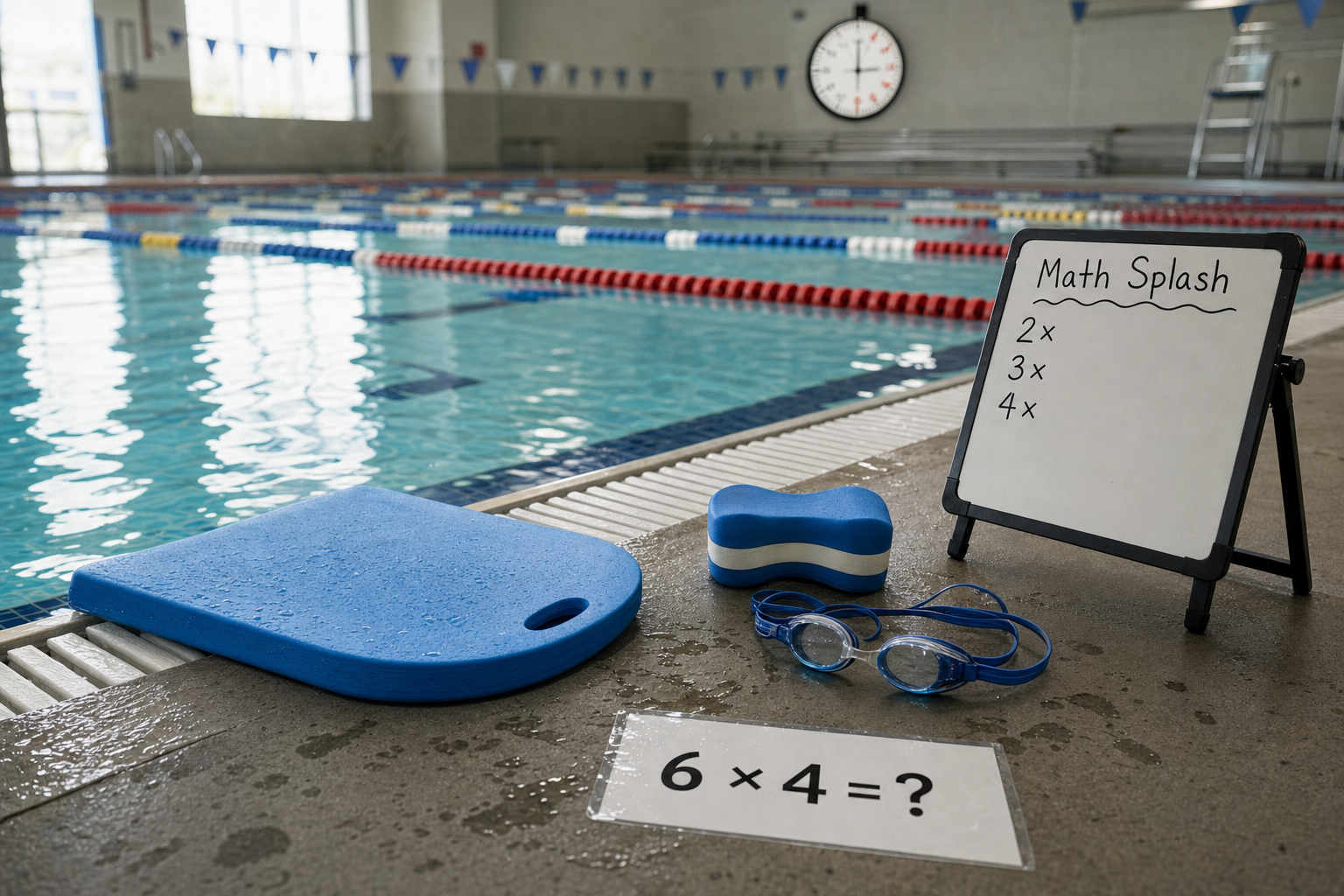
Do you want a fun, effective way to combine times-tables practice with swim fun for kids aged 6-10? Math Splash makes mental math into pacing fun by letting children answer a times-table question, then swim that number of strokes or seconds of kick. It sharpens focus, builds breath control, and improves steady effort—all while splashing around and laughing.
Why This Drill Works Best for Ages 6-10
Kids aged 6-10 are solidly in primary school, mastering 2s-12s multiplication. Their minds are ready to hold a simple math fact, then act on it physically. After answering, they swim a short burst—perhaps doing six freestyle strokes for 6×4 or kicking for 8 seconds for 2×4. That moment between thinking and doing builds concentration. Doing it in water adds resistance and rhythm, which help breath control. Short, repeated bursts avoid exhaustion or long holds. This matches what Swim Ireland recommends: introduce breath control gradually, under supervision, with structured, brief efforts.(swimireland.ie)
How to Set It Up: Turn Mental Math into Splashing Action
Start your Math Splash session after a light warm-up: easy freestyle, side kicking, breathing drills. Then the core game: parent or coach asks a multiplication question. The child responds and then immediately swims the number as strokes or kicks. Rest time should be short but cheerful—say 15–30 seconds. Over the school term, you can raise difficulty by using higher tables, more strokes, or adding a tiny bit of speed. To plan this, many parents follow something like the 10-Week Plan from swimy.org, which helps scale difficulty week-by-week while balancing challenge and rest. Always maintain fun.
Safety matters: never encourage long breath holds or underwater swimming without supervision. Breathing every 3-5 strokes can be helpful but only if the child is comfortable. Teach them to listen to their body, rest when needed. According to guidelines from Swim Ireland and U.S. Masters Swimming, breath control should always be done under qualified supervision and introduced gradually.(swimireland.ie)
Scaling Difficulty: What Parents Can Do
For a 6-year-old just getting confident with 2×, 3×, start with times-tables up to 5 and choose small numbers like 2-5 strokes. For kids aged 9-10 working on all tables up to 12×, you can ask harder questions and expect longer swimming bursts—maybe answer 12×8 then do 96 seconds of kicking. But always match what their arms and lungs can safely do. Keep rest cheerfully consistent. Use calmer breathing drills in warm-ups and occasionally in cool-downs so that breathing every 3-5 strokes feels natural, not forced.
If you want a structured way to help your child progress at home, the 10-Week Plan guides you step by step.
Sample Session Over a School Term
Over a term (about 10-12 weeks), you might follow a plan similar to swimy.org’s 10-Week Plan. In Week 1, focus on simple questions, strokes only, lots of rest. By Week 5, introduce seconds of kick, mix in breathing every few strokes. Into Week 8-10, include harder tables, more continuous bursts, but still keep rest short and fun. Always supervise, encourage slow, steady effort rather than sprinting each rep.
[[ctakid]]
Breathing & Focus: Experts’ Tips
Begin every session with easy breath-control drills: bobbing, blowing bubbles, submersion under guided control. These build lung comfort. U.S. Masters Swimming says always teach steady exhalation and inhale when needed; avoid holding breath too long or forcing underwater holds.(usms.org)
Let pacing grow naturally. Swimming games for kids 6-10 thrive when the goal is consistency—not racing each repetition. If they race, breathing gets shallow, technique breaks down.
Keep sets short. A few reps—say six to eight multiplication questions/swim bursts—are enough in one session. Then move to easier games or free play so energy stays high.
Avoiding Common Pitfalls
One big danger is encouraging kids to hyperventilate or hold their breath underwater to beat a number. That’s risky. According to health and safety guidelines, breath hold training is inappropriate for young, recreational swimmers without supervision.(ausport.gov.au) Another issue: racing every rep kills the steady effort and breath control you want. Instead of pushing speed, focus on smooth strokes, clean form, consistent breathing.
Also avoid burnout: those long, hard drills should be rare or optional. Your goal is learning and confidence, not exhaustion. Schools and swimming clubs often teach skills like breath control, buoyancy, basic strokes before moving toward performance.(rizzlersports.com)
Fun Twists & Keeping It Enjoyable
Mix up the pool game: after correct answers kids can choose the stroke, or swim while holding a toy or ring. Sometimes turn rest into mini trivia—ask multiplication facts while walking on pool deck. Celebrate correct answers with high-fives or pool cheers. For school-term consistency, set a goal: maybe by end of term, move from answering 6× to answering up to 12× correctly for all laps.
Final Thoughts
Math Splash mixes multiplication practice with swimming drills to improve focus, breath control, and steady effort in a way that feels like a game. Parents who keep sets short, rest cheerful, and breathing safe will see kids aged 6-10 grow in confidence both in math and in the water. As the school term progresses, difficulty can increase—but never at the expense of safety, enjoyment, or proper breathing. This is swimming games for kids 6-10 done right: fun pool drills learning that build more than fast laps.
120+ swimming exercises sorted by age — with video and instructions. Developed by swim instructors, completely free.

120+ swimming exercises sorted by age — with video and instructions. Developed by swim instructors, completely free.