Swim-Meet Warm-Ups: Safety and Etiquette for Ages 8–12
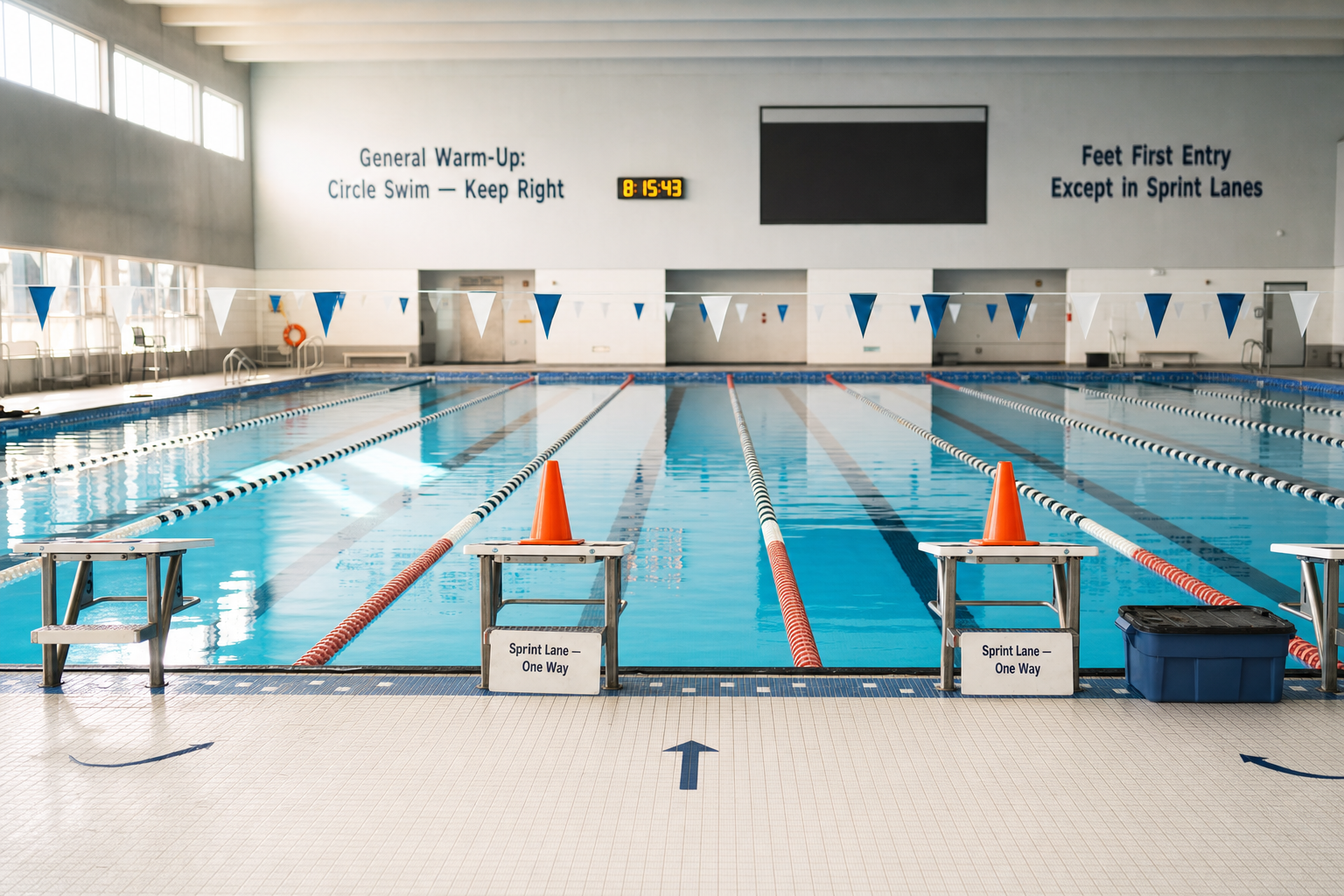
The minute your 8- to 12-year-old steps onto deck for their first swim meet warm up, you want them to be safe, polite, and ready to race. Key rules about circle-swim flow, sprint lanes, where starts are allowed, and how parents can coach ahead can make all the difference. Here’s exactly what your child (and you) needs to know right now.
What Happens in a First Swim Meet Warm-Up
Warm ups before a meet give kids time to stretch, get the heart pumping, test the water, practice starts if allowed, and get used to the pool. According to USA Swimming-approved procedures, general warm-ups begin with circle swimming in all lanes. Diving or racing starts are not allowed yet. (resources.fina.org) After some time, usually around 30-40 minutes in, meet officials or the referee will open “sprint lanes”—often lanes 2 and 5 in a 6-lane pool, 2 and 7 in an 8-lane pool—for one-way sprint work and starts. (miswim.org)
Circle-swim lanes are always shared by multiple swimmers. The flow is anti-clockwise, meaning swimmers stay to the right side of the lane (from their own view), so you don’t crash into someone coming the opposite way. (resources.fina.org) Backstroke in sprint lanes is only allowed where starts are permitted—and only under supervision and with clear rules about block use. Lanes designated for sprint lanes are the only spots where diving off blocks or doing backstroke starts are permitted. (miswim.org)
Common Pitfalls to Watch Out For
In the rush, 8- to 12-year-olds (and parents!) can unintentionally break rules. One big mistake is stopping mid-lane, especially in circle-swim lanes, blocking swimmers behind you. If your child needs to rest, they should pull over to the wall or ladder where they don’t interfere. Diving into non-start lanes also causes danger; kids should avoid drop-ins unless it’s the sprint lane when diving is officially allowed. Gear sprawled on deck like fins, hand paddles, or kickboards in unexpected areas can trip people up or block exits. Some meets ban hand paddles entirely during warm-ups since they pose a safety risk to others. (swimmingworldmagazine.com)
How Parents Can Brief Kids Before the Meet
You, as a parent, are the first coach your child listens to when they arrive. Before the meet:
Explain to them what a heat sheet is and what check-in means. The heat sheet shows their event, heat, and lane. Check-in means confirming your attendance for the event. Club guides like those at USA Swimming or others often include heat sheets and check-in info in their “How to Prepare.” (usms.org) Make sure your swimmer has these printed or saved on the phone.
If you want a structured way to help your child progress at home, the 10-Week Plan guides you step by step.
Teach them the meaning of “circle swim” (always going in the same direction unless told otherwise), “sprint lane” (one way, for starts), and “general warm up” versus “specific warm up”. Practice dry-land examples: stand facing one side, pretend you’re swimming slowly away, then faster in a straight line, so they know what to do when sprint lanes open. You can even follow a program like the swipe in the “10-Week Plan” of swimy.org for building practice skills and understanding of swim meet flow.
Remind them of safety basics: feet first entry unless in a designated sprint lane, always watch for other swimmers before entering the lane, don’t stop mid-lane, keep the walls and block areas clear, be polite if someone needs to pass, stash gear neatly, listen for instructions from coaches or deck officials.
[[ctakid]]
Rules You’ll See at Your Local Meets (Peak Season May-Aug, Winter Invites)
When meets are busiest—summer meets (May through August) and winter invites—pool decks and lanes fill fast. Meet management follows specific guidelines to keep everything moving smoothly. For ages 12 & under, meet rules often require separate assigned general warm up lanes for teams, with outside lanes reserved for pace or push work once sprint lanes are opened. (socalswim.org) Starts may only happen when sprint lanes are opened and must be done from the blocks in those lanes. Backstroke starts also only in those lanes, and the swimmer on the block must step back to avoid interfering if a backstroker is behind them. (socalswim.org) Also, meets often designate all fences, no diving signs, safety marshals, and lifeguards to enforce the rules. Pool decks should stay clear of equipment and bags, especially near block areas and exit points. (swimoregon.org)
When It’s Go Time: Starts, Sprint Lanes & Being Race-Ready
Once sprint lanes are open, your child may get to practice starts or possibly do a backstroke start. In that lane, everything changes: the lane becomes one way, from the starting blocks towards the far end; at the far wall, the swimmer must exit so others can start. Make sure your child understands they should never dive or put feet first entry in non-sprint lanes. If lanes are marked for backstroke starts, blocks are often arranged, and backstroke wedges or bar holds may be in use. Officials usually mark the sprint lane(s) clearly with signs and sometimes cones or cones on the blocks. (miswim.org)
Actionable Tips to Stay Safe, Polite & Peak Prepared
Talk through this checklist with your child ahead of arriving. First, get there early: have the heat sheet in hand, know where the team area is, suit on, goggles, cap on. Arrive 20-30 minutes before warm-ups to get your body ready. Use dynamic stretches on deck before entering the water. During warm up, pick a lane with swimmers of a similar speed. If it feels crowded, find one that’s calmer or share with others. Never use hand paddles unless meet rules allow them—and when in doubt, leave them out. When sprint time comes, only use the designated lanes, and always obey the whistles and instructions. Encourage your child to listen to their coach or safety marshal—those grown-ups are there to keep everyone safe. Finally, after the warm-up, have a shot at a light cool-down or get in a warm-up set close to when your event is starting to stay loose and mentally ready.
Why All This Matters
Good warm-up safety and etiquette aren’t just rules—they shape a child’s experience. When kids follow circle swim flow, avoid diving where it isn’t allowed, keep gear tucked away, and respect pace and sprint lane changes, they reduce risk of injury, avoid embarrassing shout-downs, and stay mentally sharp for races. Besides, teams host meets with heat sheets and check-in precisely so that everyone stays organized, so learning these norms early helps make every meet smoother and friendlier.
When your 8- to 12-year-old shows up knowing what to expect, they’ll be safer, more confident, and ready to focus on racing—not worrying about where to tread water or avoiding traffic in the lanes. That’s how first swim meet warm ups turn into great performances and happy memories.
By helping your swimmer master swim meet etiquette, especially around warm ups, you set them up not only for stronger races, but for better sportsmanship, confidence, and long-term enjoyment of the sport.
120+ swimming exercises sorted by age — with video and instructions. Developed by swim instructors, completely free.

120+ swimming exercises sorted by age — with video and instructions. Developed by swim instructors, completely free.