Switching Baby Swim Schools Without Starting Over: A Parent’s Guide
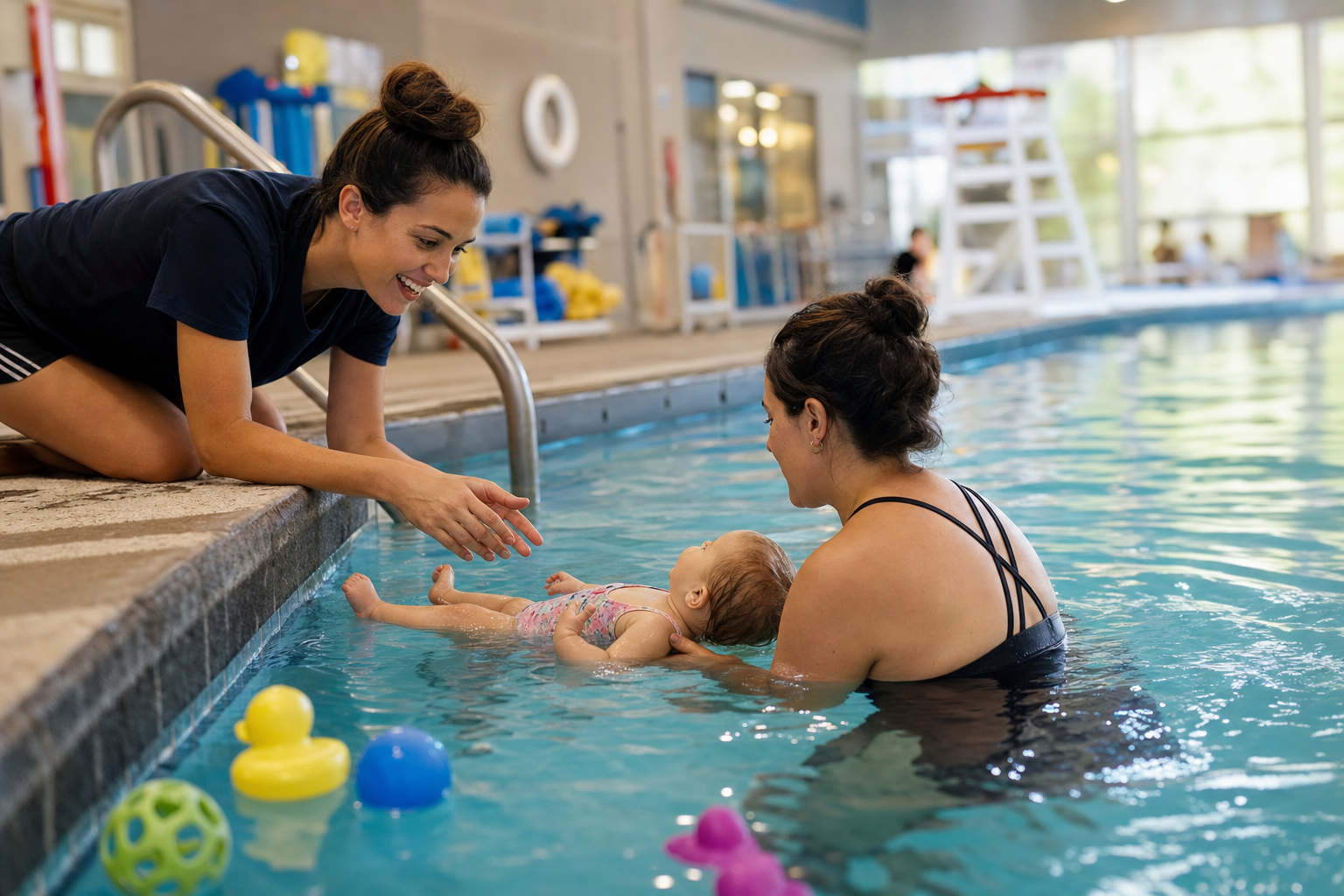
If you’re thinking about switching baby swim schools—from ages 6 to 36 months—because of schedule, cost, style or safety, you don’t have to worry that all your child’s hard-earned baby swim lesson progress will disappear. With a clear transfer plan, you can smoothly shift from one program to another and build on what’s already been achieved. Here’s how to do it right.
Capture the Skills Your Baby Has Gained
First, make a detailed record of every skill your child has mastered and those they’re still working on. This means documenting floating (on front and back), blowing bubbles, putting face under water, basic kicking, submersion comfort, water entry, and exits. Ask the current instructor for a written assessment or use tools like a swim-ability questionnaire to list the child’s strengths and challenges. This gives you concrete language that the new instructor will understand and appreciate.
Also, share your child’s “cue words” or routines. If they respond to “bubbles,” “face in,” or “jump,” make sure you pass those exact phrases along. It helps prevent confusion and gives your baby confidence in familiar signals.
Observe a Class at the New School Before Committing
Before you pull the trigger on changing toddler swim lessons, watch a trial or open class at the new school. See how teachers interact with kids, how much supervision there is, whether cue words or rituals look consistent and gentle. Watch out for anything that feels rushed or unsafe. Research and industry guidelines warn against forced submersion and weak supervision, practices that may cause distress or even trauma in babies and toddlers. The STA’s policies urge that submersion must be “with” a baby—not “to” them—and only when they show obvious readiness to avoid fear and give them control. (sta.co.uk)
Make sure the new school’s levels aren’t just renamed versions of your current ones. Many schools label rooms or “levels” differently: one “Level 2” may be another school’s “Pre-kick” class. Aim for comparison by skills achieved rather than titles.
Plan for a Short Adjustment Phase
Switching programs will usually mean a small, temporary lull in progress. Babies between 6 and 36 months may take a few lessons—often three to five sessions—to adapt to new cues, new teacher voices, pool routines. According to infant aquatic-learning experts, this curve of discomfort is normal and often peaks around lessons three through five. After that, most children settle and progress resumes. (swimkidsutah.com) If your child seems more worried or regresses beyond that point, it’s worth addressing with the teacher rather than pushing it through silence.
If you want a structured way to build water confidence at home, the 10-Week Plan guides you step by step.
To make this easier, use structured refresher sessions if possible—things that revisit floating or bubble-blowing in a low-pressure setting. In some swim schools, refreshers or maintenance lessons help little ones regain confidence fast. (kinderswim.com)
Around midway in the transition, consider using a plan like the 10-Week Plan of swimy.org which promotes gradual exposure, consistency, and shared goals so that you can track progress over time rather than measuring against rigid level names.
[[ctababy]]
Avoid These Common Pitfalls
Don’t assume that routines or level names line up exactly between schools. What one calls “Starfish Level 1” might be another’s “Parent & Toddler Basic Splash.” Instead, compare by the actual skills. Misaligned expectations lead to frustration—for both parent and baby.
Don’t skip talking to the new instructor about previous cues or triggers. If your child has anxiety around water being poured on their head, or had a negative experience, tell them. That transparency ensures they’ll go slow, use gentle encouragement, and avoid recreating discomfort. Birthlight and STA both emphasize that babies show readiness through cues, and forced submersion or ignoring distress is against best practices. (sta.co.uk)
Never stay with a program that dismisses obvious distress, uses forced submersion, or relies on weak supervision simply because it’s “just for now.” The RLSS UK industry report warns that so-called “drown-proofing” methods—that force babies to float or roll over without consent—can do harm. (rlss.org.uk) Safety isn’t negotiable.
Reassurance for Parents Who Worry Progress Will Vanish
Here’s what many miss: swimming skills at this age aren’t binary. Kids don’t “lose everything” when changing schools. They might pause or hesitate while they adjust to new faces, but muscle memory, breath patterns, and confidence carry through. When you reuse familiar cue words and give them reminders, that boosts trust. Many parents find their toddler regains poise within two or three sessions once the environment feels predictable.
Also, many programs build in refreshers or maintenance weeks—touchpoints that allow growth even when levels aren’t officially changing. That steady reinforcement matters more than moving from Level 1 to Level 2 fast.
Checklist Before You Make the Change
Make a short list: skills your child has in, skills in progress, known triggers, favorite cues, pace at which they like things introduced. Sit down with both the old and new instructor and compare that list so nothing important gets lost. Observe class once before committing, and allow about a month to feel settled. If safety concerns appear at any point—forced submersions, unsafe ratios—don’t ignore them.
Switching baby swim schools doesn’t have to mean restarting—not when you plan ahead, communicate clearly, and protect your child’s comfort and safety. With thoughtful steps, your baby can continue thriving in the water—even as circumstances change.
120+ swimming exercises sorted by age — with video and instructions. Developed by swim instructors, completely free.

120+ swimming exercises sorted by age — with video and instructions. Developed by swim instructors, completely free.