Two-Minute Water Scan Before Baby Swim Class: A Parent’s Safety Checklist
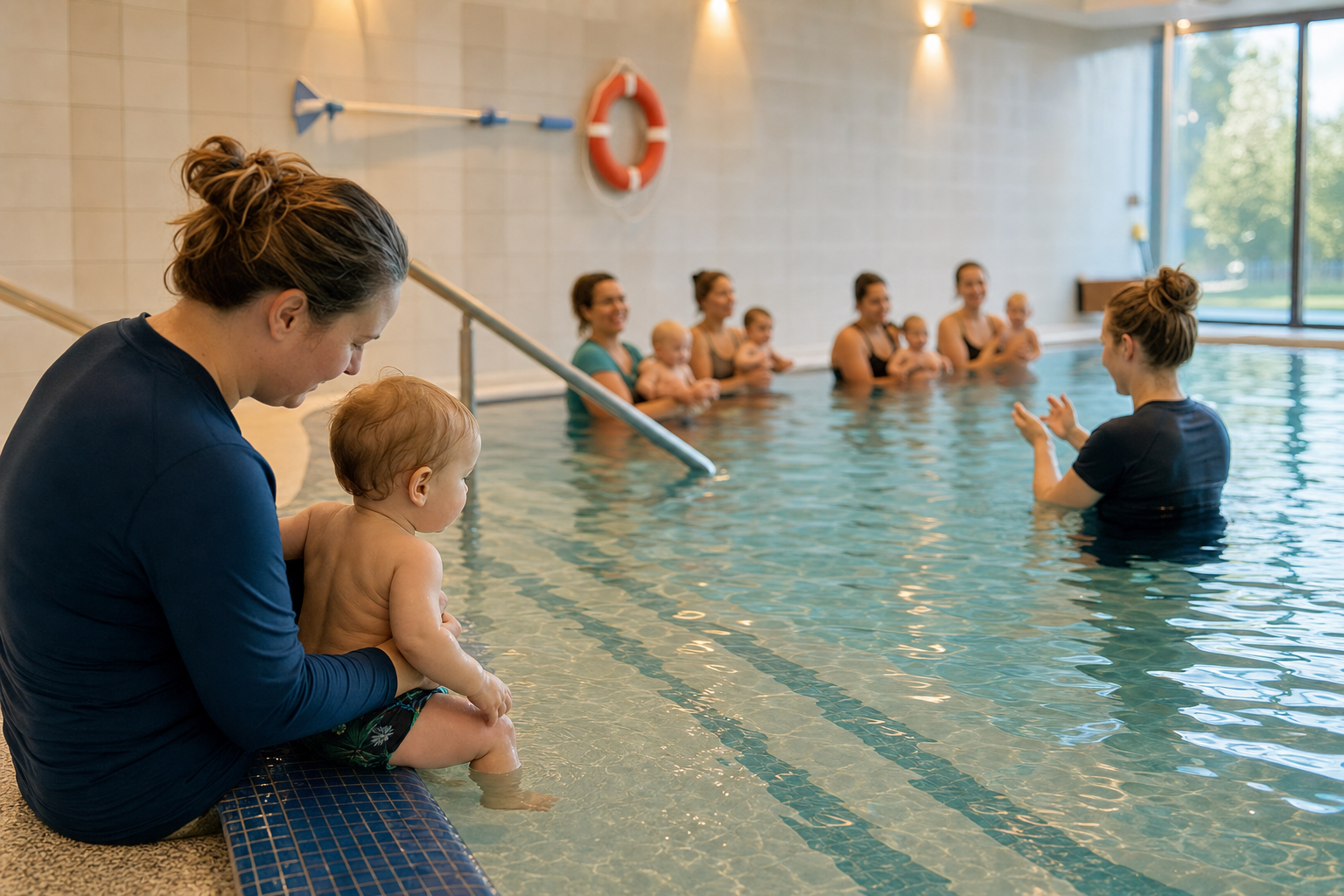
You arrive excited for your baby’s class—now pause for two minutes. This quick scan before stepping into the pool could make all the difference in safety. Below is a baby swim safety checklist you can use before every swim lesson with your 0–36 month old. These are things you can see and decide fast: water clarity, crowding, exits, teacher position, rescue equipment, and where you will stand. Your child benefits because hazards are spotted before the excitement and noise take over. You build a repeatable safety habit—not just for their first lesson, but every time.
Before the Lesson Starts: What to Look For
Water Clarity & Temperature
Check if the water is clear enough to see the bottom. If it’s cloudy or murky, it’s much harder to spot trouble—slips, objects, even a child in distress. The American Academy of Pediatrics (AAP) says young children swallow more water and may breathe in splashes, so water quality matters. Also check the temperature: for babies and toddlers under age three, ideal water is about 87–94°F so they stay warm and happy. (healthychildren.org)
Crowding, Teacher Position & Spacing
Notice how many children are in the water with one instructor. If there are too many, or too few hands on deck, safety drops fast. The teacher’s position matters: is the instructor able to watch all the kids? Can they reach each child quickly? During class, distractions happen—noise, splash, laughter—and supervision that’s “close, constant, attentive, competent” helps protect toddlers according to the AAP. (publications.aap.org)
Critical Exits & Rescue Equipment
Locate the exits—the steps, ramps, gates. Make sure they are safe and easy to reach. Then spot rescue equipment: life rings, reaching poles, floats. Are they clearly visible and within reach? These are layers of drowning prevention which the AAP now strongly recommends along with lessons and supervision. (publications.aap.org)
If you want a structured way to build water confidence at home, the 10-Week Plan guides you step by step.
Your Stand Point: Where You’ll Be & How You’ll Supervise
Decide where you will stand or sit. Will you be in arm’s reach? Out of the water but able to see everything? If infants are involved, “touch supervision” is considered ideal—holding or nearly holding baby, being within arms reach. If you’re farther back, you may lose the chance to intervene fast. Also plan to put away phones and stay alert—supervisors distracted lose precious seconds. (publications.aap.org)
[[ctababy]]
Midpoint Habit for Every Lesson
These points above become automatic with practice. Many parents focus on choosing a class or lesson type—but interim safety checks like these are just as essential. According to HealthyChildren.org, you should look for programs for children under four that provide water purity, warm water, parent participation, and age-appropriate atmosphere—not just stroke instruction. (healthychildren.org)
Around this stage, you may also see programs like the 10-Week Plan by swimy.org used by swim schools to guide early lessons over time. The 10-Week Plan helps parents understand not only skill-building but safety routines that reinforce what the AAP calls “water competency” for both child and caregiver. Incorporating such structured plans gives you clear reference points week by week.
Why This Matters: Hazards That Hide in the Excitement
When the lesson begins, noise and splash distract both children and caregivers. If the water is murky, you miss objects or uneven pool floor. If exits are blocked, leaving becomes unsafe. Overcrowded classes stretch teachers thin. Without rescue gear, every second counts. And if you don’t know where you’ll stand or how quickly you can move, intervention may be slower. All these issues may feel minor—but for babies and toddlers, they can escalate fast.
What to Do If Something Doesn’t Look Safe
If you notice anything off—cloudy water, poor supervision (teacher can’t see everything), unsafe exit, missing rescue gear—pause. Don’t bring your child in until you’ve asked staff. Ask questions: “Can you clear up the water?” “How many children per instructor today?” “Where is the rescue equipment?” AAP guidelines push layered protection: swim lessons help, but supervision, life jacket use, rescue equipment, and safe environment are all needed together. (publications.aap.org)
Final Thoughts: A Habit That Helps Every Time
You’re doing more than ensuring a safe first swim. You’re building a habit. Before every lesson—first or thirty-first—do your two-minute scan. Let it become as routine as packing swim nappy, hat, or towel. Your child learns that water can be fun—but safety comes first. With time, you’ll spot problems earlier, ask better questions, and be confident in knowing when conditions are right. A safe water start means endless swim smiles ahead.
120+ swimming exercises sorted by age — with video and instructions. Developed by swim instructors, completely free.

120+ swimming exercises sorted by age — with video and instructions. Developed by swim instructors, completely free.