
Tunnel Diving
The child dives through one or more underwater tunnels using arm and leg propulsion. Pushing off from the wall is not allowed. The child must first reach the required depth, maintain it briefly, and then move forward at that depth before surfacing. The exercise can be adjusted by adding additional tunnels or increasing the distance between them. This exercise primarily trains the core elements of breathing and propulsion.

Preparatory exercises

Slalom diving
Three offset underwater hoops are placed about one and a half meters apart in roughly chest-deep water. The child dives through all three in a slalom pattern in a single dive, without breathing between hoops; arms and legs may be used freely. This trains the underwater directional changes needed to reach the offset hoops.

Up and down
The child alternates between diving to the bottom and returning to the surface, hands at the sides, propulsion mainly from the legs, direction controlled by the position of the upper body. Make sure the child performs the necessary pressure equalization. This teaches controlling depth underwater through correct upper-body posture.
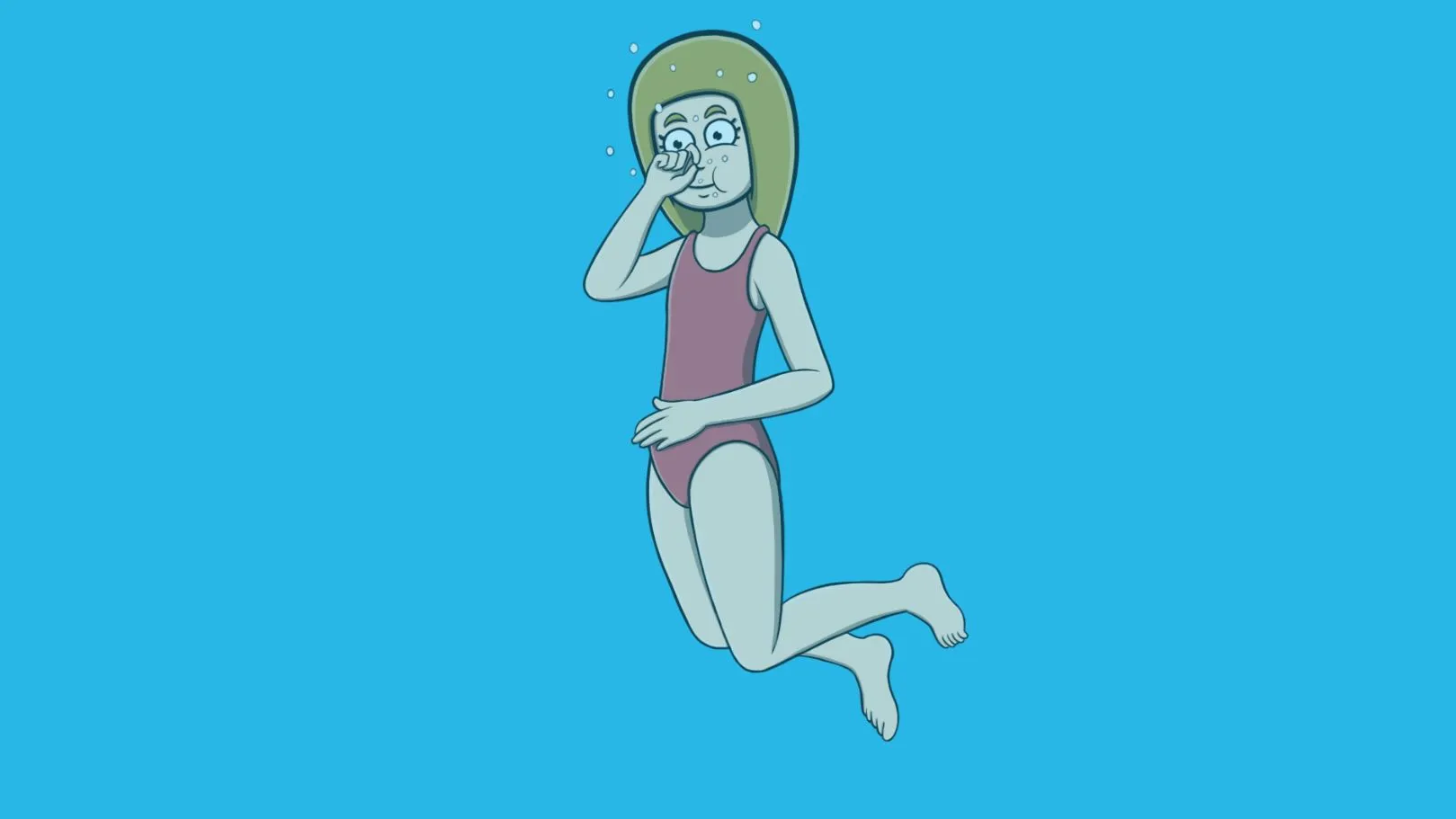
Pressure equalization
The child dives headfirst to about 1.5 meters. As soon as they feel pressure in their ears, they hold their nose and blow gently through it to equalize. Demonstrate the equalization on land first. Important: water pressure increases with depth, and around 1.5 meters it becomes uncomfortable — equalizing must be performed to prevent the pressure from causing serious ear injury.

Jump jack diving
The child does ten jumping jacks at the pool edge, jumps headfirst into the water and dives as far as possible; diving rings can be collected as motivation. The elevated pulse increases oxygen consumption and the urge to breathe — exactly what this exercise trains: diving with an increased heart rate.

Water arrow to submarine
The child pushes off the surface of the water and does not glide along the surface, but towards a tunnel at the bottom of the pool. Correct arm and head control is crucial. The arms and head must be lowered in order to glide downwards. The tunnel should be far enough away to reach the required depth in time. This exercise promotes an understanding of the upper body control required when descending.

Feeling the water with your hands
Place a kickboard in the water and try to move it to the other side of the pool without touching it. Increase the challenge with different propulsion methods: only one hand, no hands, only the head, or only the legs. Water feel — sensing water resistance and manipulating the water for a desired result — is crucial for all propulsion techniques, and here the child can focus entirely on it.

Touch the bottom
In a hip- to chest-deep children's pool, the child stretches both arms upward and touches the pool bottom with a different body part each time. Announce each step, count to three, then go: right hand, left hand, both hands, backside — and as a challenge, the nose (warn the child to avoid injury). The gradual difficulty teaches how to reach a specific depth and provides both success experiences and a rewarding challenge.

Holding breath
The child holds a pool noodle or kickboard on the water with one hand and joins a diving competition: at your signal, they submerge until you remove the noodle. Start with two seconds and gradually increase. This fun exercise builds small successes and the ability to stay underwater longer — important for the core exercise airplane, which requires holding the breath for at least five seconds.

