Baby Swim Progress Without Badges: What Parents Should See
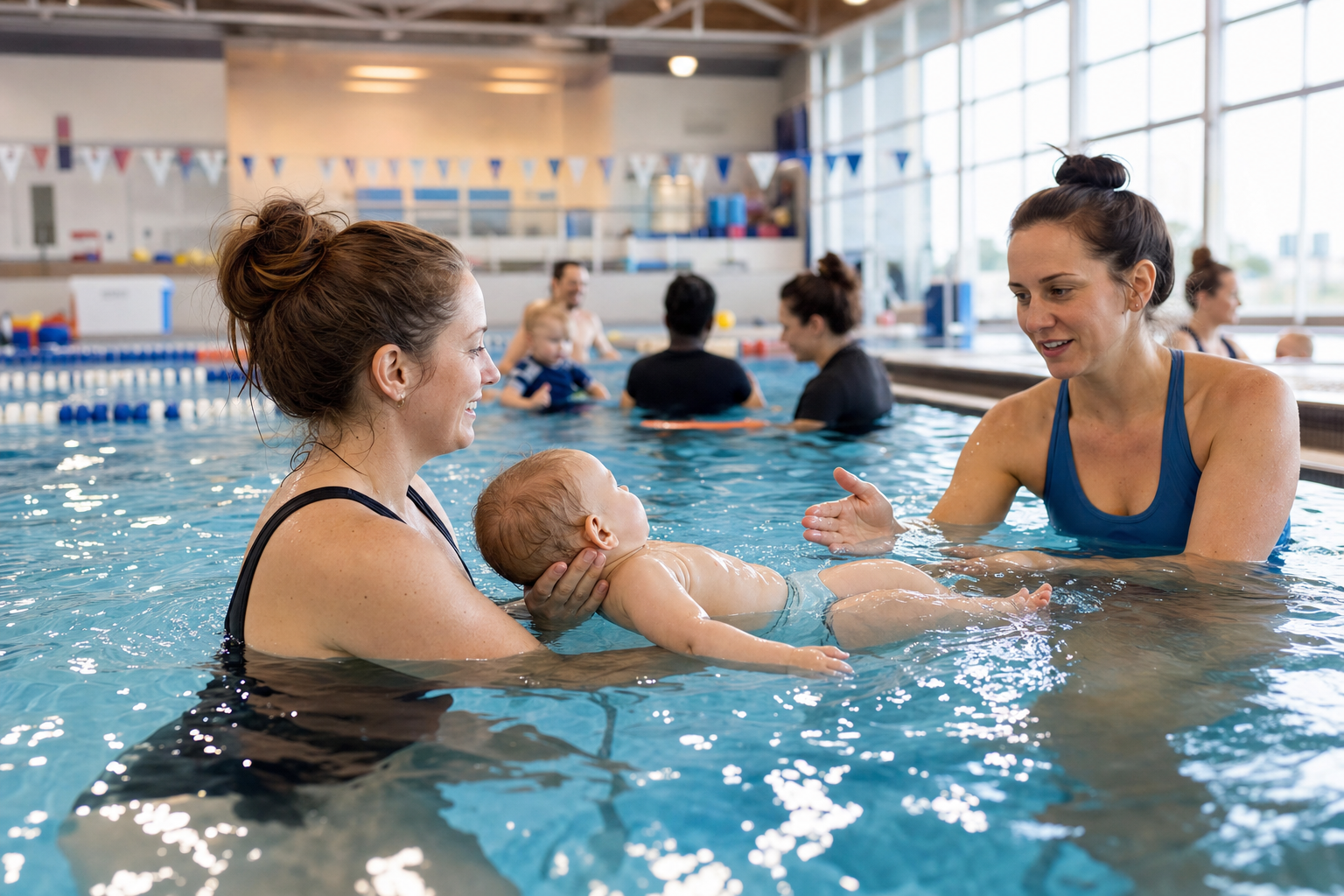
If your baby isn’t earning badges in swim class, don’t worry. Real progress shows up in gentle, often small ways—comfort in the water, ability to orient their body, grow in listening, and pull through recovery after a surprise dip. Those are the wins that matter far more in the long run than awards. Understanding what your baby should learn in swim class helps you track progress, reduce pressure, and stay motivated—so you both enjoy this journey.
What Real Progress Looks Like
Comfort and Familiarity
Progress without badges often starts with your baby just feeling okay—or even good—in the water. They might relax their limbs, stop clinging or crying as soon, or begin to enjoy splashy play. Signs like accepting gentle holds from instructors or being soothed back to calm pretty quickly after a new splash or unfamiliar movement are all positive. According to a recent guide by Kim Swim in Australia, babies showing this kind of relaxation are laying the foundation for later skills.(aquanat.com.au)
Orientation and Balance
How babies orient themselves in water—rotating, floating front-to-back or back-to-front—is crucial early work. It builds body awareness and helps them respond when they’re turned or tipped unexpectedly. Start-up programs like Royal Life Saving Australia’s Swim and Survive emphasize that infants and toddlers (6 months to 3 years) should learn elementary skills like floating, body rotation, and gliding, before swimming independently.(royallifesaving.com.au)
Listening, Cues, and Responsiveness
One of the biggest indicators of progress is how your baby tunes into class structure. That might mean recognizing certain songs, following verbal cues, hearing “blow bubbles” and responding. Or returning gaze to you when asked, or pausing kicks when told. These are listening milestones, sometimes overlooked but essential for safety and future learning.
Recovery
Babies will get surprises: water on the face, losing balance, small splashes, or even slipping. How quickly they settle, trust holds again, and return to class routines shows growing confidence. If they anticipate routines or familiar songs, even anticipating being held in a new pose, that’s recovery in action. It signals emotional safety and readiness for next steps.
Risks of Pitfalls and How to Avoid Them
Comparing your baby to others or expecting stroke skills too early can lead you to quit too soon. Australian infant swim frameworks focus on play, repetition, parent participation, and fundamental skills—not stroke perfection. Formal strokes are usually introduced later.(royallifesaving.com.au)
If you want a structured way to build water confidence at home, the 10-Week Plan guides you step by step.
Expecting lessons to be dramatic or flashy often leads parents to believe there is no progress when actually there’s motion—for example, your baby kicking more, holding their breath a little longer, or beginning some submersion. These play-based or repetitive lessons that look like songs and games are essential for building trust and patterns. Quitting because classes feel repetitive means losing the chance to see steady, foundational gains.
[[ctababy]]
What Should Baby Learn in Swim Class Ages 4–36 Months
From about 4 to 36 months, there’s a sequence of infant swimming milestones. At 4–6 months babies learn to tolerate water on their face, begin submersion if ready, supported floats. Older babies begin to kick more, use arm paddles, float with less support, start to rotate their body front-to-back and back-to-front. Toddlers may begin gliding, moving independently with aid, and showing water entries and exits with less help. Scientific evaluation proves that even without full independence, children aged 1–3 years show improvement in breath control, floating and changing orientation after formal lessons.(pmc.ncbi.nlm.nih.gov)
How Parents Can Track Progress, Even Without Badges
One helpful strategy is using structured plans. For example, the 10-Week Plan on swimy.org lays out weekly goals around comfort, listening, orientation, submersion, gliding, and recovery. It helps parents notice small steps—like supporting rolling motions, first under-water bubble blowing, or reaching for pool edges. By observing week to week, you begin seeing real gains.
Keep track by watching your baby across several classes. Notice whether they’re less upset entering the pool, whether they anticipate familiar songs or cues, and whether fear of water is shrinking. Share feedback with instructors about what small changes you saw; they often confirm you’re not imagining progress.
Maintain expectations focused on safety experience rather than swimming laps. Even when babies are not earning formal strokes or badges, they are learning core skills: floating, body orientation, listening, breath control, and recovering from water surprises. These set up later independent skills.
Safety Reminder
Even when you see real progress, it does not replace safety supervision. Touch supervision must remain whenever your baby is in or near water. Progress in lessons does not mean they can swim independently, especially under unexpected conditions. Always stay close, watch carefully, and ensure pools comply with safe temperature and ratio guidelines. Australian safety frameworks stress that parent and carer participation is integral, especially for infants and toddlers.(royallifesaving.com.au)
Final Thoughts: Motivation Through Real Signs
Celebrating small wins—comfort, orientation, listening and recovery—keeps lessons positive for both parent and baby. Instead of waiting for badges, look for change in behaviour, responses, and trust. That momentum fuels motivation far more than the reward in hand. It allows lessons to feel joyful, not pressured. As your baby grows, those small habits and skills will become the building blocks of independent swimming and water safety. Stick with it—you’ll be surprised by how much progress truly happens under the surface.
120+ swimming exercises sorted by age — with video and instructions. Developed by swim instructors, completely free.

120+ swimming exercises sorted by age — with video and instructions. Developed by swim instructors, completely free.