Baby Swim Schedule for Shift-Work Families
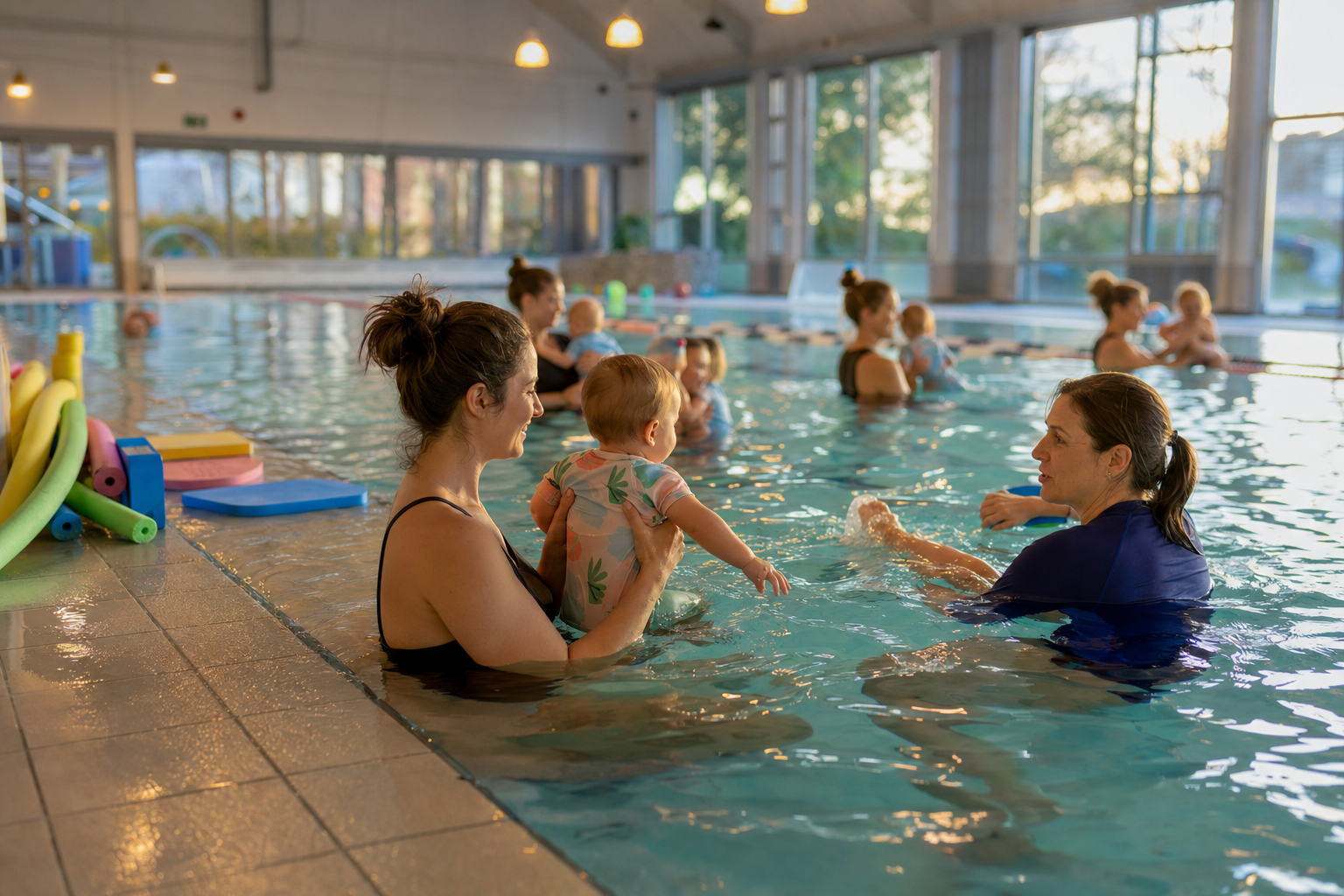
Working odd hours doesn’t mean giving up on baby swim lessons. For children aged 6–36 months, consistency in swimming builds water confidence, motor skills, and safety. But traditional weekly classes may clash with naps, feeds, and shifts. Here’s how to build a realistic schedule you and your little one can stick with—starting with the most essential parts.
Evening Lessons, Saturdays, or Rolling Enrolment: What Works Best
If you have irregular hours, focus on swim schools offering “evening baby swim lessons” and “Saturday parent and baby swim” slots. Pools with flexible timetables make it easier to avoid booking a class during your baby’s nap or your busiest work window. Many parents find success with shorter terms rather than long seasonal commitments; for example, a 6- or 8-week program with several evening or weekend lessons gives enough time for improvement without committing to something you may have to drop.
Some swim programs also offer rolling enrolment instead of strict season-start dates, meaning you can begin when your schedule allows. This helps maintain continuity even when life is unpredictable: you don’t feel you must wait until the winter term if you’re already ready to start now.
Planning Lessons for Consistency Without Stress
It’s tempting to grab the only open slot, but classes that clash with feeds, naps, or both caregivers available rarely stick. You’ll end up skipping frequently and not getting much benefit. Instead, with children 6–36 months old, focus on one class per week at a time that’s a reliable fit—even if it's earlier in the evening or on Saturday mornings. Two things help the most: making it part of your regular routine and choosing formats that accommodate caregiver changes.
Shared caregiver attendance is extremely helpful when you or your partner has varying shifts. If one of you starts work evenings or nights, the other can still take the class. Some lessons even allow both parents or caregivers to alternate attendance to maintain consistency for the child. Between classes, build in safe practice—splashes, supervised water play, warm bath times—to reinforce what your baby learned, especially if you miss a session.
What Experts Say About Early Lessons and What to Expect
According to the American Academy of Pediatrics, formal swim lessons are most evidence-based for reducing drowning risk in children aged 1 and older; infants under 1 may benefit from water exposure and play, but the data show they aren’t developmentally ready for swim competency until later. (healthychildren.org) Attending swim lessons regularly (at least weekly or every other week) leads to greater aquatic competence than infrequent or one-off lessons. (pmc.ncbi.nlm.nih.gov)
If you want a structured way to build water confidence at home, the 10-Week Plan guides you step by step.
For your age range, 6 to 36 months, lessons help with water comfort, motor skills, coordination, and even future confidence. (pmc.ncbi.nlm.nih.gov) But these gains depend on consistency and pacing lessons to match your baby’s readiness (physical, emotional, sleep-wise). Lessons that are too long, too frequent, or scheduled at awkward times create tension and lead to drops in attendance.
[[ctababy]]
Sample Formats for Shift-Work Friendly Swimming
To help you visualize, here are formats many shift-work families use:
- Evening lessons once a week for 30 minutes. Choose a slot after your shift ends or on your rest day.
- Saturday parent-and-baby swim sessions that run early in the day, avoiding naps and midday heat or fatigue.
- Shorter term commitments—or what one provider calls a 10-week plan of lessons—rather than signing up for a full season, to give room for missed classes without feeling behind. You can check swimy.org’s 10-Week Plan for inspiration and a structured format.
- Rolling enrolment so you can start when life settles down, and skilled instructors who can provide catch-ups or flexible re-makes if possible.
Making your baby swim schedule around those formats gives you predictable options without over-booking.
Avoiding Common Pitfalls
The biggest mistake is booking the only open slot even when it conflicts with your baby’s natural rhythm. One parent on a forum described taking evening lessons that clashed with bedtime routines and ended up skipping half the term. (reddit.com) That’s exactly what we want to avoid.
Also, signing up for long terms without guaranteed flexibility or caregiver support usually backfires. Consistency matters more than quantity. Missing two in a row disrupts learning and makes re-entry harder. Choose formats that allow breaks or make-ups, and be realistic about how often you’ll actually make it to the pool.
Building in Safe Practice Between Classes
When a class is missed—or just to reinforce skills between sessions—do simple things at home. Let your baby feel water safely: in a sink, bathtub, or splash pad, with supervision. Practice floating, kicking, and turning under low-stress situations. Talk about what they learned, show the strokes, or sing songs about water safety. These reinforce water competence and make lessons more effective when you return. Expert sources stress that swim lessons are just one layer in drowning prevention and aquatic competence building. (healthychildren.org)
Taking the Next Step
Look up “baby swim lessons near me” and filter results for weekend, evening, or weekday slots that match your schedule. Ask swim schools about rolling enrolment, short-term plans, and policies on missed classes or caregiver swap responsibilities. Meet instructors and see facility warmth, pool temperature, and safety setup. Start small with one class you can believe you’ll attend regularly, and build from there.
Shift-work families deserve swim schedules that bend without breaking. With smart planning, evening baby swim lessons or Saturday parent-baby slots, shared caregiver attendance, flexible enrolment, and home practice, your baby can benefit from stability—without stress or overcommitment. Stick with what your schedule can handle, and you’ll see progress, joy, and water confidence flourish under your care.
120+ swimming exercises sorted by age — with video and instructions. Developed by swim instructors, completely free.

120+ swimming exercises sorted by age — with video and instructions. Developed by swim instructors, completely free.