Backstroke Hand-Lead Scull: 10-Minute Catch Feel Drill for Kids (Ages 8–12)
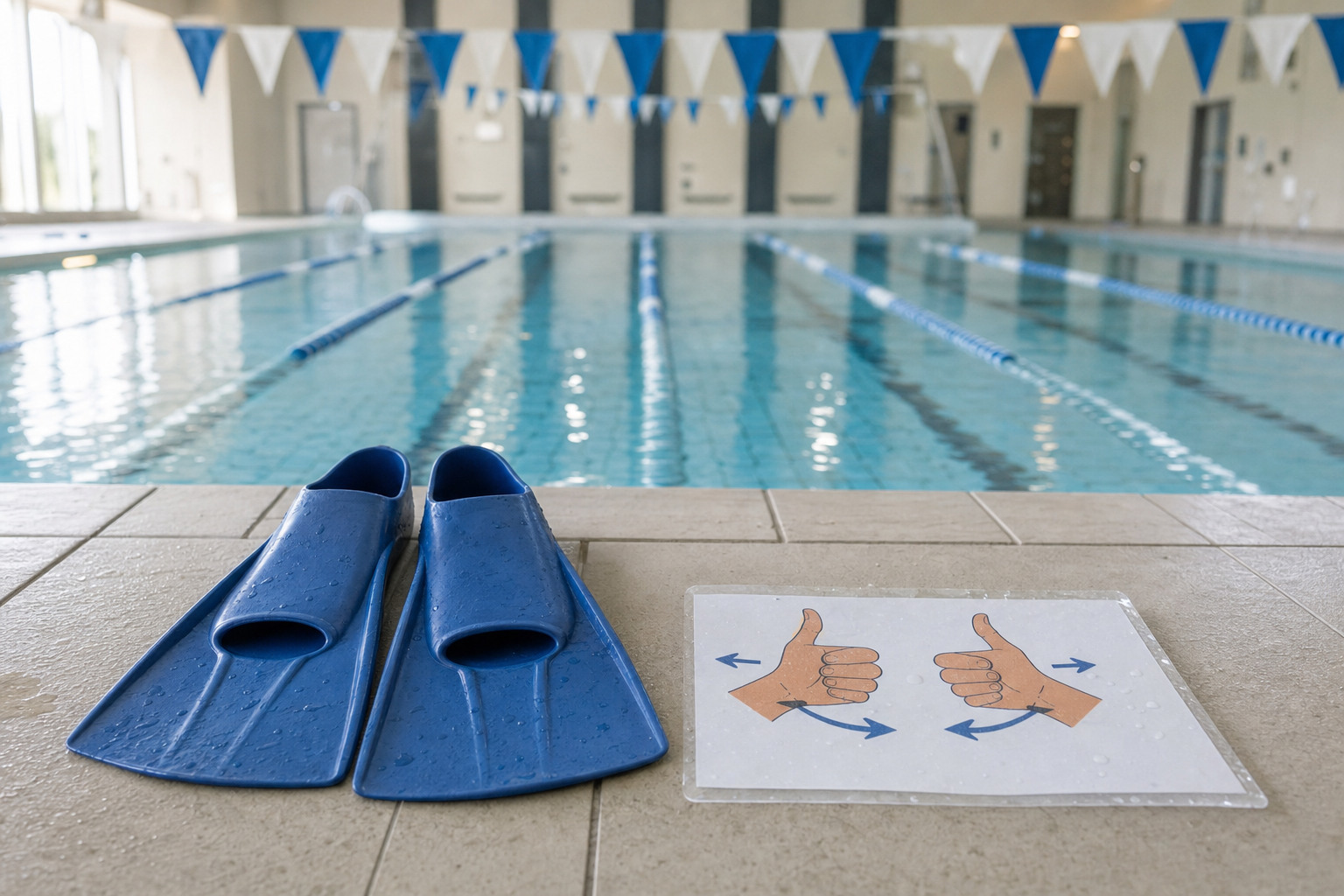
Want your child to improve their backstroke catch feel fast? Here’s a simple backstroke scull drill for kids that builds awareness in just ten minutes. It teaches kids to keep wrists neutral, thumbs up, feel water pressure, and learn early catch awareness without paddles. Ideal for ages 8–12, safe and doable all year round.
## What Exactly Is a Backstroke Hand-Lead Scull Drill?
This drill is all about isolating the feel of catching water with the hand and forearm before doing full strokes. Kids float on their back, no paddles. Hands stay just under the surface, thumbs up. They gently “scull” in small sweeps (hand-lead motion), feeling pressure from the water. No kicking large or hyper-extending wrists. Elbows stay high and bent when catching water rather than dropped. The goal is building that early catch awareness so when they do full strokes, the catch comes naturally.
## How to Do the Drill (10-Minute Routine)
All you need is a shallow, supervised lane. Parents or coaches stay close. Optionally, short fins can help support bodyline if kicking is weak at first.
- Warm-Up (2 minutes): child floats on back, arms by sides, head neutral, eyes looking up. Use gentle flutter kick to stay balanced.
- Hand-Lead Surface Scull (about 6 minutes): hands near hips, scull outward (palms face sides of pool), then rotate thumbs up, palms back toward feet. Small sweeps only, about 4-6 inches. Keep wrists neutral, thumbs up. Aim for feeling tension in palm and forearm. Rest if elbows drop or wrists bend. If the body dips, stop and reset.
- Apply Catch in Full Stroke (2 minutes): after feeling water pressure, swim backstroke using that early bent elbow catch. Parents cue “thumbs up under surface, elbow sweet-spot heavy.” If using short fins, put them on here if needed for support.
Throughout, remind child not to look at their feet—eyes should be up, head still. No hyper-extension of wrists. Never allow elbow drop (which flattens catch) or letting hips sink.
## Common Pitfalls & How to Fix Them
Kids often make mistakes when learning catch feel. Here are what to look for and what to say.
- Elbow too low: elbow should stay high (above hand entry), forming an angle so forearm can act like a paddle. Cue: “Make your elbow lead, not your hand.”
- Wrist hyper-extension: neutral wrist so hand isn’t flopping back too far. Cue: “Keep a flat plate hand.”
- Looking at feet: causes body position to collapse, hips sink. Cue: “Eyes up to sky/ceiling.”
- Sloppy thumb position: thumbs down entry or recovery hurts catch. Cue: “Thumbs up under water, like a fin.”
If you want a structured way to help your child progress at home, the 10-Week Plan guides you step by step.
## Supporting Parent Tips & When to Use Short Fins
Parents, your cues and tools help a lot. In early sessions, stand poolside and gently guide their hands through the scull so they feel how water pushes. Use simple vocabulary: pressure, flat hand, thumbs up. If the child’s legs are heavy or hips drooping, short fins give light lift. Fins aren’t for power here—they’re for support so bodyline stays flat while focusing on hand and catch technique. Once full stroke work begins, remove fins to let strength and feel build.
[[ctakid]]
Safety: always shallow enough to touch, continuous supervision. Only small sculling motions—don’t let wrists bend backwards. Stop the drill immediately if child feels discomfort in shoulders.
## Getting Maximum Feel in 10 Minutes Exactly
Aim to do this drill twice a week early in the season—seasonality isn’t an issue, you can do it indoors or outdoors all year round. To speed up learning, connect to a plan: you could slot this into the 10-Week Plan from swimy.org, which builds progressive skills over weeks. Link this scull drill early to train catch awareness before more advanced backstroke drills.
In each ten-minute block, focus the first half on feeling scull alone. The second half, apply that feel in full backstroke. Use video feedback if possible—kids love seeing themselves, and parents/coaches can point out elbow and wrist positions. After a few sessions, most kids will naturally begin their backstroke stroke with early bent-arm catch, neutral wrists, and thumbs up.
## Why This Helps More Than Full Stroke Repetition
Doing full strokes without catch feel practice tends to anchor poor habits: flat hands, elbow drops, wrists bending, hips sinking. With this scull drill, children build muscle memory of a strong catch before adding speed or distance. They learn to feel water pressure—an underwater sense usually missing in only doing full strokes. And the drill isolates what’s hard to see in backstroke: the break-in between hand entry and pull. When you can’t see it, you feel it.
## When Progress Happens & How You’ll Know
After just two or three drills, you’ll see these changes: wrists staying neutral; elbows lifting early; thumbs up under water; hips riding higher. Full backstroke strokes will start feeling more powerful through the catch, less flapping or wasted motion. Parents should hear softer splash upon entry (a flatter hand) and see smoother arm recovery. If progress stalls, keep returning to scull drill before swimming backstroke full length.
With consistent practice, this backstroke catch feel becomes second nature. In only ten minutes, kids gain awareness without paddles, learn safe form, and build a foundation for stronger, cleaner backstroke technique. You’ll be amazed how much catch awareness shows up in full strokes after just a few good drills—wrists corrected, elbows high, thumbs up, eyes on the sky.
120+ swimming exercises sorted by age — with video and instructions. Developed by swim instructors, completely free.

120+ swimming exercises sorted by age — with video and instructions. Developed by swim instructors, completely free.