Bring Test Strips: A Two-Minute Pool Safety Check for Parents
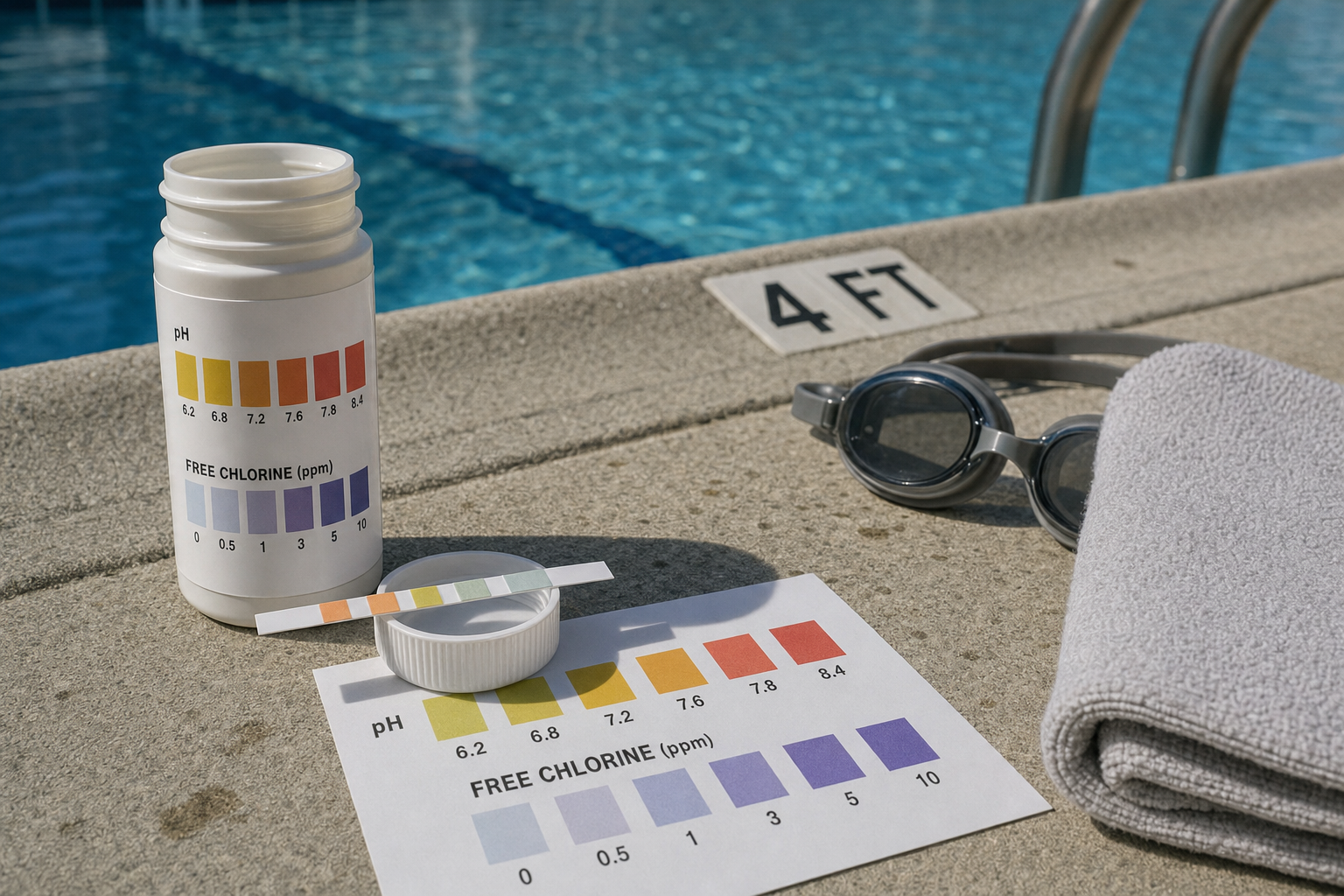
You’ve just pulled up to a public or rental pool with your kids aged 3 to 12 and you’re itching to jump in. But before goggles go on, there’s a simple two-minute test you can do using pool test strips. This quick check for pH and chlorine levels helps protect your child from red eyes, gut bugs, and germy water. It does not replace lifeguards or health department inspections—it simply gives you a snapshot of water safety before letting your kids dive in.
What ranges should you look for?
According to the CDC, safe chlorine levels for pools are at least 1 ppm (parts per million) free chlorine, with ideal ranges usually 1–3 ppm for everyday use. Pools should ideally have a pH between 7.0 and 7.8, more precisely around 7.2 to 7.8, which balances germ-killing effectiveness and swimmer comfort. When pH climbs above that range, chlorine becomes far less effective; when it dips too low, water feels harsh, eye irritation increases, and pool fixtures may corrode (cdc.gov).
Why a quick pool test strip check matters before every swim
Even if water looks crystal clear, that doesn’t necessarily mean it’s safe. Water clarity tells you visibility, not chemical balance. A strong chlorine smell often signals that chlorine has reacted with dirt, skin, sweat or urine to form chloramines—these irritants cause itchy eyes and harsh smells (poison.org).
Test strips are affordable, simple to use, and handy for screening levels of pH and free chlorine. They help you avoid letting your child swim in water that’s either chemically unsuitable or unsafe. Use strips for this quick check, but remember the readings can be off, especially if the strip bottle was left open or exposed to heat and humidity. For full accuracy, liquid kits or professional testing are better—but for a “pool test strips before swimming” moment, strips do the job (poolometer.com).
How to do a reliable two-minute strip test
When you arrive at the pool, go grab your kit (strip bottle + color chart). Dip one strip into water about elbow-deep, away from jets or splash zones. Hold it under water for the time the instructions say—usually 15 seconds. Pull it out and compare immediately to the strip color chart. If chlorine is below 1 ppm or pH is out of the 7.0-7.8 safe range, politely opt out of swimming until things are fixed.
Between swims, a numbers check like this teaches kids and parents good habits. I remember on vacation, my daughter complained her eyes stung at a hotel pool; I tested the water and found chlorine was still high after a shock treatment. We waited until next morning when staff adjusted it, and next swim was problem free.
You might also find that local health authorities obey guidelines from the Model Aquatic Health Code (MAHC) or ANSI/PHTA/ICC-11 (formerly PHTA-11) which require these ranges for public pools (cdc.gov).
Learning to interpret strip results is like learning to read a new map: takes practice, but very empowering.
That “pool test strips before swimming” habit ties in nicely with other safe swim behaviors and learning resources. For example, parents who enroll their kids in swim-training often follow programs like the 10-Week Plan from swimy.org which combines skill building with safety awareness—this includes teaching children to ask about water quality and encouraging guardians to check before each session. Hyperlinked directly to the full 10-Week Plan, it’s a great tool for families committed to smarter swimming habits https://www.swimy.org/10-week-plan.
[[ctakid]]
When should you politely say “no thanks” and ask for fixes?
If your strip shows free chlorine under 1 ppm, or pH below 7.0 or above 7.8, it’s reasonable to ask pool staff if they can adjust chemicals before entry. If chlorine is way too high—say above 4 ppm—or there’s a strong smell of bleach or eye irritation, that’s a red flag. Adult supervision doesn’t cover chemical risks. If the water is cloudy, drains aren’t visible, or the strip result is wildly off from expected safe range, wait or find a better pool.
How to ask without making a scene
You can say something like: “Hi there, I’m a bit concerned—my strip shows low chlorine (or weird pH). Can you check it please? My kids get eye irritation, but I’d love to swim if things can be balanced.” Quality pool staff know these requests are common and valid. Public pools often test pH and disinfectant multiple times a day, especially during high use (cdc.gov). If you find issues, local health departments may post inspection results publicly—do check online or on site for signage.
Common mistakes parents make and how to avoid them
One mistake is assuming that clear water is safe. Clarity means you can see through it, but it doesn’t guarantee correct chemical balance. Another is misreading strips—strip bottles sometimes fade charts over time; lighting conditions can throw off color matching. Always use good light and fresh strips.
Some pool operators “shock” pools at night with high doses of chlorine. After shocking, free chlorine may be way above safe levels—or strip tests may even show “bleached out”—so pools should stay closed until chlorine returns to normal range AND pH is in range (poison.org).
Finally, assume public pools follow guidelines—but with summer travel spikes, some pools might be under-staffed or overused. That’s when regular checks and your strip become your safeguard.
Keeping kids safe: beyond just chemistry
This quick pool test complements—but does not replace—other safety measures. Never substitute it for lifeguards, floatation aids, swim lessons, or checking inspection scores. Encourage your children to shower before swimming to reduce contaminants. Teach them not to swallow water. Know where the exits are. Eye irritation isn’t the only risk: gastrointestinal illnesses spread through water when disinfection is low or when swimmers are unwell. Practices like taking restroom breaks and cleaning up after accidents are just as important (cdc.gov).
Testing pool water with test strips before swimming gives parents a fast way to protect young swimmers from irritation and germs, especially during busy summer travel. Knowing that free chlorine should be at least 1 ppm, and pH between 7.0 and 7.8 lets you make safe swim choices. Misread strips or cloudy water? Skip the swim this time. But when things measure up, you can relax—because you and your child have done the homework. Safe splashing!
120+ swimming exercises sorted by age — with video and instructions. Developed by swim instructors, completely free.

120+ swimming exercises sorted by age — with video and instructions. Developed by swim instructors, completely free.