Co-Parent Water Rules for Toddlers: Safety, Consistency, and Confidence
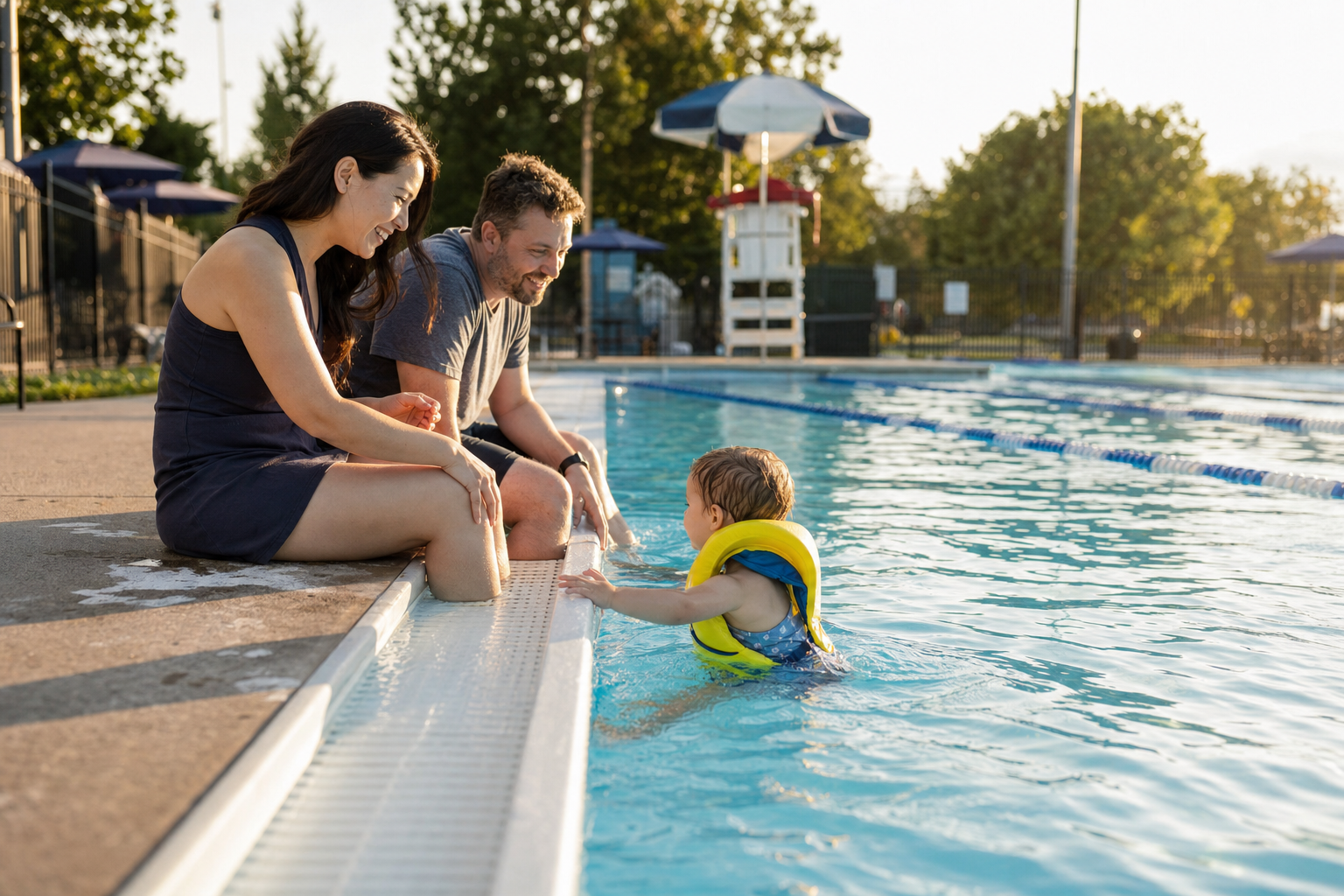
Consistency is everything when it comes to water safety in co-parenting. Toddlers aged 12-36 months thrive when both homes share the same rules, language, and routines around pools and water play. Without shared guidelines, mixed messages around flotation aids, supervision, or swim lessons can lead to confusion—and risk.
Why Shared Rules Are Non-Negotiable for Toddlers
Toddlers begin to recognize patterns early. If at one home they’re told “always wear a flotation vest” and at the other “floaties are bad,” or if one parent uses touch supervision and the other lets them roam near water, a toddler won’t reliably know what’s safe. According to the AAP, swim lessons are another layer of protection—it recommends formal swim lessons after age one but insists swim skills alone do not make a child drown-proof. What does remain non-negotiable is that whenever toddlers—or weak swimmers—are in or around water, a competent adult must be within arm’s reach offering touch supervision. (publications.aap.org)
Another key point from the CDC: formal swimming lessons can reduce drowning risk among children between ages 1-4. But this benefit only holds when supervision, life jackets, and barriers (like pool fences) remain constantly enforced. (cdc.gov)
Shared Water-Safety Script: Same Words, Clear Rules
To avoid mixed signals, both parents should agree on a simple “pool rules script.” Every caregiver and home should use the same four or five phrases. For example:
“Wait until someone with you says it’s okay.”
“Always wear the vest before going in.”
“Stay where-you can touch the wall or a grown-up.”
“No toys near the edge unless someone’s with you.”
“Finish your lesson before going deeper or farther.”
When handed over between homes, caregivers should repeat the rules, using the same words. Over time the toddler begins to expect those phrases wherever they swim, reinforcing confidence and clear boundaries.
What Gear Must Always Match
Flotation gear causes more disagreements than almost anything else. One parent may suppress floaties; the other might embrace life jackets. But here’s what must stay consistent:
Life jackets must be U.S. Coast Guard approved (or equivalent in the UK/AU). They should be the same fit, style, and brand if possible—and always worn during pool play unless instructed otherwise (for example, during supervised swim lessons). Avoid inflatable water wings, beach floaties, or floats that aren’t child-life jacket or PFD standards. The AAP warns these often fail or give a false sense of safety. (healthychildren.org)
Other gear includes swim caps or snug swim pants for hygiene, goggles if needed, and non-slip pool shoes if deck surfaces are slippery. Being uniform across homes helps toddlers avoid resistance or surprise when packing for swim time.
If you want a structured way to build water confidence at home, the 10-Week Plan guides you step by step.
Supervision Standard: Touch, Tether, Never Distracted
Always have a caregiver within arm’s reach—that’s touch supervision. Whether one parent or two kids with an adult—no exceptions. According to both the CDC and AAP, drowning incidents in children aged 1-4 often happen during lapses in supervision. (publications.aap.org)
Distractions must be minimized. Phones, drinks, chatting, or multitasking are distractions. One person should be the designated watcher; others help—but only one adult owns the supervision at any swim moment. Pool fences, self-closing gates, and pool alarms (where available) also serve as essential barriers to unintended access during non-swim times. (aap.org)
[[ctababy]]
Shared Swim Lessons & the “10-Week Plan”
Both parents should enroll the toddler in the same or comparable swim lesson program. The AAP recommends lessons starting after the first birthday, with clear instruction in water survival skills (floating, getting out, coming to surface). (publications.aap.org)
To reinforce consistency, try following a shared structured course—such as the 10-Week Plan by swimy.org—which lays out progressive water safety and swim skill building that both homes can follow. That way, both parents know what was taught last week, what practice the toddler needs, and what’s coming next.
But always remember: even timed lessons do not make your child incapable of drowning. They are one important layer, not the only one. (publications.aap.org)
Regular Lesson-Update System at Handover
One of the biggest pitfalls in co-parenting is inconsistent record keeping. One caregiver attends swim class, the other hears nothing. To prevent this:
Agree on a simple update ritual at handover. It might be a 5-minute chat, a photo message, or a shared journal. Key things both parents need to share: what was learned, what the child struggled with, what safety behavior to drill (vest always on, diving? wall holds?), what skills to practice, and any instructor feedback.
Every week put a note into a common space (shared app, notebook) so both parents can reinforce the same rules and expectations. Toddlers notice when lessons are praised at one home and absent at the other.
Safety Caveats: What No One Should Compromise
No swim lesson, no gear, no set of rules should replace these non-negotiables. First, touch supervision at all times for 12-36-month-olds whenever they are in or around water. Never assume swim lessons make them safe alone. Second, all caregivers must recognize that flotation devices are tools—not guarantees. Third, drown risk is highest for children aged 1-4; even though skill builds, risk remains unless all prevention layers are enforced. (publications.aap.org)
How Consistency Boosts Confidence & Boundaries
Consistency builds safety, but it also builds self-confidence. When toddlers hear the same safety script, wear the same jacket, get the same supervision standard, and know what to expect of lesson follow-ups, they feel more secure. They begin to trust that the rules are meaningful everywhere. That boundary clarity reduces anxiety, resistance, or risky testing behaviors. For parents, consistency reduces arguments and mixed messages and makes co-parenting around water smoother.
When both homes operate from the same shared set of water-safety rules, they provide toddlers with a reliable framework. Between life jackets that always fit, touch supervision that never wavers, lessons that match, and clear handover notes, kids learn routines that protect them and bring them confidence. Co-parent water safety isn’t just about protecting toddlers—it’s about partnering, communicating, and building security across two homes.
120+ swimming exercises sorted by age — with video and instructions. Developed by swim instructors, completely free.

120+ swimming exercises sorted by age — with video and instructions. Developed by swim instructors, completely free.