Build Baby Water Confidence Without Pressure: Guided Milestones (3–36 Months)
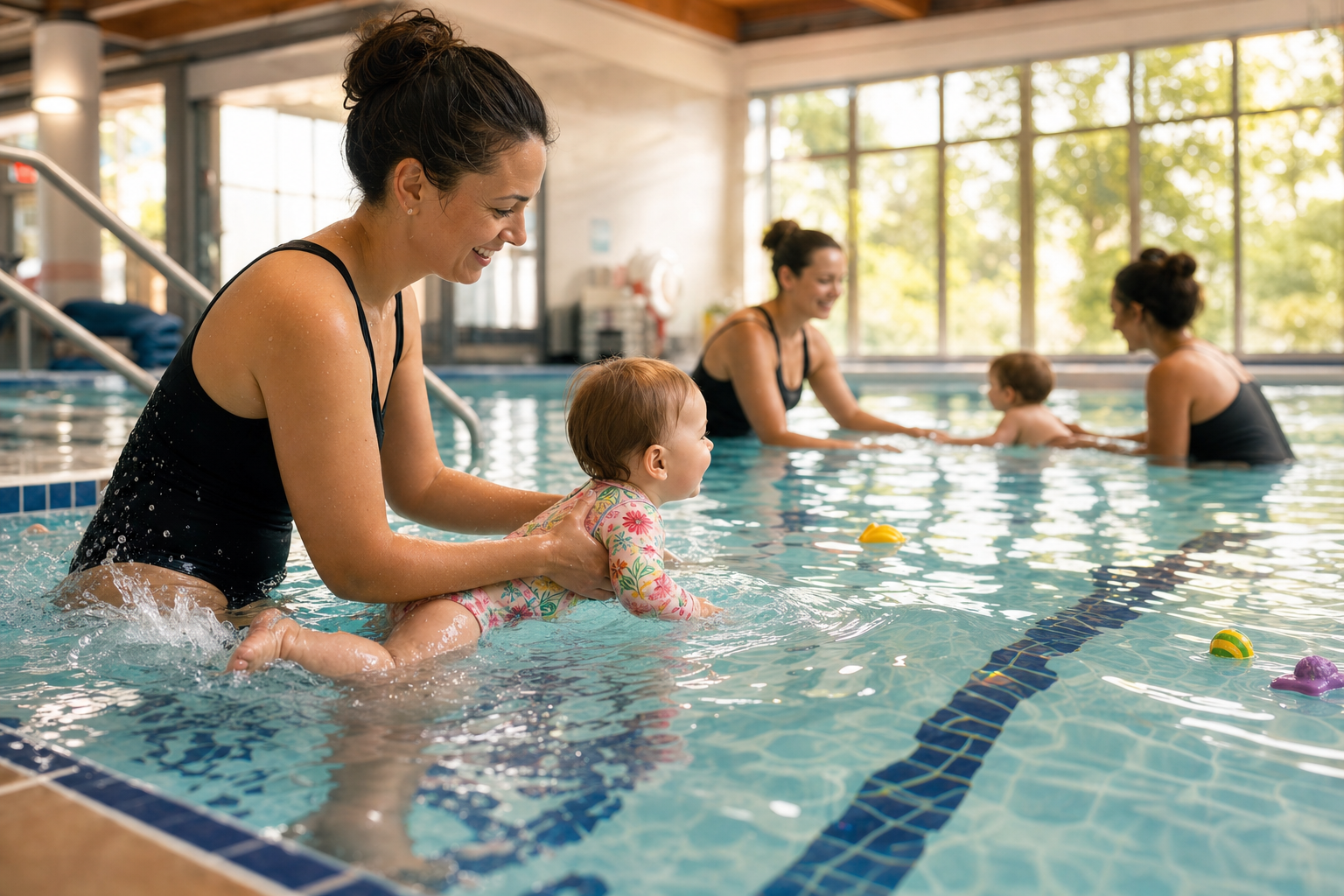
Getting started with baby water confidence doesn’t mean rushing in or expecting perfection. The best approach is gentle progression: trust first, skills next. Below is a roadmap of water-familiarisation baby by baby, broken into three stages—pre-crawling, crawling/cruising, and toddler. You’ll find key milestones from first splashes to supported floating, kicking, reaching, plus tips to avoid common pitfalls. Before you read more, know this: water familiarity is not the same as swimming competence. Even confident children still need barriers and close, constant supervision.
Pre-Crawling Stage (3–6 Months)
At this age babies are not expected to swim, but they can begin exploring what water feels like, safely. Core goals are to build trust and very gentle sensory exposure. Around 4–6 months many babies strengthen head control, roll both ways, begin to push up on hands, and may kick arms and legs when submerged. These motor movements—reaching, lifting chest on tummy, paddling motions—form the physical foundation for supported floating and kicking later. Referencing standard Gross Motor Milestones confirms this typical movement timeline for infants in the 4-7 month range. (healthychildren.org)
In the pool or at bath time, start by letting your baby sit in your lap in shallow warm water. Introduce splashing hands and feet, gentle submersions of hands or the face, always until your baby seems comfortable. Use songs or toys to distract and delight so water feels fun, not scary. Avoid forcing face wetting or submersion before your baby shows readiness (usually around 4-6 months when head control is solid).
Crawling / Cruising Stage (Approx. 7–18 Months)
Once your child is crawling, standing with support (“cruising”), or walking short distances, you can begin to layer in more complex water confidence skills. Toddlers in this age range can start supported floating, blowing bubbles, kicking legs and using arms cooperatively, often with a parent or instructor’s hands. The Royal Life Saving “Infant Aquatics” program breaks these into “Duck Stages”: for example, by 12–18 months babies begin breathing control and early submersions, by 18-24 months assisted entries and kicks start.
Building on crawling milestones—sitting, pulling to stand, shifting weight—this stage supports motor coordination in the water. Float your toddler back-to-front with your support, then maybe try holding under their chest so they kick. Let them reach for floating toys to encourage movement. Observe their cues: if they stiffen, look anxious, or avoid putting face near water, slow down or pause. Every child moves at their own pace.
Around 30–50% through your water confidence journey, many parents wonder how to structure swim lessons. One useful resource is the 10-Week Plan from swimy.org, which walks parents and toddlers through gradual swim-skill builds over ten weeks. It complements these stages by offering structured progression without forcing skills.
Toddler Stage (18–36 Months)
[[ctababy]]
Toddlers are curious, mobile, and often ready to experiment. At this stage children may show strong preferences, fear of face wetting or submersion, or comparisons to other kids pop up. They can begin simple supported entries and exits, kicking with both legs, gliding short distances with assistance, blowing bubbles, and using simple arm reaches. They may attempt supported floating on back or front for a second or two.
To help a toddler afraid of water, experts recommend starting with play before pressure. Use toys, singing, pouring water gently over shoulders, letting them observe other kids splashing they like. Keep water environments warm, calm, small-class or low distraction. Consistent exposure—short, fun sessions—builds confidence over time. (chicagobluedolphins.com)
Tips Parents Should Know: Learning Without Comparison or Force
Progress is not linear. Pressuring toddlers to wet their face, do floats, or perform strokes before they are developmentally ready can backfire. Risk-taking praise (e.g. “great you jumped!”) too early may make water feel dangerous rather than joyful. Avoid comparing your child to siblings or friends; each child’s milestone timing varies widely.
Instead, celebrate small wins: touch water, kick once, float for a heartbeat. Let your child lead pace, always asking their permission verbally or through their cues. Kept calm, your own relaxed presence teaches them safety and trust.
Safety Caveat: Confidence Isn’t Competence
Being water familiar doesn’t mean your child is safe near water alone. Even confident babies can move quickly toward pools or water features. Barriers (pool fences, locked gates, closed doors), life jackets in open water, and “touch supervision” (being within an arm’s length) are essential. The American Academy of Pediatrics emphasises supervision and multiple safety layers around water. (healthychildren.org)
Always stay vigilant—even short distraction or momentary lapse of supervision can lead to tragedy.
Sample Milestone Progression Summary
Pre-Crawling (3-6 mo): water on hands/arms, face greeting water slowly, supported buoyant holding from parent lap.
Crawling/Cruising (7-18 mo): assisted floating, kicking with support, reaching for toys in water, beginning submersion with control.
Toddler (18-36 mo): glides with help, floats briefly, exits and enters water safely, starts blow bubbles, strong kicking motion, uses arms.
Starting babies on a path toward water confidence without pressure gives them something far more valuable than early swimming ability: trust, joy, and a lifetime of safe choices around water. If you're patient, follow their signals, build skills steadily, and never force a milestone, your child will gain water confidence naturally—at their own pace.
120+ swimming exercises sorted by age — with video and instructions. Developed by swim instructors, completely free.

120+ swimming exercises sorted by age — with video and instructions. Developed by swim instructors, completely free.