Butterfly Every-Other Breath: A Calmer First Rhythm for Young Swimmers
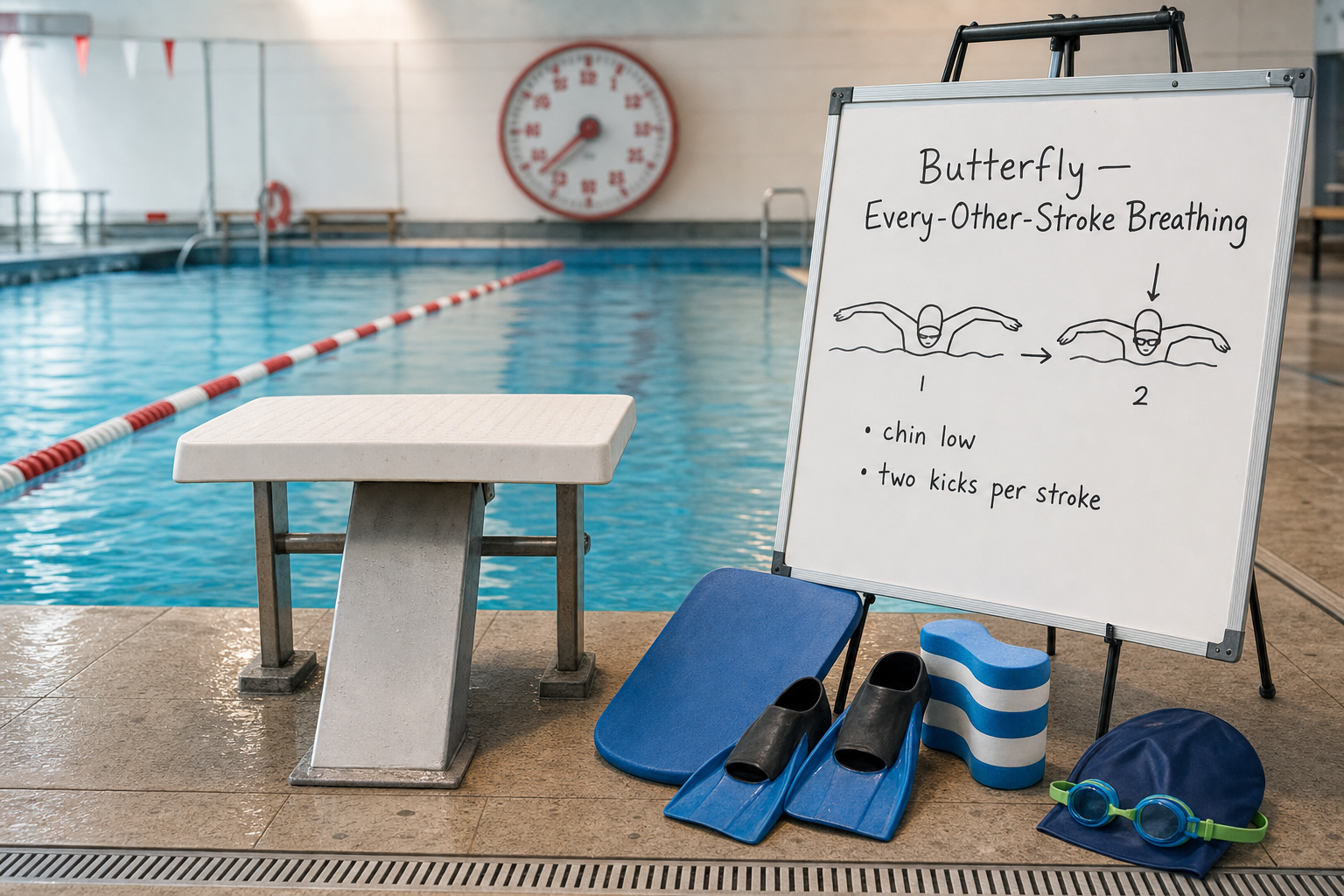
Want your child learning butterfly without the panic or neck strain? The trick is using an every-other-stroke breathe rhythm during early learning. This rhythm gives smoother timing, less chin lifting, and way more fun in the pool.
How the Every-Other-Stroke Breathe Rhythm Helps
Every-other-stroke breathing means they take air only on the second stroke in every two full butterfly strokes. This pattern lets the swimmer keep the body wave moving without constant interruptions. With fewer breaths, they’re less likely to lift the head too far or late, which drops the hips and slows them down. Coaches emphasize that good butterfly rhythm is built from a “wave that rolls through the body” rather than heavy arms or over-kicking.(birminghambluedolphins.com)
Also, breathing low and early in the pull (chin just clearing the surface) keeps momentum and avoids neck strain. It makes breathing feel like part of the swim, not a rescue mission.(birminghambluedolphins.com)
A Progression Parents Can Guide
Here’s a short roadmap you can follow with your 8-to-12-year-old (or younger once they’re strong in freestyle and backstroke), so butterfly doesn’t feel overwhelming:
Stage 1: Kick Timing with Body Dolphin
Start with just body dolphin kicks—arms at the side or extended. Focus on undulation from chest through hips to the legs. Introduce counting: one big down/up kick, then another smaller one. That “kick-pull-kick-recover” rhythm is the foundation.(swim-teach.com)
Stage 2: Single-Arm Fly with Every-Stroke Breathe
Next, let them use one arm at a time, with the other either in front or by their side. They still do two kicks per cycle. Breathe every stroke with the working arm. This helps build coordination and keeps the body lined up.(teamunify.com)
Stage 3: Every-Other-Stroke Breathing in Full Butterfly
Once they’re comfortable with kick timing and the one-arm rhythm, shift to full butterfly strokes. Encourage breathing every other stroke. Remind them: chin forward, eyes down, quick inhale, and back in before the hands enter. Use short bursts—maybe three or four strokes—so fatigue doesn’t cause bad habits.(birminghambluedolphins.com)
If you want a structured way to help your child progress at home, the 10-Week Plan guides you step by step.
This progression fits nicely within broader structured teaching frameworks. If you want a full seasonal plan for stroke learning and skill building, try the “10-Week Plan” of swimy.org—it lays out when to introduce fly, drills for timing, and breathing patterns for steady progress.(swimy.org)
[[ctakid]]
What to Avoid: Common Pitfalls & Fixes
Parents (and kids) often tripped up by a few predictable issues. Here’s what to watch for, and how to coach around them.
Late Breathing: Kids tend to inhale too late—waiting until arms are fully recovering and breath becomes more of a struggle. That delays momentum and lifts the head too high. Fix it by cueing “inhale early, chin just skims the water,” so breathing happens with the pull, not waiting for the end.(birminghambluedolphins.com)
Lifting the Chin: When breathing late, it’s tempting to throw the head up to get air. That sinks the hips. Teach small, low breaths—chin forward, not nose to the sky. Eyes can stay down toward the water just ahead.(birminghambluedolphins.com)
Over-Kicking: Without good rhythm, kids overuse their kick—either kicking too hard or not letting the wave travel through the body. Two kicks per stroke is enough. The second kick especially should be timed to help with breathing and arm recovery.(sportsacademy.school)
Safety & Breath-Hold Advice
Always keep breaths low and quick. The inhale should happen as the arms pull back; exhale underwater. No prolonged breath-holding, which can stress a child’s system and reduce focus on technique. If you see them gasping or pushing through lengthless fly with poor form, stop and reset with drills.(swim-teach.com)
Ensure rests are frequent when learning. Fatigue makes faulty breathing and lifting chin much more likely.
Putting It All Together at Practice
For swim practices or home sessions, use short sets early in the lesson where your child practices body dolphin and single-arm fly. Then try 2-to-4 strokes of full fly with every-other-stroke breathing. Between those bursts, let them do something easier (freestyle, backstroke) to reset. Use drills like one-arm stroke or kick-only drills to lock in timing without overwhelming them. Coach with gentle feedback: praise rhythm, low chin, two kicks per cycle.
By doing the progression, avoiding late breath, discouraging neck lift, and keeping kick under control, your swimmer gets a sustainable rhythm for butterfly that builds confidence, not frustration. With these steps, every trial in the water becomes more satisfying, more controlled—and a lot more fun.
120+ swimming exercises sorted by age — with video and instructions. Developed by swim instructors, completely free.

120+ swimming exercises sorted by age — with video and instructions. Developed by swim instructors, completely free.