Freestyle Elbow-Lead Recovery: A Simple Kid Cue to Fix Chicken-Wings
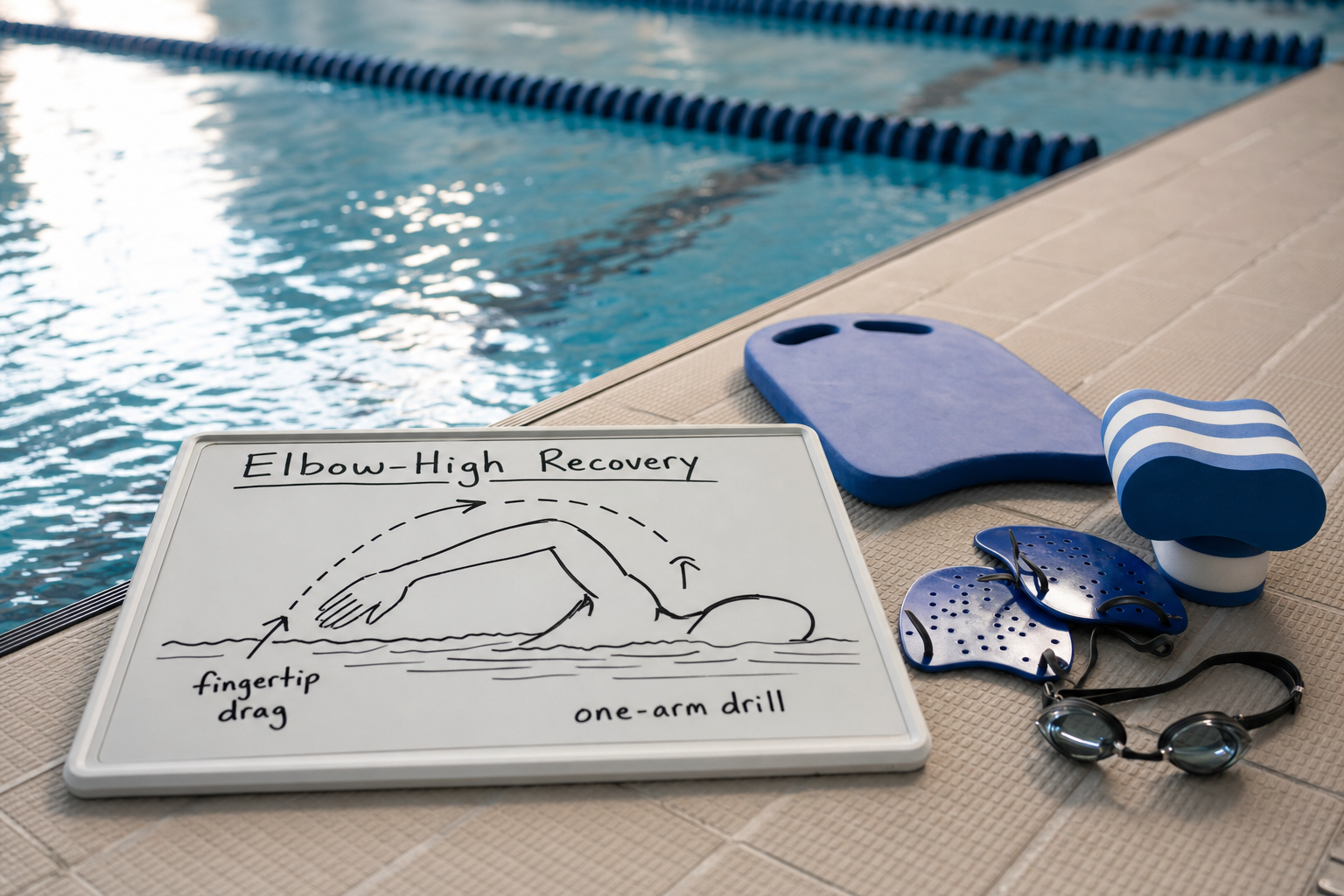
Kids aged 6-12 who are already doing 25-yard or 25-metre freestyle often swing straight arms or stick their elbow out (“chicken-wing”) when recovering their arm over the water. A relaxed elbow-lead recovery solves that by smoothing timing, cutting down shoulder hitches, and working toward easier side-breathing. Below you’ll get: what elbow-lead recovery really means, how to spot when it’s wrong, and a 5-minute spot-and-fix parents can use in shallow water with just two drills (one-arm and fingertip-drag). Plus caveats so you don’t push into harm or bad habits.
What Exactly Is “Elbow-High Recovery” in Freestyle?
When your child’s arm comes out of the water after the pull, the elbow should be the first part to clear, higher than the hand or forearm. The arm swings forward with a relaxed hand and forearm, elbow leading. That keeps shoulders relaxed and helps avoid winding up with the hand too far out (“over-reaching”) or letting the elbow drop (that chicken-wing). When done right, elbow-high recovery sets up a clean path for breathing because the arm stays out of the way as the swimmer rolls.
Experts describe doing the recovery like “zipper drill” or “fingertip drag” where the recovering hand drags lightly along the side or surface until it reaches shoulder/ear level, making sure the elbow is high throughout.(blog.goswim.tv) That cue forces the elbow up, locks out those wide swings, and encourages a tighter, smoother cycle.(blog.myswimpro.com)
Spotting “Straight Arms / Chicken-Wing” Problems
If any of these show up, the elbow-lead recovery cue is especially helpful:
- Swinging arm recovery with arm almost locked straight.
- Elbow trailing hand or elbow dropping below hand during recovery.
- Big shoulder hitches or tugs when arm exits water.
- Trouble breathing to the side without the head lifting too much.
- Lots of extra splash when the arm re-enters.
If you see these, it means the child is over-reaching or not lifting the elbow, and recovery is costing speed and stressing the shoulder.
5-Minute Spot-and-Fix: Two Drills to Practice in Shallow Water
Use these drills when your child is warm (after a few strokes or warm-ups), and keep things easy. The aim is feel, not speed. If anything hurts—stop immediately and consult the coach or swim specialist.
One-Arm Drill
Stand in shallow water so your child can touch the bottom with one hand or use a kickboard for balance. Tell them to leave one arm at their side (relaxed), while they swim freestyle with the other arm only. Focus every stroke on lifting the recovering elbow high, hand and forearm loose. Alternate sides. This isolates the recovery arm so they can really feel elbow leading.
If you want a structured way to help your child progress at home, the 10-Week Plan guides you step by step.
Fingertip-Drag Drill
Have the child swim freestyle with both arms, but on the recovery, drag the fingertips of the recovering hand lightly along the surface (or just under) of the water until the elbow is well above the hand. Then let the hand re-enter gently in front of the shoulder, not too wide. This teaches a smooth, high elbow recovery and discourages flaring out or pulling the arm if the hand skips ahead.(blog.goswim.tv)
[[ctakid]]
Do each drill for 2-3 minutes, total 5 minutes. Mix in a few normal freestyle strokes after drills to let the feel settle.
Where This Fixes Other Common Freestyle Issues
Using these cues and drills helps with timing—because as the elbow leads, the body rolls more naturally and the breathing side clears space. Shoulder hitches (that rebound in the arm muscles) reduce, because the elbow being high reduces torque and weird lever lengths. Over-reaching (hand entering wide or ahead of the shoulder) gets fixed as the fingertip-drag forces the hand to enter under a better path. Relaxing the forearm helps avoid stiff, windmill-like swings.
Many kids keep working these drills during their regular practice, or parents might include them in a technique block. An example plan for weekly improvement is the “10-Week Plan” from swimy.org, which includes fingertip drag and one-arm drills as part of structured swim building. That plan helps set adequate frequency and progression without overloading.(swimsmarttoday.com)
Common Pitfalls & How to Avoid Them
Even with good cues, mistakes happen. Watch out for over-rotation when breathing—kids might twist their whole body too much trying to get elbow high, which hurts alignment. Also avoid pushing for speed before form. Practice slowly. Better a few good strokes than many messy ones.
If elbow-lead is forced or the arm is too tense, it creates strain in shoulder or neck—pain is a warning sign. If your child complains of pain, stop and talk to their coach or maybe a physical therapist.
Make sure strokes are never windmill-like (straight arm recovery): that looks flashy but is higher risk for shoulder stress and inefficient at longer distances.
Making It Year-Round & Age-Appropriate
This elbow-high recovery isn’t a fancy trick reserved for summer or competition. It’s a foundational part of freestyle form for ages 6-12. Every season, whether your child is doing lap swim, swim squad or lessons, these cues and drills should be part of warm-ups or technical work. Over time, doing 2-3 drills per week for 5 minutes helps imprint the correct recovery subconsciously.
Encourage patience. They may revert to old arm swings when tired—but remind them of elbow-lead, bring back fingertip drag or one-arm work, slow things down. Coaches often praise consistency more than occasional brilliance.
Final Thoughts for Parents Coaching at Home
You don’t need fancy gear. You don’t need to be a swim coach. You just need correct cues, safe shallow water, and to focus on feel rather than laps. Watching the elbow versus the hand, making sure the recovery is relaxed, fingers dragging—those are simple signals. Apply the spot-and-fix drills regularly, watch for over-rotation or shoulder discomfort, and avoid rushing speed over form.
With time and consistency, your child’s freestyle will swing into smoother, safer, more efficient recovery. Elbow-high recovery helps beat the chicken-wing, improve breathing, and reduce strain. Your swimmer’s shoulders and timing will thank you — season after season.
120+ swimming exercises sorted by age — with video and instructions. Developed by swim instructors, completely free.

120+ swimming exercises sorted by age — with video and instructions. Developed by swim instructors, completely free.