When Your Baby Starts Copying the Big Kids at the Pool: Safety Tips for Mixed-Age Swim Time
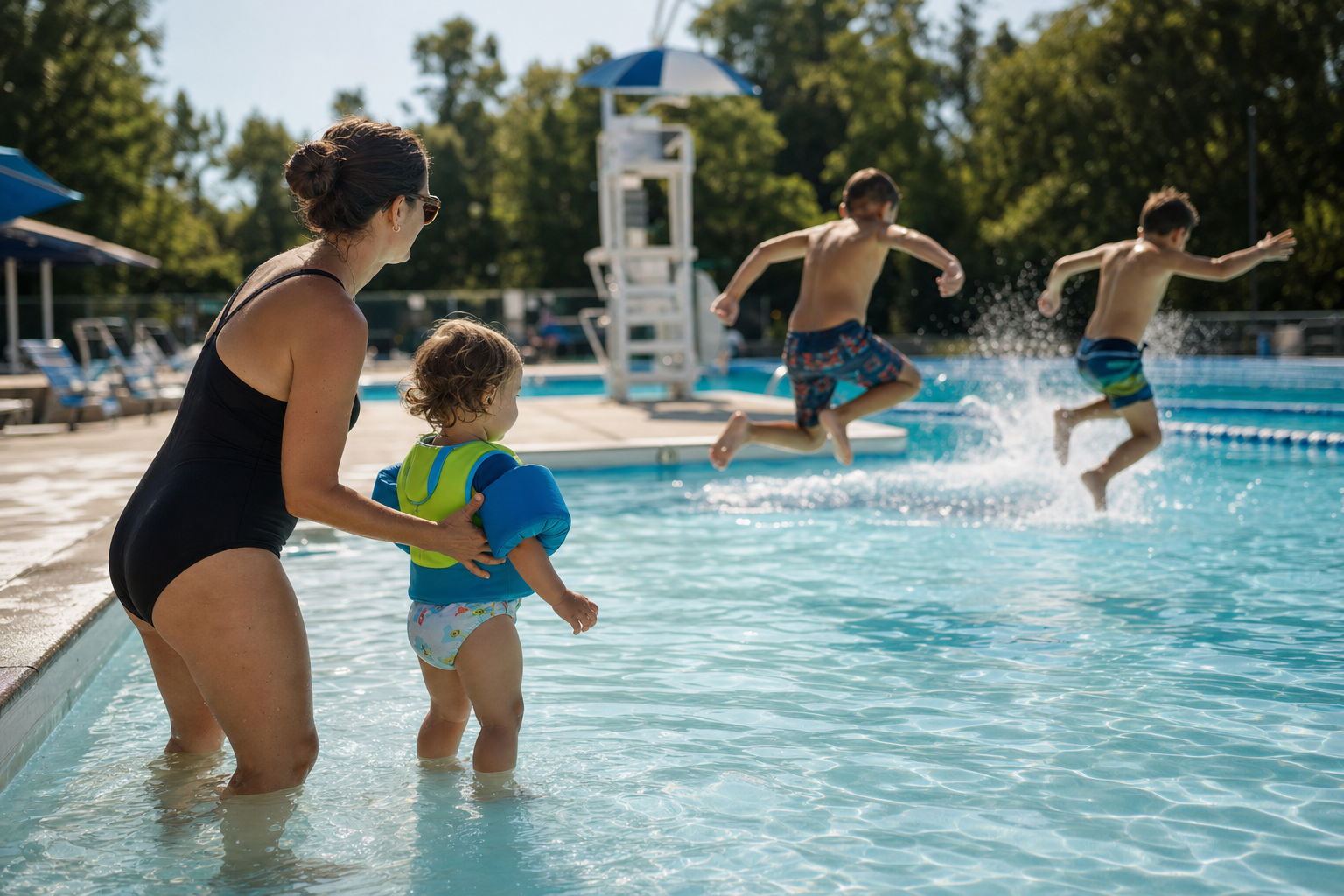
Almost every parent of a 10- to 36-month-old has looked over to see their toddler trying a splash, jump, or run—just like older siblings. It’s adorable, but in a pool that behavior can turn risky fast. Here’s what matters most: keeping your baby safe through smarter positioning, choosing age-appropriate alternatives, and not letting big-kid antics set the pool rules.
Why Toddlers Copy Older Kids
Toddlers learn by watching those around them, especially older siblings or cousins. When big kids are running by the pool, leaping off ledges, or diving into the deep end, your baby sees action and wants to join in. Developmentally, babies around 10 to 36 months start imitating movements—both safe and unsafe—without understanding potential danger.
Common Pool-Day Pitfalls
A frequent scenario: the pool is crowded, an older kid leaps into the deep end, and the toddler tries to follow. Or a parent thinks, “My older child will watch the little one,” then steps away. Research shows that even with competent swimmers nearby, toddlers need “touch supervision”—meaning a parent or caregiver is within arm’s reach. Letting toddlers swim unsupervised—even when older siblings are present—raises drowning risk. According to the Centers for Disease Control and Prevention, drownings are often fast, quiet, and happen when nothing seems wrong.(cdc.gov) Parents sometimes assume that more people around equals safer, but distractions, group dynamics, or dividing attention compromises real supervision.(stonybrookmedicine.edu)
Another pitfall is letting big-kid games drive pool rules. Older kids might treat the pool edge as a diving board, run along slippery surfaces, or climb on ladders in ways toddlers imitate without knowing safety limits. Without clear rules that protect littler ones, imitation can become hazard.
How to Manage Mixed-Age Swim Time
Watching toddlers and older kids together means extra vigilance. First, choose your spot in the pool area carefully. Stay close to your toddler, ideally in shallow water where you can stand or in water that allows constant contact. Even if older children are capable swimmers, keep the toddler always within arm’s reach. The “touch supervision” style helps prevent slips, imitative leaps into water too deep, and other sudden danger.(pmc.ncbi.nlm.nih.gov)
Next, during family or community pool time, designate a “water watcher”—a responsible adult who has no distractions, like phones, grilling, or chatting. Make sure this adult’s attention is on your toddler and not assumed to be taken up by an older child. Older siblings may want to help, and they can, but they shouldn’t replace adult supervision.(stonybrookmedicine.edu)
If you want a structured way to build water confidence at home, the 10-Week Plan guides you step by step.
Teach simple, clear rules aligned with your toddler’s age. No jumping unless feet are firmly on a surface you know is shallow enough. No running near the pool’s edge. If older siblings want to play more energetic games, they do so away from the baby’s reach or do them at times when the toddler is resting or out of the water.
[[ctababy]]
Age-Appropriate Alternatives & Redirecting Imitation
Instead of allowing your toddler to mimic dangerous moves, offer fun, safe alternatives. Simple water games like patting water, floating with you, or pouring water are excellent for this age. When older kids are doing big splashes or jumps, provide your toddler with splash toys or shallow ledges to step off into water they can stand in safely.
Enrolling in swim lessons can also help. Babies older than one benefit from introductory lessons focused on comfort in the water, while toddlers build skills like floating or kicking. The right swim-teaching system includes structured guidance over weeks to build confidence and safety. For example, the “10-Week Plan” of swimy.org offers age-appropriate modules, even for children aged 0-2, letting toddlers grow strong water skills without feeling pressured by what the older kids can do.(swimy.org)
Safety Strategies for Parents
By now you know you need close supervision, but here are more ways to stay ahead:
- Position yourself where you can see both your toddler and the bigger kids. Stay in the water or on the pool edge nearby so you can intervene quickly.
- Set up pool safety zones. Maybe the shallow end is for toddlers and splashing, while older kids play in deeper water under lifeguards or separate supervision.
- Clear distractions: no phones, no beverages that draw your attention away. The pool watcher role means zero multitasking.
- Help older siblings understand their role. Encourage them to follow rules that protect the toddler—like no diving near the baby or keeping toys from attracting the toddler toward deeper water.
What the Experts Say
The CDC emphasizes that drowning is preventable by ensuring close and constant supervision when children are in or near water. Adults should always be within arm’s length of toddlers, avoiding distractions.(cdc.gov) The American Academy of Pediatrics echoes these points, encouraging early swim lessons for children aged 1-4, while stressing such lessons don’t replace attentive parenting.(healthychildren.org)
Research into caregiver behavior confirms that believing a toddler is “water competent” often leads to less attentive supervision—which can backfire. Toddlers should never be treated as if they’re safer in the pool simply because other kids seem skilled.(pmc.ncbi.nlm.nih.gov)
Final Thoughts
When your 10- to 36-month-old starts copying big kids at the pool, don’t wait until a scare. Take action now: stay close, set limits, redirect unsafe imitation, and equip your toddler with safe alternatives. You can enjoy family pool days, trips, and summer fun without risking safety. Remember, in the world of mixed-age swimming, the baby’s health depends on what you prevent—before it becomes an emergency.
120+ swimming exercises sorted by age — with video and instructions. Developed by swim instructors, completely free.

120+ swimming exercises sorted by age — with video and instructions. Developed by swim instructors, completely free.