Find Staffed Swim Hours During Lifeguard Shortages: A Parent’s Guide
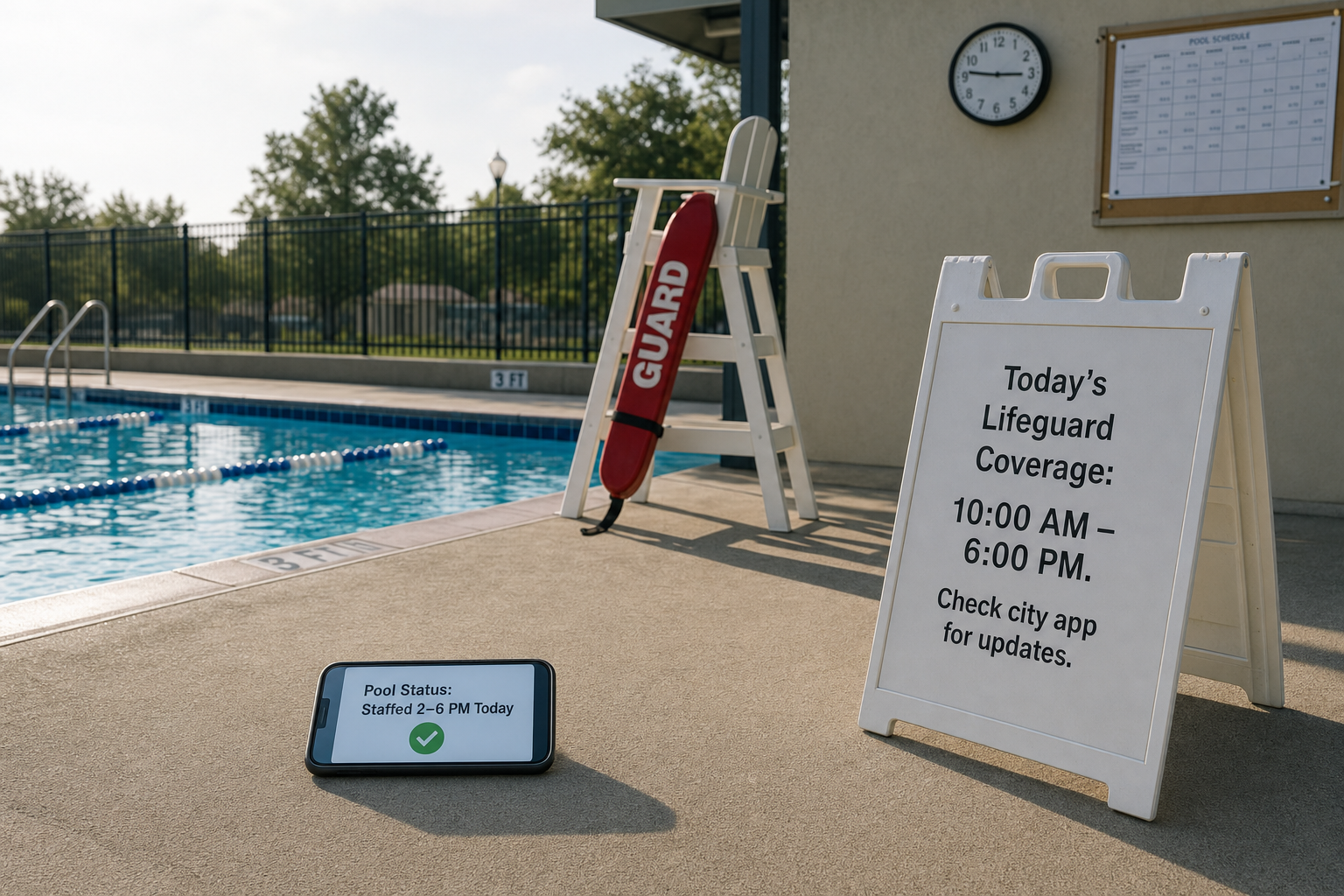
If you’re a parent of a child aged 3-12, figuring out when there are lifeguards on duty becomes mission critical once summer starts winding down. Pools often operate fewer hours late summer, during holiday weeks, or in shoulder seasons when “pool lifeguard shortage” leads to reduced shifts and last-minute closures. Knowing how to spot “staffed swim hours near me”, make backup plans, and swim safely when guards aren’t there—all matter. Here’s what you really need to know.
How to Track When Pools Are Actually Staffed
First, don’t assume your local pool’s hours stay the same from July through September. Many local councils and city aquatics departments update schedules daily—or even multiple times per day—due to absences or required rest breaks. For example, Manatee County’s Aquatic Safety division publishes daily updates on public pool status so parents can check before heading out.(mymanatee.org)
Apps and notifications are your new best friends. The City of Boulder, Colorado, for instance, uses a system where text keywords alert you about unexpected pool closures or staffing shortages.(bouldercolorado.gov) Similarly, Palm Beach Gardens has an app and online tool to view current operating hours of their aquatic complex and to know when water temperature or air conditions cancel swim sessions.(pbgfl.gov)
Check your city or county’s aquatics webpage first thing in the morning, then again mid-day. Weather, staffing, or safety issues can switch things fast. Always search for “safe swim times today” in your area—because even “open pool” signs don’t guarantee lifeguard coverage.
What to Do When Lifeguards Are Off Duty
Sometimes your pool may be open for general use without lifeguards, or guards may only arrive later or leave early. If that’s the case:
Make sure supervision is rock solid: you or another trusted adult should stay within arm’s reach of weak swimmers, especially ages 3-6. For older children, confirm everyone knows how to float, tread water, and get to the pool edge safely. Using approved lifejackets is smart.
Know the safety gear: always check that floaters, rescue rings or poles are available and in good condition, that water clarity is good, and that pool rules are posted and enforced. The Georgia Department of Public Health reminds swimmers that injuries and drownings rise when trained staff and equipment are absent.(dph.georgia.gov)
If you want a structured way to help your child progress at home, the 10-Week Plan guides you step by step.
Learn basic rescue and CPR yourself. Swim lessons are good—but becoming rescue-aware helps you make decisions when lifeguards are not present.
Alternative Venues When Your Usual Pool Reduces Hours
If your go-to pool has shorter open swim hours, find backup spots. Private swim clubs, YMCA branches, school pools, or aquatic courts in recreation centres often have more stable staffing or use instructor-led supervised sessions. In many cities, swim lessons or programs at these alternative venues continue well into late summer or autumn, even when public pools scale back. Swimy.org, for example, offers many seasonal exercise plans and swims—including a structured 10-Week Plan designed to build skill and confidence in kids aged 3-12 that you can follow even if public pool hours are limited.(swimy.org)
[[ctakid]]
Check with local clubs to see if they can buddy up so members agree on mutual supervision when lifeguards aren’t there. Also, watch local bulletins: some councils hire extra guards mid-season once budget or recruitment improves. Armagh City, Banbridge & Craigavon in Northern Ireland recently filled many vacancies after a recruitment drive, reducing disruptions.(armaghi.com)
Planning Smart for Late Summer and Off-Peak Swim Time
As temperatures cool toward September, staffing often drops. Don’t expect “July level” coverage. Holiday weeks may complicate things: guards may take vacations; schedules shift. Always check for “holiday hours” or “special staffing” notes.
Pick consistent times that are more likely to be staffed—typically early mornings, weekday late afternoons, and weekends. These times often match high-use periods, so pools tend to keep guards then. The City of Vancouver reduced hours midday more than evenings or mornings during shoulder seasons.(cityofvancouver.us)
Have a backup indoor pool that works for you when outdoor pools shut early or get too crowded. Even a recreational centre could offer supervised swim or swim lessons even without full lifeguard staffing.
Safety First: What You Must Check Every Single Swim
Every time you plan to head to the pool, confirm lifeguard coverage. If guards are absent, check that venue rules allow unsupervised or parent-supervised swim under those conditions and that there is a solid supervision plan in place.
Make sure water chemistry is maintained: clear water helps you see everything. Understand local pool inspections and certifications. If pools are notifying you via apps or texts, they’re probably safer choices.
For children aged 3-12, establish rules around swim buddy systems, flotation devices, and rest breaks. Teach them never to swim alone—even if a lifeguard is “likely” to be there.
Putting This into Action
Wake up early on pool days, check your city’s aquatics website or app to see “staffed swim hours near me.” If you’re unsure, call. Have a few alternate spots mapped out. Use a swim plan like the 10-Week Plan on Swimy.org to build your child’s technique so they’re safer in various environments. Keep safety gear and backup supervision ready. And always lean toward safer options when lifeguard coverage drops.
When you do this, even amid widespread pool lifeguard shortage, you can still secure meaningful, safe swim time for your children. Swimming won’t pause; you’ll just swim smarter.
120+ swimming exercises sorted by age — with video and instructions. Developed by swim instructors, completely free.

120+ swimming exercises sorted by age — with video and instructions. Developed by swim instructors, completely free.