How to Read Swim School Safety Pages Like a Pro
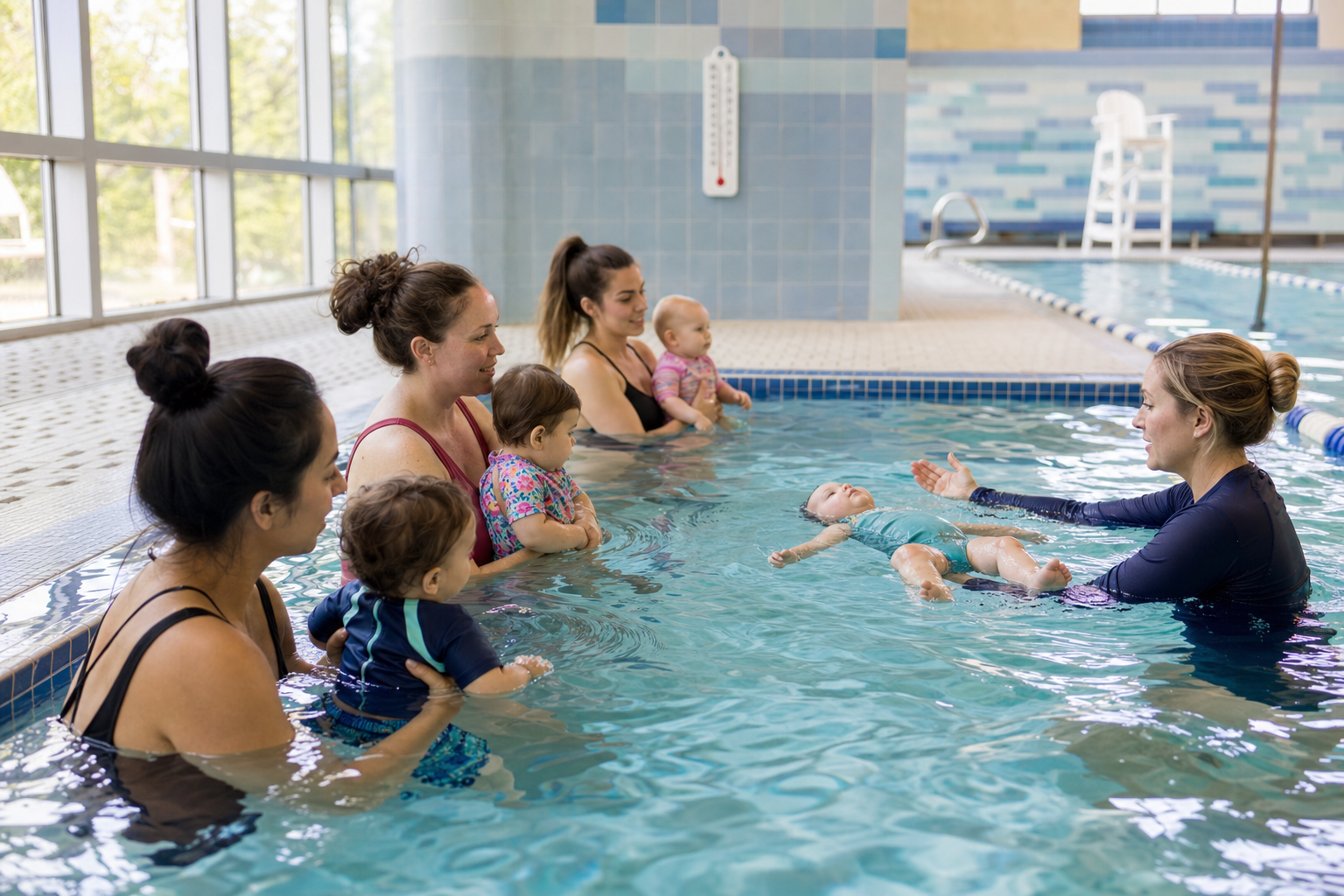
When you're searching for baby swim lessons near me, don’t let glossy photos and enthusiastic quotes be the only reason you sign up. These safety details will help you compare swim schools that put your infant’s well-being first.
What to Check Before Booking
Age Ranges and What “Baby Class” Really Means
The American Academy of Pediatrics (AAP) says swim lessons can begin after the baby turns one year old because many children aren’t developmentally ready before that.(publications.aap.org) Parent-and-me water play classes are fine earlier, since you’ll be in the water together. If a site lets you book formal baby swim classes starting at, say, two months, that’s a red flag to investigate more.(swimkids.us)
Teacher-to-Student and Parent-in-Water Policies
You’ll want a low ratio: for babies and toddlers (0-36 months), a safe class has one teacher per four to six children, plus caregivers.(swimy.org) A caregiver should often be in or touch-supervising the baby in the water. Check whether the swim school expects parents or caregivers to be in the pool. If the information is vague or missing, call.(publications.aap.org)
Water Temperature and Pool Hygiene
Cold water quickly becomes dangerous for small babies. The AAP recommends water heated to between 87-94°F (≈30-34°C) for classes with children age three and under.(healthychildren.org) Swim schools should also follow strict water purity rules, sanitize properly, and require swim diapers or pants that prevent leaks.(usswimschools.org)
Fecal Accident Rules and Cleanliness
Schools should have a clear protocol in case of accidents. The CDC’s Healthy Swimming guidelines say the pool must be closed, cleaned, disinfected, and left unused for a defined period depending on the type of incident (solid vs. diarrheal).(cdc.gov) If this info isn’t listed on the safety page, you should ask before paying. If their answers are vague, move on.
If you want a structured way to build water confidence at home, the 10-Week Plan guides you step by step.
Teacher Training and Certification
Make sure staff are trained specifically in infant/toddler swim education, child development, and water safety. They should hold current First Aid and CPR certifications.(usswimschools.org) Programs endorsed by USA Swimming or similar credible bodies tend to meet these standards.(usaswimming.org)
[[ctababy]]
Emergency Procedures and Liability
A quality school should publish or share their emergency action plan—what they do if a child is distressed, there’s a contamination event, or an instructor needs help. Also check that they are regulated by health or safety authorities, and that the facility has insurance that covers incidents.(usaswimming.org)
How to Use These Insights While You Compare Classes
While browsing swim school pages, start by scanning safety or policies sections. If something feels “too good to be true”—like photos of tiny babies underwater without caregiver support—investigate. Here’s what parents often miss:
- Booking classes just “because the pool is pretty.”
- Overlooking water temp because they assume all aquatic centers keep water warm enough.
- Assuming a “baby class under 3” means the parent will be in the water when sometimes classes expect babies alone early on.
Sometimes swim schools offer special progression plans for infants and toddlers. For example, you may find a “10-Week Plan” that outlines what skills will be introduced each week. If you see such a plan, take a look at how frequently parents are included, how submersions are handled, and whether water conditions are safe according to what we discussed above. (Here’s an example of one exactly called the “10-Week Plan”.)(swimy.org)
Use a side‐by‐side comparison chart as you research: age range, ratio, water temp, parent policy, fecal or illness rules, teacher qualifications, emergency plan. If any key area is blank or vague, send an email or call. Safety first.
When Key Info Is Missing or Unclear
If none of those critical safety points are clearly answered on the website, that’s a red flag. Don’t pay until:
- you’ve called or visited and gotten specifics,
- the school can explain exactly their water temperature, fecal-accident process, teacher credentials,
- you hear concrete details—vague promises like “warm water,” “great teachers,” etc., are not enough.
Final Word: Don't Let Photos Fool You
Bright happy photos are wonderful—but they don’t tell you if a baby class includes caregiver support, whether the teacher is trained, or how emergencies are handled. Use the safety policy as your measuring stick. Follow the AAP advice: for baby swim lessons, those under age one should be in parent-led water play; lessons after age one can build swim safety, but still not “drown proof.”(publications.aap.org) Trust your gut—and verify everything essential—before choosing a baby swim school you can feel confident about.
120+ swimming exercises sorted by age — with video and instructions. Developed by swim instructors, completely free.

120+ swimming exercises sorted by age — with video and instructions. Developed by swim instructors, completely free.