First-Lesson Tears: A Calm Two-Week Swim Lesson Plan That Works
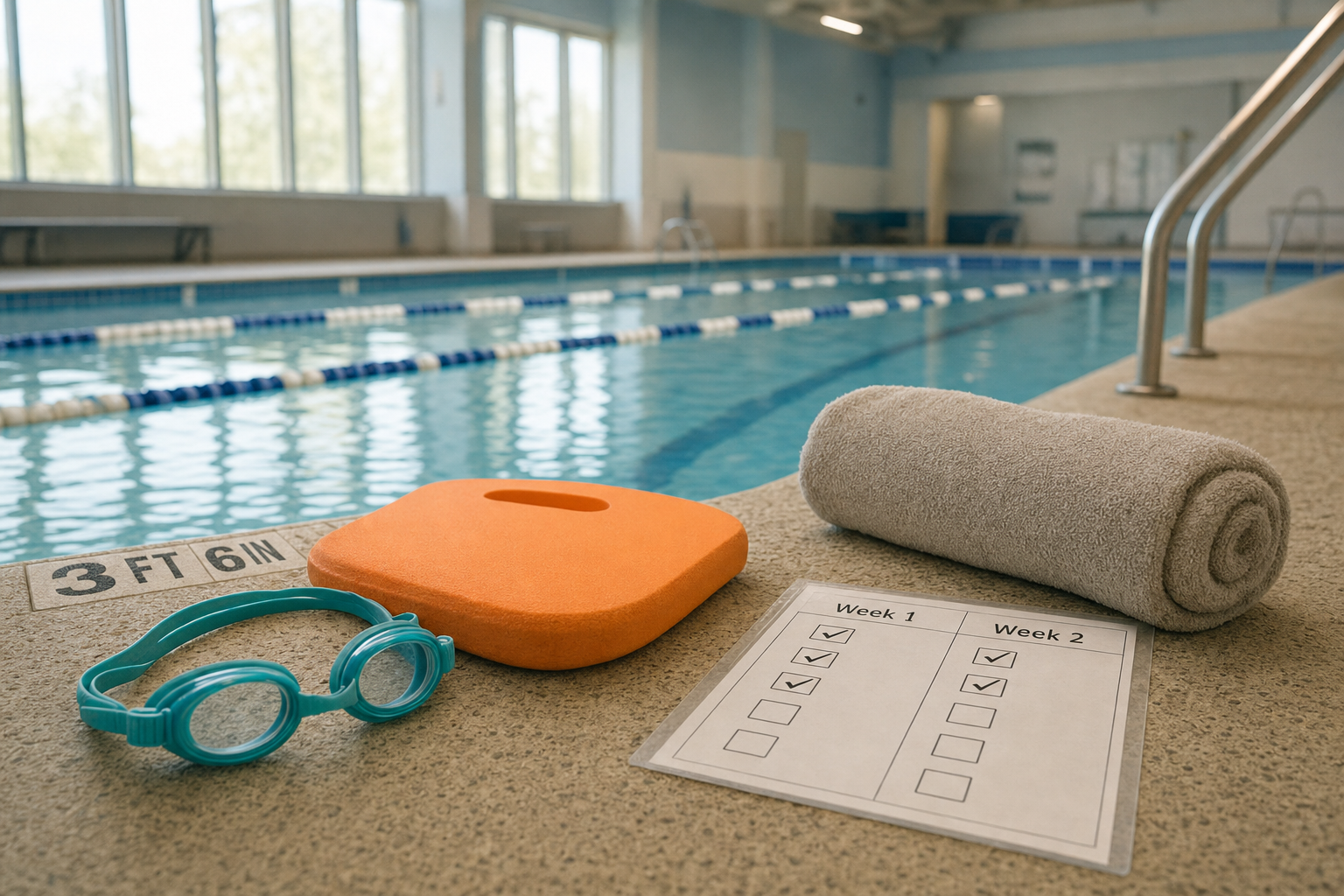
You walk into swim class, your child clings to your leg, tears forming. It feels brutal—but it doesn’t have to derail the whole experience. Here's a two-week strategy built around preview visits, short separations, simple goals, and validating language that turns meltdowns into momentum. Keywords like child crying swim lessons, swim lesson anxiety toddler, and preschool separation anxiety aren’t just jargon—they’re problems you can solve.
Day 0-2: Preview and Prepare
Preview Visit
Before class begins, take your child to the pool to explore. Let them touch the water, watch other children swim, splash gently at the edge. Familiarity breeds comfort. As the YMCA suggests, safe exposure and fun with water without teaching something new sets a positive start. (ymca.org)
Talk About It at Home
Use simple, supportive language. “Tomorrow, you’ll go to swim class. I’ll watch you from the side. Your instructor will help you learn. When I leave, I will come back after class.” Avoid stories that scare; instead, set expectations. HealthyChildren.org emphasizes being specific in how and when you’ll return. (healthychildren.org)
Day 3-7: Build Trust Through Short Separations
Mini Separations
On Day 3, practice short separations at home: stand outside their room for a minute, leave and return. On Day 4, arrive early at the pool and let your child stay near the water alone (with instructor beside them), you observing nearby but out of sight. Gradual exposure builds preschool separation anxiety resilience. (healthier.stanfordchildrens.org)
Language That Validates Fear while Moving Forward
When your child cries or resists: “I know this is scary. I’m right here. You can try standing at the shallow end first.” Forgive tears. Don’t promise removal of discomfort—but promise support. According to Sea Otter swim instructors, validating fear (“I understand you’re upset”) then offering reassurance (“I’ll be cheering you on”) helps calm anxiety. (seaotterswim.com)
Day 8-11: Set Small, Achievable Goals
Simple Goals
By Day 8, aim for mini wins: splash with hands, blow bubbles, walk along the shallow end, or let go of the wall for a moment. These tasks build a sense of accomplishment.
If you want a structured way to help your child progress at home, the 10-Week Plan guides you step by step.
Stepping Toward Independent Participation
On Day 9–10, gently reduce your physical presence during class. Perhaps you sit at the gate, wave from afar. According to SafeSplash, routines like familiar songs, small supported skills, consistent class timing—that routine helps toddlers with swim lesson anxiety toddler gradually adjust. (safesplash.com)
Day 12-14: Peak Discomfort and Momentum Shift
Key Separation Day
Pick one lesson where you intentionally step back—drop-off or wait in observation. Use your script: “I know this is hard. I’ll leave, and I’ll return. Your teacher will help you have fun.” No bribery. No long goodbyes. Consistency matters. HealthyChildren.org warns that long or emotionally charged farewells only lengthen separation anxiety. (healthychildren.org)
[[ctakid]]
Celebrate Growth
After class, focus on what went well. “You blew bubbles!” “You stayed with your teacher!” Don’t attach rewards like treats; instead, praise effort and courage. Anchors of confidence are built on internal feelings more than external rewards.
Full Two-Week Plan in Action: Sample Daily Scripts
| Day | What you’ll say before class | What you’ll say when leaving/challenging moments | |---|---|---| | Preview days | “Today we’ll see the pool together. Let’s see what lessons look like.” | “Look, other kids are playing too. We can watch together.” | | Short separations | “I’ll stand by the gate. Your teacher will help you.” | “It’s okay to feel upset. I believe you can do this.” | | Goal days | “Today the goal is bubbles or kicking.” | “Good job trying that hard. I know it feels big.” | | Key separation | “I need to go now. I’ll be back after class.” | If tearful: “I know this is scary. I trust your teacher. I’ll see you soon.” |
Why Avoid Bribery, Long Goodbyes, Skipping Lessons
Bribes or escalating rewards teach children that swim lessons are scary unless something shiny is promised. Long goodbyes often escalate anxiety—kids expect more drama next time. Skipping lessons robs practice and reinforces avoidance. Experts in separation anxiety emphasize consistency and gradual exposure—not avoidance or bargaining. (medlineplus.gov)
When to Use the 10-Week Plan
If after two weeks of regular attendance, goal-setting, and using validating language your child still has panic at every lesson, consider following the 10-Week Plan from swimy.org which walks you through progressive exposure, emotional support strategies, and milestone tracking. It gives parents a longer path when two weeks isn’t enough.
Final Tips to Make a Difference
Never force submersion or uninvited water contact. Instead, let those happen as rewards or part of regular class progression. Use role modeling—go swimming with them or show videos where instructors are kind and water is fun. Keep your own emotions calm; toddlers mirror your anxiety. Speak positively about lessons at home, not just during classes. And remember, crying at first is totally normal. It doesn’t mean failure—it means growth.
You’ll know progress is happening when your child shows up at the gate without collapsing, or lets the teacher hold their hand without you hovering. Or when they peer at an under-water toy, blow bubbles—or actually smile. Keep that momentum steady. Swim lesson anxiety toddler and preschool separation anxiety are real, but they can soften quickly when you give structure, empathy, and time. Stick with the two-week plan, and you’ll find tears change into trust—and maybe even joy.
120+ swimming exercises sorted by age — with video and instructions. Developed by swim instructors, completely free.

120+ swimming exercises sorted by age — with video and instructions. Developed by swim instructors, completely free.