Flip Turns Make Them Dizzy? Gentle Fixes That Work for Kids
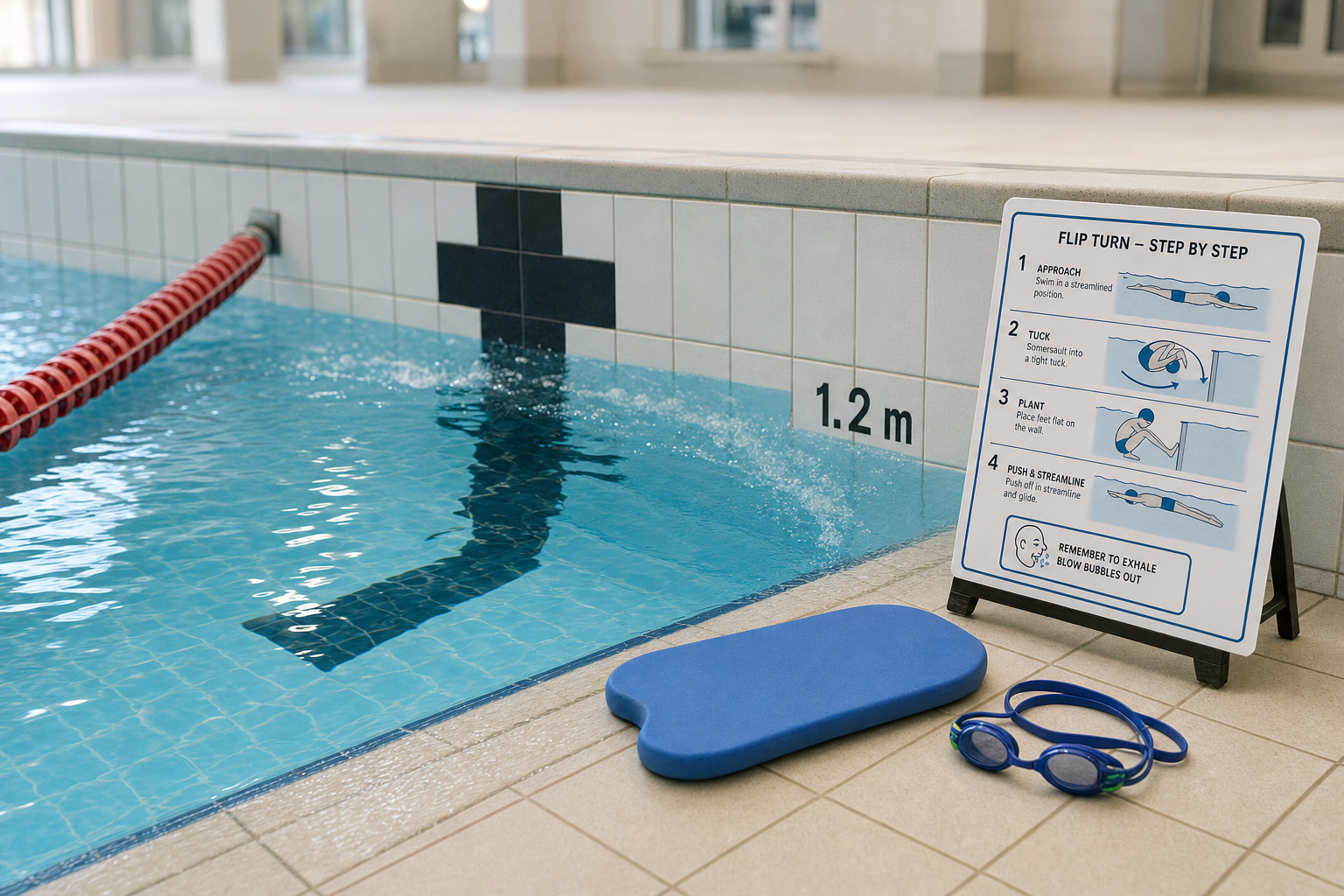
Kids often get woozy or nauseated when learning tumble turns (also called flip turns), especially those aged 7 to 12. It’s not unusual. But there are safe progressions and techniques that help children master turns without dizziness. Let’s dive into what causes the spin-out feelings and how parents and coaches can gently guide their swimmer toward confident, nausea-free turns.
What Causes Dizziness in Flip Turns
The tumble turn combines rapid rotation, breath-holding, pressure changes, and sometimes water rushing against the face and ears. The inner ear’s balance sensors (vestibular organs) sense motion. When head position and rotation are sudden, or when breath is held for too long, those sensors send mixed signals to the brain. That mismatch can trigger dizziness or nausea. Also, if a child rushes the push-off, forgetting to exhale, oxygen dips and tension rises—making wooziness much more likely. These are common in age-group swim settings, especially just before try-outs or school gala season, when kids are pushing through technique quickly. Coaches’ manuals stress that swimmers exhale gently during somersaults to avoid these issues. (lifeguardcertifications.com)
Safe Progressions: From Mini-Somersaults to Full Tumble Turns
Mini-Somersaults in Shallow Water First
Begin with somersaults away from the wall in shallow water. Ensure the child tucks knees into chest, keeps their head on their chest, and practices exhaling through nose and mouth. Doing bubbles while turning builds comfort with being upside-down and breathing out under water. This builds vestibular tolerance and body awareness without risk. (lahealth.co.za)
Move to Wall Taps Before Full Flip Turns
Once mini-somersaults are stable, try somersaults near the wall. A swimmer swims half a length, performs a tuck and somersault about an arm’s length before touching the wall with their feet. The goal is to get used to rotating very close to a fixed barrier, controlling speed, and pushing off without the confusion of distance estimation. (lahealth.co.za)
Full Tumble Turn with Swim-In and Push-Off
Finally, after the child is comfortable with wall taps, they progress to full flip turns. Coach should verify their approach timing, head low and tucked, and encourage a clean push-off into tight streamline. Critical here is exhaling gently during the turn and avoiding a rush or breath-holding through the rotation. (lifeguardcertifications.com)
If you want a structured way to help your child progress at home, the 10-Week Plan guides you step by step.
Breathing Tips That Reduce Wooziness
Steady and relaxed breathing is a big part of escaping that dizzy trap. Teach the child to take their final breath well before the last stroke, then exhale through the nose during the flip to avoid water entry and inner ear pressure. Let them resume normal breathing only once they’re fully off the wall. Breath-holding or trying to time everything too tightly tends to backfire. Coaches often warn against breath-holding during flips. (lifeguardcertifications.com)
When and Where to Practice: Safety and Seasonality
During pre-team tryouts or ahead of school gala season is a smart time to begin more intense flip turn work. It gives kids time to master turns before competition. Always practice in lanes with clear space. Follow pool depth rules: for example, USA Swimming and other governing bodies suggest that flip turn instruction occurs only where depth is safe and signage is clear. Some guidelines allow tumble turn lessons in water around 0.9 metres or a bit shallower for younger children, but only if risk is assessed carefully. (dorsetasa.org) (swimy.org)
**
[[ctakid]]
**
Common Pitfalls to Avoid
Don’t let kids hold their breath through the turn—it increases tension, inner ear stress, low oxygen. Don’t rush push-offs or let them guess wall distance; that causes mis-timing and panic. Also, avoid ignoring coach approval or depth rules; unsafe practice zones + turns = risk of injury. Coaches’ manuals explicitly call out hyperventilation or disorientation as avoidable if progressions are slow and breathing cues are followed. (lifeguardcertifications.com)
How Parents Can Support from the Sidelines
Watch for signs of dizziness: stumbling, wiping watery eyes, hesitation after turns. Talk with the coach about staging practice using progressive drills. Ask if the swim team uses structured skill plans—many incorporate step-by-step programs like the 10-Week Plan from swimy.org, which builds strength, awareness, and confidence in starts and turns safely for ages 7-12. (swimy.org) Ensure your child rests, stays hydrated, eats well, especially on days of intense practice. Sensory overload (cold, chlorine smell, loud deck) can worsen dizziness.
Putting It All Together: How Progress Looks Over 2-4 Weeks
Week one: mini-somersaults and bubbles away from wall. Week two: somersaults near wall, practicing foot taps, controlled motion. Week three: half turns with push-offs. Week four: full tumble turns with swim-in, timing breath well, effective streamline. Keep sessions short and positive. Celebrate small wins—first time coming off the turn without looking shaken, or pushing off without gulping air.
By the end of 4 weeks, many kids will see dizziness fade significantly. If symptoms continue—frequent nausea, vertigo, or disorientation—meeting with a pediatrician or swim safety expert is wise. Sometimes it’s possible there’s an ear or vestibular issue that needs addressing. But for most kids, careful progression, gentle breathing, and safe, coach-approved practice leave dizziness behind, just as the flip turns become one more tool in their swimming skillset.
120+ swimming exercises sorted by age — with video and instructions. Developed by swim instructors, completely free.

120+ swimming exercises sorted by age — with video and instructions. Developed by swim instructors, completely free.