Great Lakes with Kids: Staying Safe from Rip Currents, Piers, and Beach Hazards
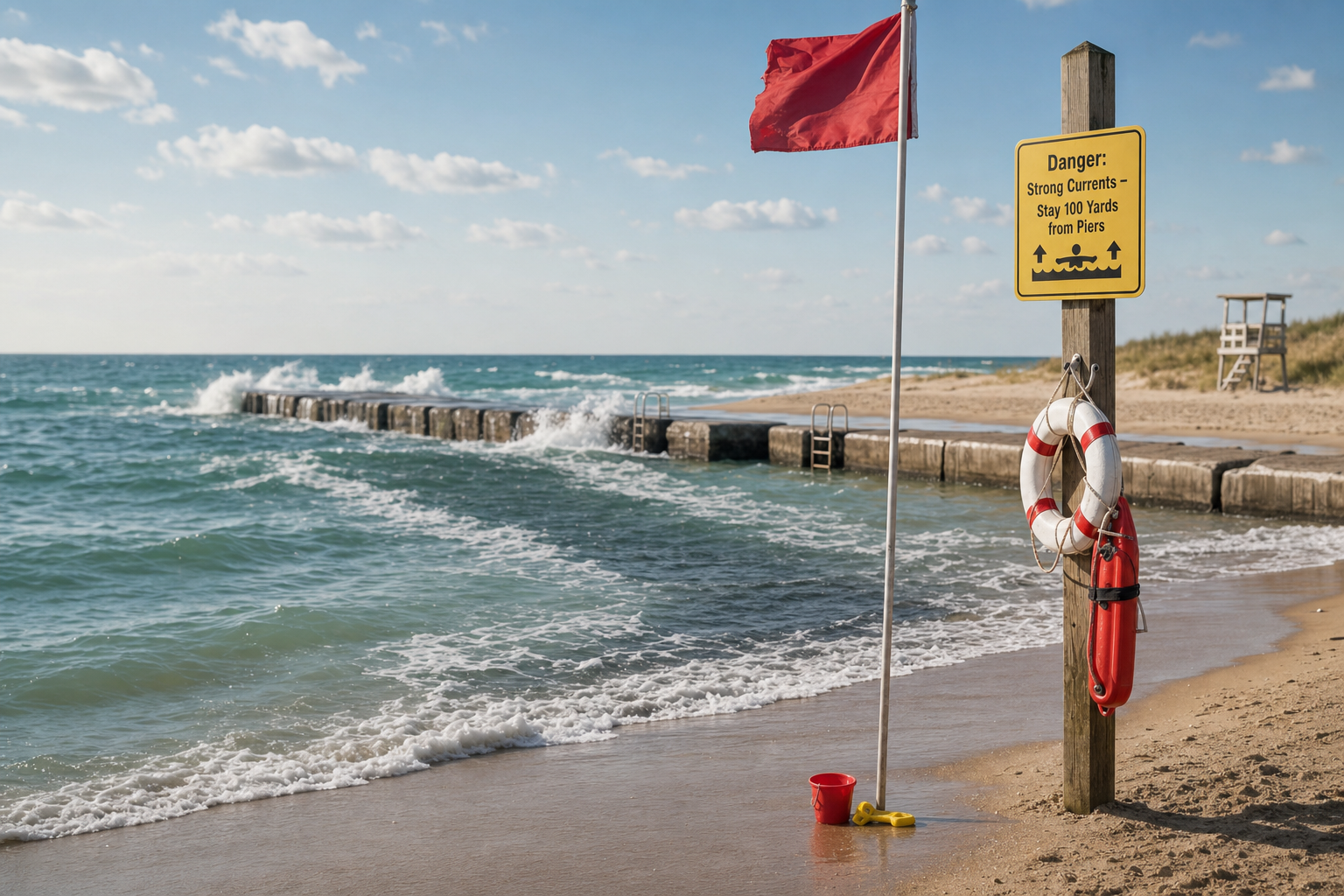
Swimming in the Great Lakes in late spring or summer is an adventure—until unexpected waves, currents, or a steep drop-off change everything. For parents of kids aged 6–12, it’s crucial to understand what makes these lakes dangerous and how to keep children safe. Below are top safety insights backed by experts and real-time forecasts, so you can enjoy the beach with confidence.
Why the Great Lakes are tougher than a pool
Currents in the Great Lakes come from many sources: rip currents, longshore flow, structural currents near piers or breakwalls, and outlet or river jet currents. Rip currents are fast-moving channels of water flowing from shore out toward open water. They form near gaps in sandbars or along structures. Even when the beach looks calm, these currents can pull swimmers off their feet. NOAA says rip currents in the Great Lakes can move faster than Olympic swimmers, and that swimming directly into one is dangerous.(oceanservice.noaa.gov)
Structural currents flow out along the side of piers or near river outlets. Water piling up near a pier has to go somewhere and often turns into a swift, pulling current that’s hard to fight. If your child is playing near a pier, they can easily get dragged into deeper water without warning.○(weather.gov)
Sudden drop-offs are another hidden danger. What looks like wading water near shore often turns into deep water quickly. Even strong pool swimmers can get shocked by cold, choppy water when waves crash overhead.(lakemichigansafety.org)
Reading the forecast and recognizing hazardous signs
Every trip to a Great Lakes beach should start with checking the Great Lakes Beach Hazards Forecast. NOAA’s Beach Forecast provides a detailed surf-zone outlook for the next 12 to 48 hours, along with swim risk levels and warnings about dangerous currents or waves.(weather.gov) When there’s a “Beach Hazard Statement,” it means high risk—for example, that piers may be heavily swamped or currents strong.(forecast.weather.gov)
Teach kids how to spot signs of rip currents or other dangerous areas. Calm water between breaking waves, murky channels, or water pulled toward deep zones could mean a rip is forming. Dark water, foam lines, or debris streaming out from shore are clues.(nhc.noaa.gov)
Also, learn to read warning flags. Most beaches use color codes—green for safe, yellow for caution, red for no swimming. Even if risk is low overall, dangerous currents can still be present near piers or outlets.(forecast.weather.gov)
If you want a structured way to help your child progress at home, the 10-Week Plan guides you step by step.
How parents and children can stay safe
Start safety habits early. For example, your child should know the rule: Flip, Float, Follow. If caught in a rip current, flip onto their back, float to conserve energy, and swim parallel to shore until out of the current, then head back in.(oceanservice.noaa.gov) Practice this on dry land so it feels familiar in real emergencies.
When checking beaches, try NOAA’s “Surf Zone Forecast” and “Beach Hazard Statements” to determine swim risk: low, moderate, or high. If the forecast is moderate or high—or if the waves are over three feet—stay out of the water or limit entry to shallow zones near the shore.(forecast.weather.gov)
[[ctakid]]
Teach kids to stay away from piers, breakwalls, and river outlets. At most Great Lakes beaches, safety advice recommends staying at least 100 yards—nearly three times the length of a school bus—away from piers.(weather.gov) If caught in a structural current beside a pier, use ladders if available or float until help arrives.(weather.gov)
To build strong, water-safe swimmers, consider signups for structured lessons. The 10-Week Plan from swimy.org offers age-appropriate skill building so kids learn both confident strokes and critical safety moves in that short window. This helps children cope when the water acts unexpectedly.
Life jackets are more than props; they save lives. For any child who struggles with swim strength, a coast-guard approved life jacket can make all the difference when they step from shallow sand into deep water.(lakemichigansafety.org) Always stay within arm’s reach; currents work fast.
Real-life danger zones: piers, outlets, breakwalls
Piers, breakwalls, and river outlets are magnets for currents. Structural currents form beside piers as waves crash and water is forced to flow around or along the edge. It’s a common place for rescues, especially in families unfamiliar with lake behavior.(weather.gov) River outlets or stream mouths are often unpredictable. Cold water, fast flows, and hidden drops make them particularly risky for children who are comfortable in a pool but not prepared for sudden depth changes.(weather.gov)
Parents should set firm rules: no swimming within 100 yards of pier structures or outlets, no jumping off piers, and no letting children wander near submerged barriers. Even on calm days, reflections off surfaces and underflow around structures can form treacherous waves or eddies.(weather.gov)
What to do if things go wrong
If your child is being pulled by a current or is swept off balance near a pier, stay calm. Yelling from shore or throwing a flotation device helps. Teach them to float on their back, signal with one hand, and only try to swim when they have space—not against the pull. Parents should never dive in unless trained; calling for help and using lifesaving gear is safest.(oceanservice.noaa.gov)
Practice safety drills with children before beach trips. Use the “Flip, Float, Follow” method at home. Role play scenarios: strong wave knocks you down, you’re near a pier with waves crashing; how would you respond? These drills stick better than rules shouted at the beach.
Final thoughts: preparation beats panic
Lake beaches are beautiful and fun, but they’re not calm pools. By knowing how to read beach hazard forecasts, teaching kids about structural and rip currents, always keeping eyes on the water, and planning with real safety tools like life jackets and swim lessons (like swimy.org’s 10-Week Plan), you give your family the best chance of enjoying the lakes safely. Keep it simple, stay alert, and respect the power of the water—and you’ll make summer memories that are fun, not frightening.
120+ swimming exercises sorted by age — with video and instructions. Developed by swim instructors, completely free.

120+ swimming exercises sorted by age — with video and instructions. Developed by swim instructors, completely free.