Flotation Belts in Toddler Swim Lessons: What Every Parent Should Ask First
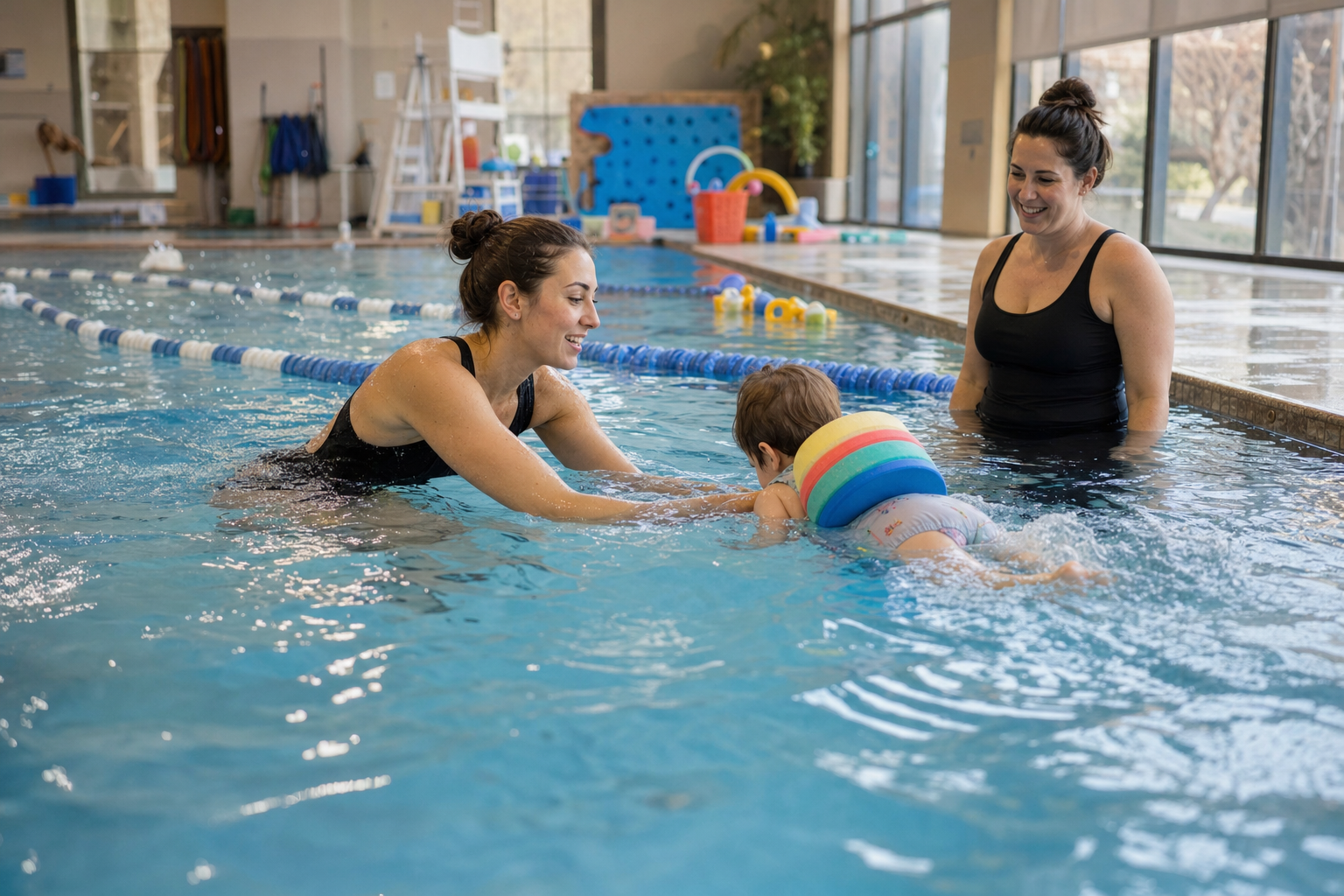
If you’re picking a toddler swim class for your 18- to 36-month-old, one of the first things you’ll want to know is whether instructors use toddler swim belts, back float bubbles, or just rely on back floats. How they use these aids matters as much as whether they use them at all. Here’s how to ask and what to watch for to protect your child and build skills that matter.
What’s a Flotation Belt and Why Some Programs Use Them
A flotation belt swim lessons program typically uses a belt with buoyant padding or bubbles around the waist or back, helping toddlers float while freeing up their legs to kick. Some classes use “bubbles” (bubble belts) or back float bubbles—devices that attach to the child’s back—or back floats, which support front-to-back or back-to-front floating. The idea is to aid body position so kids can learn kicking, breath control, turning over, and gliding.
In the age range of 18 to 36 months, many swim programs introduce flotation belts or bubble belts when toddlers are comfortable in the water, but not yet strong enough to maintain a horizontal body position unaided. For example, OPREC level swim lessons require children to wear a bubble belt on their back to learn proper body position while working toward swimming without support. (oprec.org)
Key Questions to Ask Swim Instructors
To make sure flotation aids are helping and not hindering, ask the instructor:
- Why are you using this aid? Is it to build body position, breath control, or confidence?
- How do you support horizontal or prone positions? Will the belt or bubble allow a flat body with face in the water, or does it force a vertical posture?
- When and how do you remove the aid? Good programs start with flotation belts but gradually phase them out during lessons, especially in parts focused on building independent skills. (bestswimschools.org)
- What’s your plan for helping toddlers not assume they can float unassisted just because of the gear? Instructors should teach back floats, rolling, and recovery to safety without any aid. (healthychildren.org)
These questions help you see if the class uses aids wisely—not as crutches but as stepping stones toward real swimming.
Pros, Cons, and Common Pitfalls
Flotation belts, bubbles, and back floats can speed up confidence, letting toddlers try glides, kicking, and breath control in a safer feeling way. The belts and bubbles often support body alignment better than inflatable arm floaties, which tend to force a vertical posture and interfere with swimming technique. (bubblestobutterfly.com)
Also consider this plan: many swim-schoolms design lesson programs you can follow week-by-week, adding new skills. Swimy.org offers a “10-Week Plan” that breaks down what to expect: using aids early, building floats, introducing independent movement, and gradually removing supports. When you ask instructors, you can say, “Are you following something like the 10-Week Plan?” to see if the class has structure. (Check that URL: https://www.swimy.org/10-week-plan)
On the flip side, relying too much on aids causes problems. Sometimes kids expect the aid to always be there and don’t learn to put their face underwater, push off walls, or turn over to float. Studies show that children who train with flotation vests tend to engage less in vertical movements like jumping, diving, or surface diving when playing freely. (waveaquatics.org) Belted or buoyed toddlers often move more horizontally during play and ask for flotation toys more often to feel safe. (waveaquatics.org)
[[ctababy]]
There's a key pitfall: buying the exact device used in class for open swim or home use without understanding its purpose. What helps in lessons (where instructors control the environment, timing, and support) might hinder progress in casual swim time. Some programs don’t allow floaties during lessons for precisely this reason: they interfere with learning body position and arm movement. (recwell.berkeley.edu)
What Real Body Position Looks Like
When toddlers are working toward being able to swim without floating aids, body position is critical. Real or almost-real body position means head in line with water surface (face often touching the water), hips up, legs extended behind, kicking from the hips rather than paddling. Back floats should be flat with slight arch but not curled. The position encourages a flat, streamlined posture essential for strokes.
Some teaching aids like kickboards and pull buoys help with this: instructors have toddlers hold a kickboard to practice front floats or float bubbles on their back to work on horizontal alignment. (bhjsl.org)
Ensuring Safety vs. Perceiving Safety
Flotation aids in class are not permission for independent swimming. Just because your toddler floats well in a belt class doesn’t mean they can be left unsupervised. The American Academy of Pediatrics stresses that swimming lessons can help build skills but always need “layers of protection” including close supervision, especially for toddlers. (healthychildren.org)
Make sure the class teaches “self-rescue”: floating or turning over after being submerged or knocked off balance. Ask: Do toddlers practice back floats without belts? Are they taught to roll from front to back on their own? These are critical for safety in accidental falls into water.
How to Handle Open Swim vs Class Devices
If you buy a toddler swim belt for open swim sessions always check:
- Size and fit should be snug, comfortable, and properly fastened.
- It should allow correct body position; don’t pick one that forces vertical posture or holds arms in place.
- Use it as backup or for supervised play, never leave your child without close watch—even with gear.
Instructors will often want these aids removed in lessons when teaching technique, body alignment, or breath control. Make sure you know the policy in your swim school. Ask this before signing up.
Bottom Line: Flotation Belts Work—When Used Right
When the instructor uses a toddler swim belt or back float bubble properly—just for support, just enough time, and always with care to body position—the aid can help build swimming foundations. But always treat aids as temporary tools, not permanent safety nets. Ask your swim school about reasons, timing, phasing out, and what your toddler will learn without the belt. As your toddler builds skills over time, the best outcome is independent movements, real floating, strong kicking, and confident breath control. That’s what sets them up for safe, skilled, and enjoyable swimming long term.
120+ swimming exercises sorted by age — with video and instructions. Developed by swim instructors, completely free.

120+ swimming exercises sorted by age — with video and instructions. Developed by swim instructors, completely free.