Cruise Ship Pools with Kids: Lifeguards, Vests & Real Rules
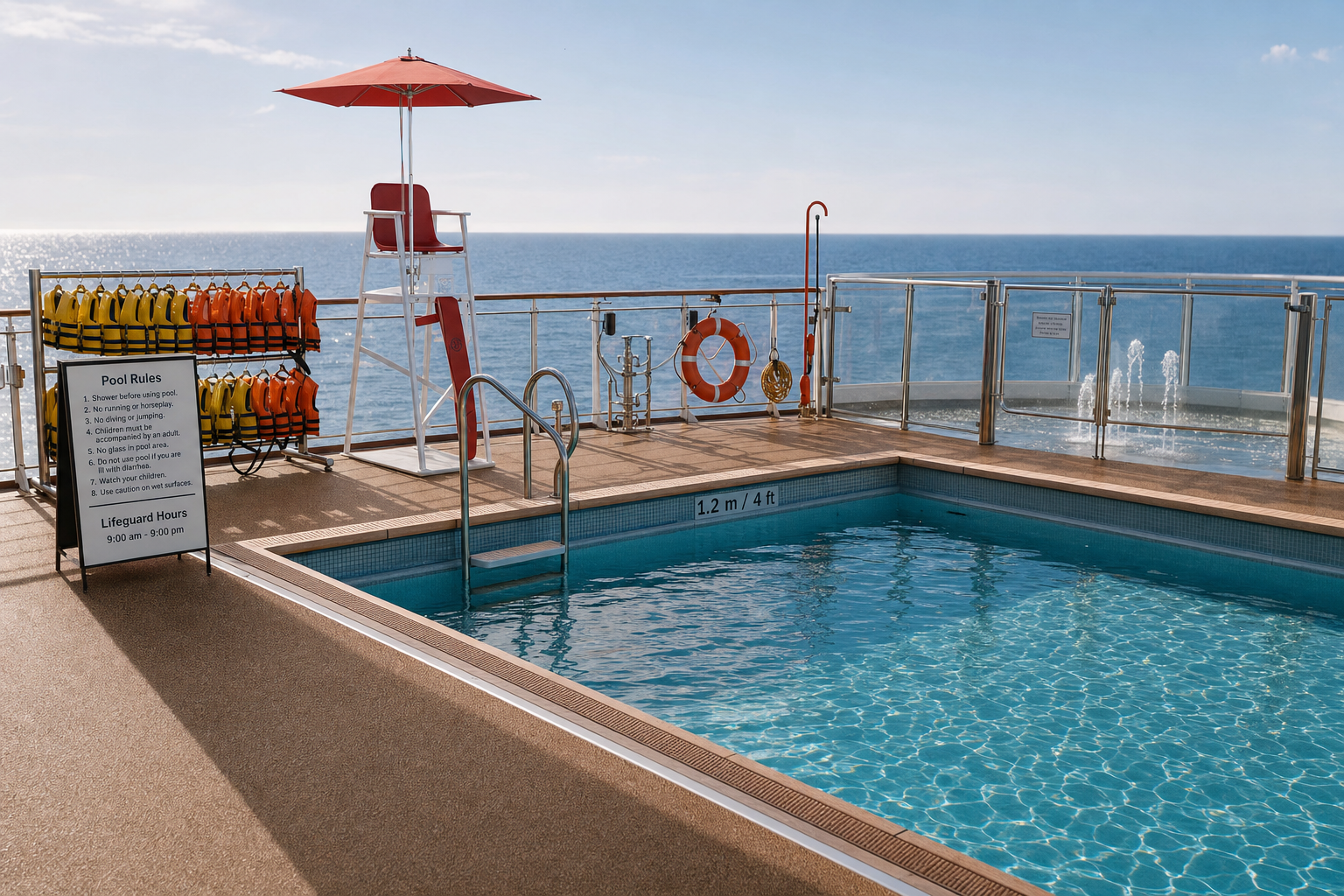
If you’ve ever wondered are there lifeguards on cruise ships or what cruise ship pools kids rules look like during peak summer holidays, you’re not alone. Parents expect child-safe water zones, but rules, supervision, and lifeguards vary wildly from one cruise line or ship to another. Here’s a deep dive into what you need to know so your children aged 3-12 stay safe, and you enjoy calm as much as the sea breeze.
What Cruise Lines Generally Do: Lifeguards & Swim Vests
Royal Caribbean is a good example of current best practices. They state clearly that all pools and waterslides have licensed lifeguards on duty during opening hours. These lifeguards are trained and certified not to babysit, but to reduce risks and respond in emergencies. (royalcaribbean.com)
There are also swim vests available fleet-wide. Royal Caribbean provides free life vests in four sizes, placed on the pool deck. While they are not mandatory, children 12 and under must be supervised by a parent or guardian. (royalcaribbean.com) Other lines—Disney Cruise Line, Norwegian Cruise Line—also follow similar policies, with lifeguards positioned at family pools and complimentary swim vests for kids. (cruisecritic.com)
These are positive trends, but they come with caveats. Lifeguards are not always present outside operating hours. Rules vary per ship and pool; some areas remain ungated or unguarded. Parents shouldn’t treat lifeguards as sole protectors.
What the Experts Say: Layers of Protection from the American Academy of Pediatrics
The American Academy of Pediatrics (AAP) urges parents to use multiple layers of protection around water—not just lifeguards or vests. These layers include physical barriers, swim competence, life jackets, and adult supervision. (publications.aap.org)
Supervision has to be close, constant, attentive, and competent. This means an adult who can immediately act—rescue, call for help, even perform CPR—should always be in sight. Lifeguards are a helpful layer but do not replace caregiver responsibility. (publications.aap.org)
Swim lessons and water-competency training are also crucial. If your child spends lots of time around pools or water, investing in swim lessons builds confidence and safety skills. Swimy.org’s 10-Week Plan can help parents and 3-12-year-olds work together toward water competence. (publications.aap.org)
If you want a structured way to help your child progress at home, the 10-Week Plan guides you step by step.
The Gaps: What Isn’t Covered & Common Pitfalls
Even on the most family-friendly cruise line, some areas remain ungated and unguarded. Splash pads, smaller kiddie pools, or shallow wading zones sometimes lack barriers. This means children can wander in unsupervised moments. Posted rules alone—like “no running” or “must be accompanied by an adult”—mean little unless actively enforced. Cruise lines post pool rules at every pool. (royalcaribbean.com)
[[ctakid]]
Another trap: assuming age alone equals readiness. A 10 or 11-year-old who swims well in a local pool may still struggle with rough seas, high wave activity, or guest crowds. Allowing tweens to roam to pools on their own during unguarded times or when supervision is scattered increases risk.
Also, water safety doesn’t end with pools. Open decks, balconies with low railings, gangways, and other areas still pose hazards. Equipment like life jackets are usually provided for pool use—not always required—and may be insufficient for a weak swimmer unless properly fitted. (royalcaribbean.com)
What Parents Can Do: Practical Rules and Supervision
First, always check your cruise line’s pool safety policies before you sail. What hours do lifeguards work? Are there gates and barriers around kids’ areas? Are swim vests available, and in what sizes? Royal Caribbean, for instance, lists vest sizes for infants, children, youth, and small adults. (royalcaribbean.com)
Second, apply the AAP’s supervision model: stay within arm’s reach of young or weak swimmers. Even strong swimmers ages 9-12 should have a buddy and adult oversight. One adult should always have the job of watching children, without distractions like phones or cocktails.
Third, use swim vests or life jackets when needed—not just as a safety net, but also to give your child confidence. Make sure they fit by height and weight. The AAP warns against inflatables like arm floaties as substitutes. Standards like US Coast Guard approved vests are best when near open water or moving water. (publications.aap.org)
Fourth, ensure children take swim lessons, practice water competency, and refresh those skills. Plans like the 10-Week Plan from swimy.org can structure progress and confidence. These kinds of programs build practical skills in children aged 3-12 so they respond better in unplanned situations. (publications.aap.org)
Finally, enforce clear rules every time: pools only when lifeguards are on duty; gates always closed; no rough play; everyone washes before entering. Talk through the rules with your child. Clear expectations can help avoid risky behavior, especially during peak holiday times.
Are Cruise Ship Pools Safe Enough?
Yes—but only if parents understand these rules and supervise actively. Lifeguards and swim vests are vital, but they are only part of the safety picture. The most common accidents happen when children are unmonitored, wandering into ungated areas, or swimming outside guarded hours.
At sea, safety tends to feel controlled—and in many ways it is. Cruise lines invest heavily in pool safety equipment, signage, and staff training. But the sea is unpredictable and crowded pools during peak summer make supervision harder. When parents know the exact rules—when guards are on duty, where barriers are, what flotation options are offered—they can make smart choices for their children aged 3-12.
Staying safe on a cruise ship doesn’t mean missing fun in the pool—it means a little prep, clear expectations, and active participation. That way, your summer cruise can be sunny, splash-filled, and worry-free.
120+ swimming exercises sorted by age — with video and instructions. Developed by swim instructors, completely free.

120+ swimming exercises sorted by age — with video and instructions. Developed by swim instructors, completely free.