How to Bring a Sibling to Baby Swim Lessons (Without the Poolside Panic)
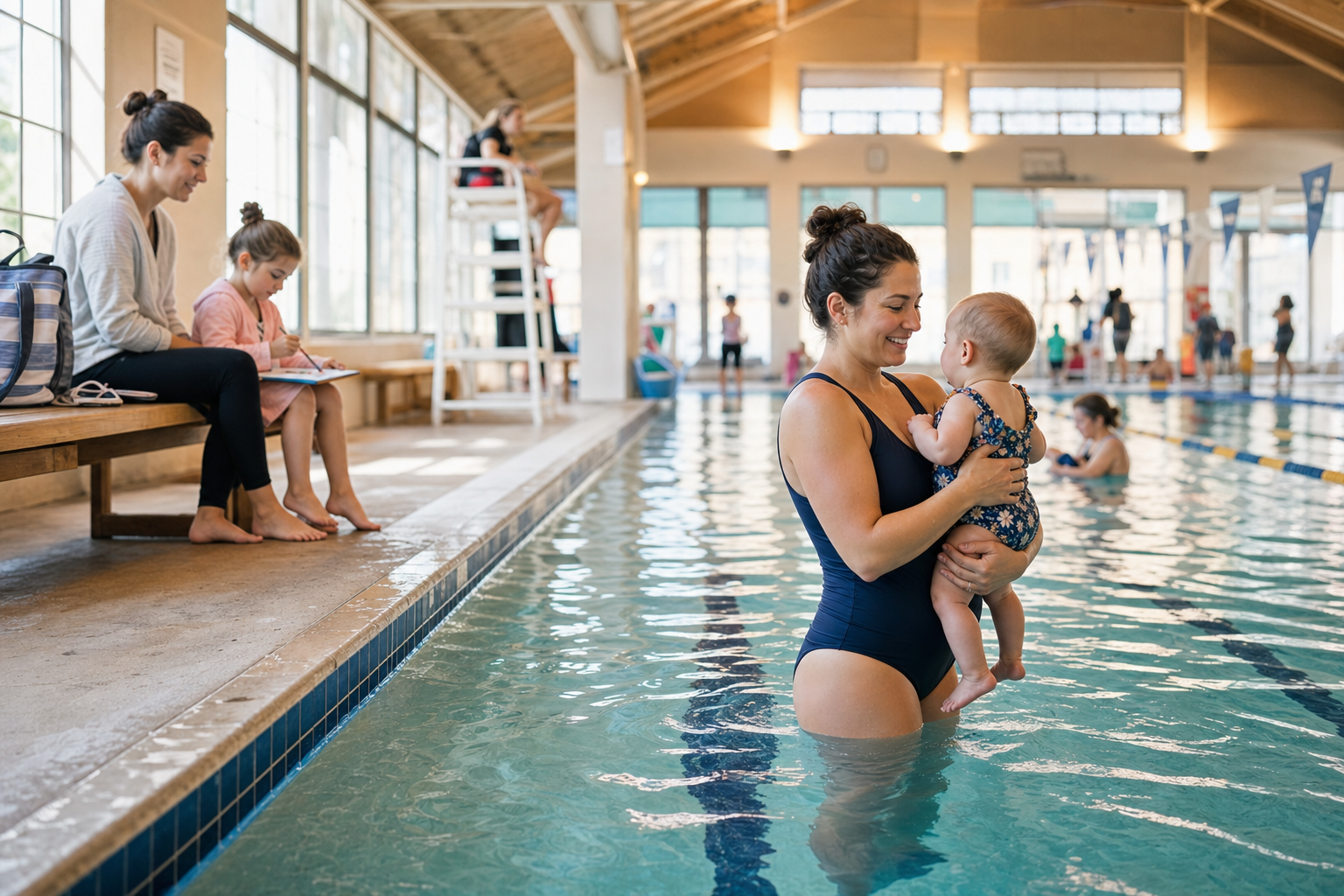
In baby swim lessons (0–36 months), the little one in your arms is clearly your focus—but what about your 2–8 year-old sibling waiting poolside? Planning seating, handoffs, supervision, and following venue rules can keep the class safe and smooth for everyone. Let’s tackle your most pressing questions right away.
What Makes Sibling Spectators Risky (But Fixable)
One adult in the water with a baby cannot supervise the deck at the same time. That means siblings left to wander, strollers near the pool edge, or the mistaken belief that staff will take care of non-participating kids can lead to danger. The American Academy of Pediatrics stresses that “whenever infants and toddlers are in or around water…an adult should be within arm’s reach,” which doesn’t include watching from the deck. (healthychildren.org) Programs also warn: “Don’t leave a baby or young child in or near any body of water under the care of another child.” (healthychildren.org)
So, before signing up, know your pool’s rules, think ahead about who supervises the sibling, and always treat the “spectator seat” as part of the safety plan.
How to Plan Seating & Supervision
Choose a spot where you can keep your baby in the water and your eyes on the sibling without moving around too much. Bench or folding chairs a few feet from the edge are ideal. That way, you can stay in the water with the baby, and another adult can sit with the sibling close by.
If no other adult can come, rotate watching duties: you’re in the water with the baby; someone else watches the sibling from poolside. Even then, you must assume full responsibility—staff or instructors are usually focused on lessons, not spectators. The 10-Week Plan from Swimy has guidance for parents juggling sibling routines during baby and toddler swim classes. It can be a useful framework. (swimy.org)
Keep younger siblings quiet and seated while lessons are ongoing. Pool rules often require spectators to stay away from the water unless their lesson is starting. For example, Infant Swimming Resource rules state that siblings not in class must stay seated “very strictly” next to parents or play under supervision away from the pool edge. (swimsafenaples.com)
If you want a structured way to build water confidence at home, the 10-Week Plan guides you step by step.
Handoff Strategies During Lessons
Transitions matter. If you need to bring toddler into play area, mark clear breakpoints—before class starts or during a waiting break. Let the sibling help get swim gear ready, scoop water under supervision, or observe with safe distance. These small tasks give them purpose while keeping them out of harm.
[[ctababy]]
Arrive early so there’s time to help both kids settle. Assign roles if possible: one adult always responsible for poolside safety, the other for in-water attention. Communication is key: let instructors know you may need to swap supervision, and know where life saving gear is stored.
Venue Rules & What to Ask Before You Go
Every swim center or pool has its own policies. Ask ahead: Do you allow siblings? Where must spectators sit? Are spectators required to be quiet, seated, or otherwise supervised? Is life guard or safety staff responsible for watching deck or spectators? What rules exist about strollers or chairs near the water?
Check whether children not in class must wear swim shoes or non-slip footwear. Also confirm swim diaper rules when toddlers are near. The United States Swim School Association guidelines warn that caregivers must understand safety around water, that each child around water needs constant supervision, and that programs must follow rules about hygiene and supervision ratios. (usswimschools.org)
Common Pitfalls & How to Avoid Them
Relying on a stroller too close to pool edge’s edge puts child at risk if it rolls or tips. Always park it well back. Letting siblings roam or explore unsupervised leads to accidents. The CDC advises “supervise children closely and constantly when they are in or near water,” and avoid distractions like phones or other children. (cdc.gov)
Assuming staff will watch non-participating children is a mistake. Instructors focus on students; deck supervision of spectators is rarely provided. Also dangerous: letting siblings act as “water watchers”—kids should not supervise other kids. Red Cross and AAPs clearly say “never leave a young child unattended near water and do not trust a child’s life to another child.” (redcross.org)
What You Can Do Today
Before your next baby swim lesson, take these steps. Choose the seating spot with a view of both the water and the sibling. Bring something quiet and familiar for the older child to occupy them during the lesson (drawing, a book, a small toy) so they are less tempted to wander. If possible, bring another adult or arrange a carpool with another parent who can trade child-watching. Stretch the handoff plan ahead so transitions are predictable. Now you feel more confident, your baby can focus on splashing, and your 2-8 year-old sibling stays safe, calm, and included.
In sum, when parents plan seating, supervision, handoffs, and check venue rules, bringing sibling to baby swim lessons can work without turning into poolside chaos. Poolside sibling safety isn’t just an extra concern—it’s central to your baby’s learning environment and everyone’s peace of mind.
120+ swimming exercises sorted by age — with video and instructions. Developed by swim instructors, completely free.

120+ swimming exercises sorted by age — with video and instructions. Developed by swim instructors, completely free.