How to Read Baby Swim Skill Claims Safely
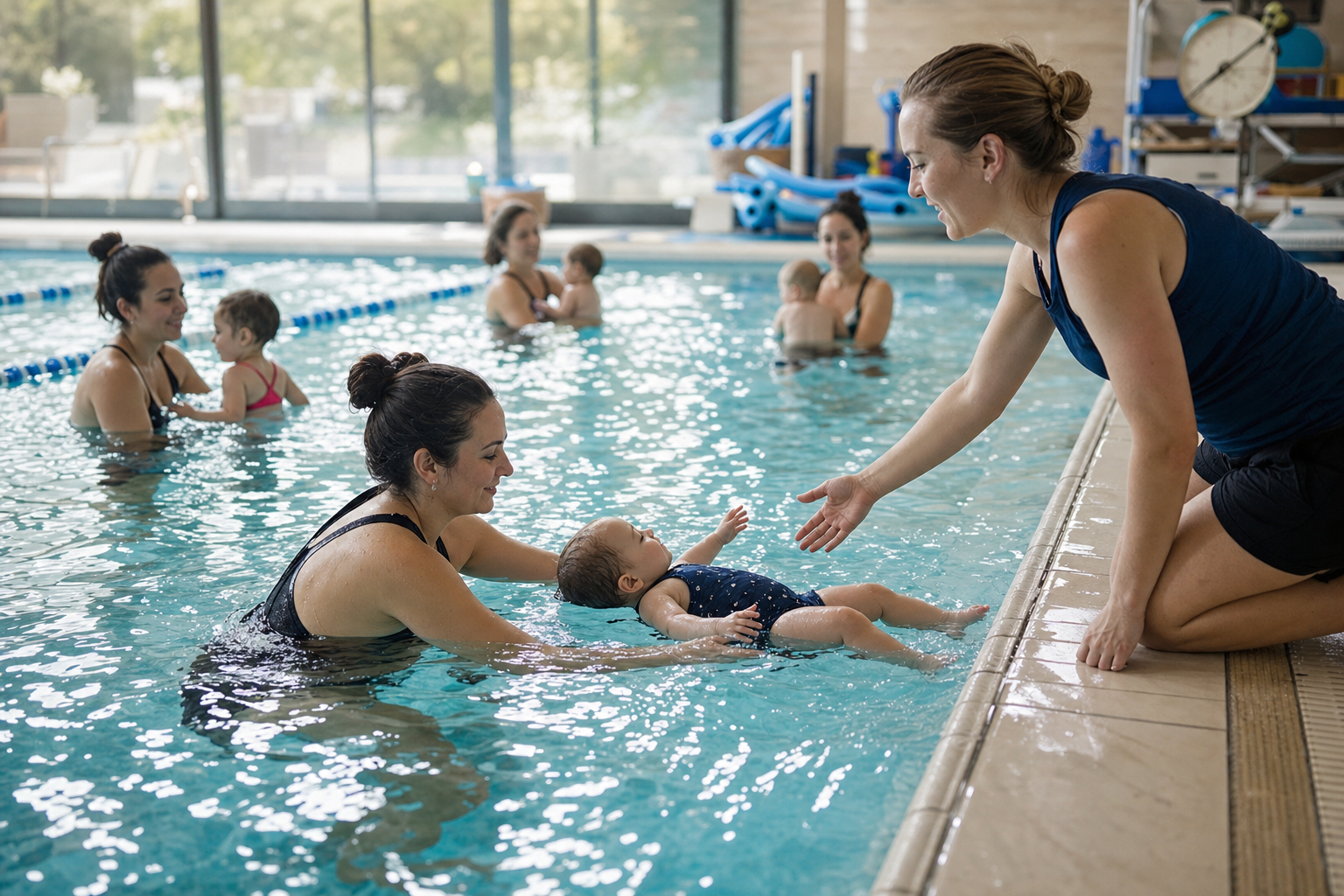
When a swim class description uses terms like “water safe,” “survival,” “advanced baby,” or “independent swimmer,” it’s easy to assume your baby can handle more than they really can. Here's how to interpret those claims with care, especially for infants and toddlers aged 0–36 months. You’ll learn what those terms really mean, how to spot marketing vs. proven outcomes, and how to stay safe even when lessons seem impressive.
Understanding What Swim Class Labels Mean
Claims such as “water safe,” “survival,” “advanced baby,” or “independent swimmer” suggest a level of skill that varies widely among programs—and medical experts warn parents not to overestimate those abilities.
“Water safe” usually means the child is comfortable in water, won’t panic, might float with help, but doesn’t imply swimming unaided or surviving an accidental fall into deep water. “Survival” often refers to being able to float back to breathe or roll to the side, yet infants under 12 months cannot reliably do these skills or coordinate limbs enough for full survival swimming. The American Academy of Pediatrics (AAP) states that “infants younger than 1 year are neurodevelopmentally unable … to perform most of the motor skills required for survival swimming” and that there is no evidence that infant swim programs reduce drowning risk for babies under one.(publications.aap.org)
“Advanced baby” may mean longer swim times, diving during play, or more independent floating. Still, these are not same as “independent swimmer.” “Independent swimmer” should only describe a child who can stay afloat, lift their face out of water, paddle or swim to an exit without help. Even then, qualifications and consistency differ.
What Research Really Tells Us
There are clear benefits of infant and toddler swim lessons, but with important caveats. Formal aquatic activities under 36 months have been shown to support motor development, cognitive flexibility, growth, physiological balance, feeding, and digestion.(frontiersin.org) A pilot study confirmed that baby swimming improves fine and gross motor skills and may even sharpen executive functions like inhibition and response shifting.(pubmed.ncbi.nlm.nih.gov)
However, these lessons are not evidence of drowning prevention in babies under one year. AAP recommends swim lessons generally begin after the first birthday for most children. For infants less than 12 months, the main benefit tends to be parent-child bonding and exposure to water rather than survival skills.(publications.aap.org) Studies also emphasize “layers of protection” beyond swim lessons—supervision, barriers, life jackets.(healthychildren.org)
If you want a structured way to build water confidence at home, the 10-Week Plan guides you step by step.
How Parents Can Read Between the Lines
When browsing classes online, you’ll see lots of “survival baby swims,” “advanced infant classes,” or “independent swimmers.” Marketing often mixes safety language with aspirational claims. Start by looking for class details that answer: what age is the program for, what skills are taught, what is supervision like, whether flotation devices are used, and how the instructor defines each term.
For instance, a promise that an infant will perform underwater rolls or floats might come with repeated submersion—which AAP technical reports warn could cause distress and might even reduce swim competence over time.(publications.aap.org) Ask for clear definitions. If “survival skills” means floating or getting to pool’s edge, okay—but if it means being tossed in unsupervised water, that’s a red flag.
[[ctababy]]
Also ask whether the program offers parental education about ongoing risk. Some companies combine water training with education—briefings, brochures, safety talks. When parents finish classes believing their child is “drown-proof,” research shows too much confidence can lead to risky behavior.(publications.aap.org)
Choosing Programs Wisely: What To Look For
Look for classes that use measured terms. “Water familiarization,” “swim readiness,” or “water introduction” are more transparent than “independent swimmer.” Seek instructors with certifications, small teacher-to-child ratios, warm, clean water, gradual progression, and demonstrations of what survival skills really mean.
If schedule or budget is tight, some programs offer structured plans like the 10-Week Plan at swimy.org, which lays out gradual progression from water comfort to basic survival tools. Using a plan like this you can see realistic timelines and avoid overly ambitious claims. These allow you to compare what’s promised with what’s reasonable for your baby’s age.
Programs for children aged 1–4 years have stronger evidence for reducing drowning risk when combined with water safety training and parent involvement.(publications.aap.org) For babies under one, use swim classes to build familiarity with water—and always rely on supervision and protection.
Staying Safe Even When Lessons Look Impressive
Even after several classes, even a baby who seems confident in the pool is never “drown-proof.” Waterproof skill demonstrations vary and fade. Always practice layers of safety: a supervising adult within arm’s reach (“touch supervision”), physical barriers like pool fences, life jackets where needed, and never leaving a child unsupervised near any water—even bathtubs or buckets. Recently updated AAP drowning prevention guidelines stress that swim lessons are one layer among many.(healthychildren.org)
Speak with your pediatrician if you’re thinking of enrolling in an infant swim survival program. They can help you weigh developmental readiness, health conditions, and emotional maturity. And get clear benchmarks—what your child should be able to do by the end, and what realistic progress is. That way, when a class description says “survival” or “independent swimmer,” you know whether that means safe practice or just marketing shine.
Key Takeaways
When comparing baby swim programs online, don’t assume claims like “survival,” “advanced,” or “independent” always match medical definitions. Research confirms swim lessons beginning after age 1 can help reduce drowning risk, but when it’s under one, there’s no proof of that benefit. Benefits like motor and cognitive development are real, though. Treat any swim program as one layer in a safety system that includes supervision, education, and physical protections. If you're unsure what a program is promising, ask questions until you’re confident, not dazzled.
120+ swimming exercises sorted by age — with video and instructions. Developed by swim instructors, completely free.

120+ swimming exercises sorted by age — with video and instructions. Developed by swim instructors, completely free.