Indoor Pool Air Checklist for Babies: Can Tiny Swimmers Breathe Easy?
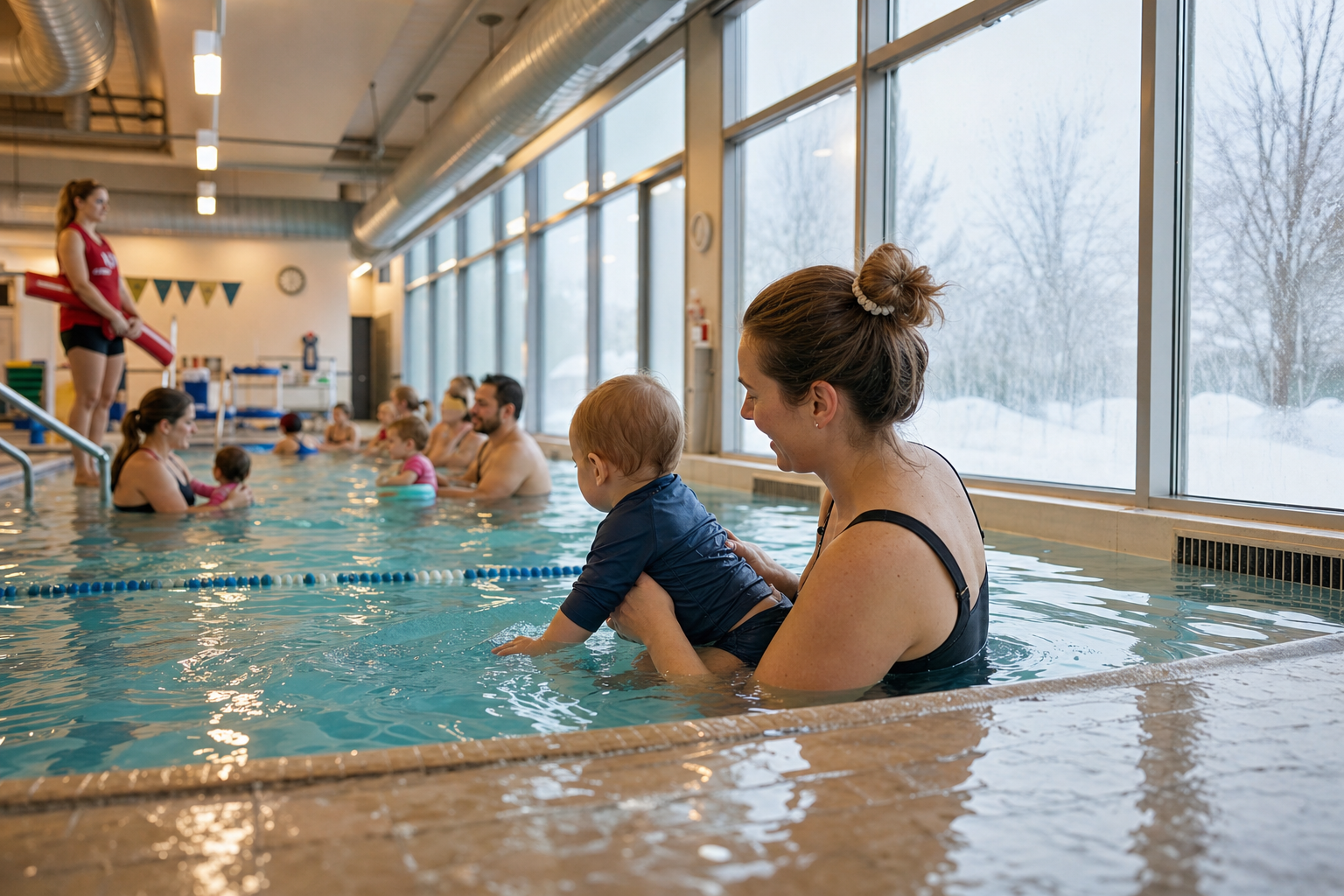
If your baby or toddler (0–36 months) spends time in indoor baby swim lessons—especially in winter—you want to know the air feels clean, not heavy with chemical smells. When you start noticing coughing, eye irritation or a powerful “chlorine smell,” these aren’t normal signs—they’re red flags. Below is your go-to indoor pool air checklist. Use it to ask smart questions at the pool, protect your baby’s breathing, and decide when it might be best to step out.
What’s Triggering Coughs, Watery Eyes, or That Strong Smell?
That sharp, bleach-like odor isn’t pure chlorine. It’s usually chloramines—dry, combined chlorine chemicals made when chlorine reacts with sweat, urine, and other organic matter in the water. Trichloramine is especially irritating. In indoor pools with low ventilation, it builds up in the air and settles where babies breathe—just above the surface. This can lead to coughing, wheezing and eye irritation, even if the water itself looks clean. Scientific studies show that repeated exposure to these gases in poorly ventilated baby swim programs may harm developing airways.(pmc.ncbi.nlm.nih.gov)
Pool Ventilation: The Parent’s Key Questions
You deserve clarity about the air quality where your little one is learning to float or kick. Ask pool staff these:
- How many air changes per hour does the facility provide? For most indoor swimming pools without big spectator areas, the standard is 4–6 air changes per hour. Pools with stands should aim for 6–8.(sandiegocounty.gov)
- Is there direct exhaust ventilation above or around the pool surface? This helps pull chloramine-rich air away before babies inhale it.
- What is the typical humidity level in the pool hall? Ideal is between 50% to 60% relative humidity—too high and mist & chemicals linger; too low and it dries out everything.(sandiegocounty.gov)
Make sure the pool doesn’t try to reuse air from locker rooms or other humid spaces as supply air, and confirm doors/windows can open for extra airflow when needed.
Baby Behavior & Pool Conditions: What to Notice
While walking through or sitting by the pool deck, pay attention to:
If you want a structured way to build water confidence at home, the 10-Week Plan guides you step by step.
- Smell: If the pool area smells like chlorine—or stronger, like bleach—that usually means high chloramine levels. That smell itself is a cue that ventilation and water chemistry might be off.(cdc.gov)
- Tears or red eyes: If your baby’s eyes water or look red soon after entering the water, that’s a sign of eye irritation from chemical-laden air.
- Cough or wheeze: One cough? Could be normal. Persistent coughing, wheezing, or trouble breathing? Not normal. Leave the area and consult a pediatrician.
- Lesson crowding: More people = more sweat, more urine, more organic matter making chloramines. If class sizes are large, the air quality will get worse unless ventilation is stronger than usual.
Here’s a real example—a pool featured in a post on swimy.org explained how in some lessons, kids aged 3–12 started coughing and holding eyes after jobs without good air handling. They recommended confirming ventilation standards and seeing whether staff open doors or windows when crowded. One tool they suggested is the 10-Week Plan at swimy.org, to help parents see how conditions like water hygiene and air flow hold up over time in a systemized way.(swimy.org)
[[ctababy]]
When Clear Warning Signs Tell You It’s Time to Investigate or Pause
You shouldn’t ignore these signs. If any of these happen, consider pausing or asking questions:
- Your baby coughs repeatedly during or right after the lesson, or during rest periods outside the pool.
- Eyes burn or look glossy or red, especially if this repeat visits happen.
- You can noticeably smell chloramines in the air, even from outside pool close to door points.
- The room feels so humid you sweat just walking in, or puddles of condensation are up on walls and windows; this usually means the ventilation system isn’t keeping up.
If symptoms are severe, long-lasting, or you see wheezing or breathing difficulty, leave the area and seek advice from a pediatrician. Air quality issues may worsen other conditions like asthma.(pmc.ncbi.nlm.nih.gov)
Tips You Can Use Right Away
Some actions you can control:
Before you arrive, check whether the pool facility has a reputation for shutting windows or relying only on heating/cooling without bringing in fresh air. Encourage habits like showering together before getting in and changing swim diapers immediately; these help reduce chloramines.(cdc.gov)
Choose class times with lighter crowding, preferably when the pool is less busy. Visit the facility in advance to sniff the air, check ventilation grills near the water line, and observe whether windows or vents are open or working.
Lastly—and importantly—while this post offers practical guidance, it’s not medical advice. If your baby is still coughing, wheezing, or has breath-based symptoms that won’t go away, always step out and talk to a pediatrician. Often a fresh environment and clean air are the first remedy.
Keeping babies safe during indoor swim lessons in winter means paying attention to air—not just water. Use this checklist. Ask smart questions. Trust your instincts when the pool air isn’t fresh. Your tiny swimmer’s lungs will thank you.
120+ swimming exercises sorted by age — with video and instructions. Developed by swim instructors, completely free.

120+ swimming exercises sorted by age — with video and instructions. Developed by swim instructors, completely free.