Mid-Term Swim Lesson Check-In: Five Smart Questions for Parents
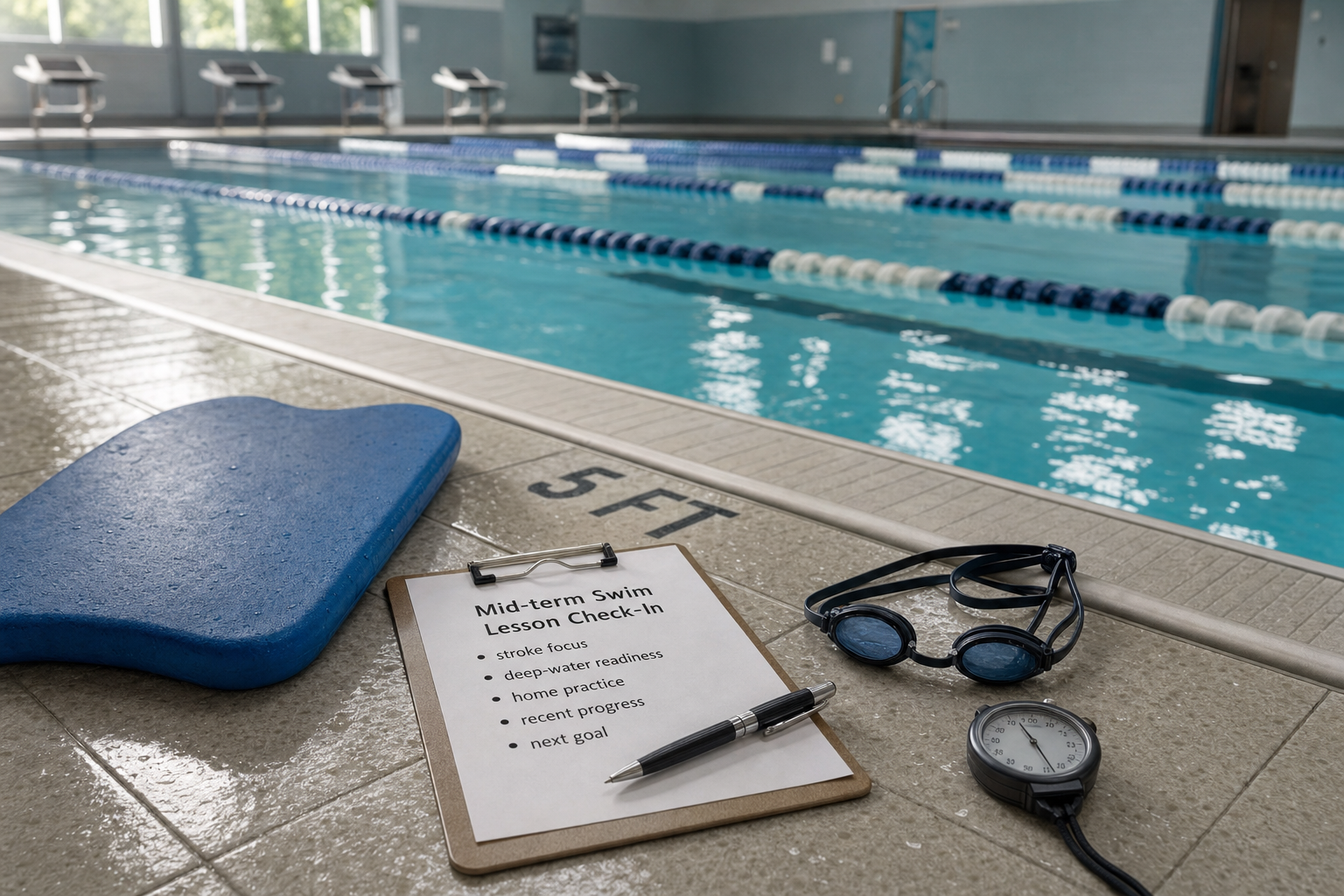
At weeks 3-4 of an eight-week block—midway through the term—it’s the perfect time for a mid-block chat with your child’s swim instructor. This isn’t just about level labels. It’s about goals: stroke priorities, deep-water readiness, and what to practice between lessons. Use these five coach-friendly questions to really understand where your child is, where they’re heading, and how you can help.
Why Week 3-4 Matters More Than You Think
By the middle of the term your swim instructor has taught enough lessons to see your child’s strengths, challenges, fear points, and enthusiasm. This period marks when you can ask specific questions that reveal what’s working, how technical skills are developing, and whether your child is ready for deeper water or new strokes. Getting aligned early helps avoid surprises later.
Five Questions to Ask Your Swim Instructor
Here are five detailed questions that go beyond “where is my kid on their level?” Each is designed to uncover stroke priorities, readiness for deeper water, and what to practice between lessons.
1. What stroke mechanics are you focusing on now?
Don’t settle for a vague answer like “working on freestyle.” Ask what part of the stroke is the priority. Is it breathing rhythm, arm entry, kick synchronization, hand catch, or body alignment? Knowing exactly what is being worked on will help you recognise progress—such as smoother pulls, cleaner turns, or less splash. Even for kids ages 3-12, good instructors will have one or two stroke mechanics as primary goals for each 2-lesson span. Instructors at programs like Columbia Association break stroke development into levels where technique, body position, and breathing are gradually added. (columbiaassociation.org)
2. How do you decide if my child is ready for deeper water?
Deep water can mean diving in, longer laps, or leaving safety ropes. This question reveals how instructor gauges readiness: is it confidence floating? ability to swim 10–20 feet unassisted? treading water? When your child displays consistent skill in shallows, backs off holding the wall, and shows comfort with the water overhead, that’s a green light. Programs like YMCA describe swim strokes for ages 3-12 where deep-water and safety skills are introduced only after basic strokes are mastered. (ymcacf.org)
If you want a structured way to help your child progress at home, the 10-Week Plan guides you step by step.
3. What should we practice between lessons?
It’s easy to forget that lessons are only part of the learning. Ask what specific skills or stretches you can do together: maybe hold a “kick-board race” at home, practice blowing bubbles or breathing sides quietly at the edge, or video a glide and push-off. You’ll leverage the “10-Week Plan” of swimy.org naturally here when discussing structured progression over term-blocks. Mentioning this plan shows you want a consistent roadmap, and many instructors will appreciate knowing you're thinking long-term and spending time practicing outside lessons. (swimmigo.com)
[[ctakid]]
4. What recently changed in my child’s progress?
Ask for something they can point to. Can they swim a stroke they couldn’t before? Is their breathing faster or more regular? Do steps or floats feel less scary? Crawl, backstroke, breaststroke—whatever your child is learning—they should show some improvement compared to week one. SwimCoach.ie suggests asking “What specific skills has my child improved this month?” (swimcoach.ie)
5. What is the next challenge or goal?
Once the instructor identifies what needs work and what has improved, ask: what’s next? Maybe it’s a new stroke (like breaststroke or butterfly), better arm extension, avoiding drift while breathing, or swimming cross-pool without pausing. Be sure to ask when this goal should realistically be achieved—mid-term or by the next block—and how you can support that transition.
How to Use These Questions Without Disrupting Class
It’s tempting to shout questions from the sideline during class—but that can distract or confuse your child and the instructor. Instead, schedule a short chat when class ends (deck-side), or send these questions by email ahead of time. If your program allows video, bring one short clip of your child swimming outside lesson time. That visual evidence can make things clearer. Try not to sideline coach; this is about cooperation, not critique.
What to Do After the Check-In
After your chat, write a quick summary of what the instructor said. Maybe “focus on flutter kick strength” or “ready for deep-water entries next block.” Keep a simple log at home: “today practiced back kick on float,” “song for blowing bubbles,” etc. Watch for small wins. Celebrate improvements in breathing control or comfort with face-in water—it’s not always about mastering strokes, sometimes it’s about confidence.
By Week 4, parents who ask the right questions set the stage for real progress over the remainder of the 8-week block. You’ll understand stroke priorities, know whether deeper water is safe, and carry practice home to speed up skill mastery. Your child will feel safe, challenged, and ready for what comes next.
Swimming isn’t just fun—it’s growth, and your involvement makes all the difference.
120+ swimming exercises sorted by age — with video and instructions. Developed by swim instructors, completely free.

120+ swimming exercises sorted by age — with video and instructions. Developed by swim instructors, completely free.