Mixing Fun Swim Classes and Safety Lessons for Babies & Toddlers
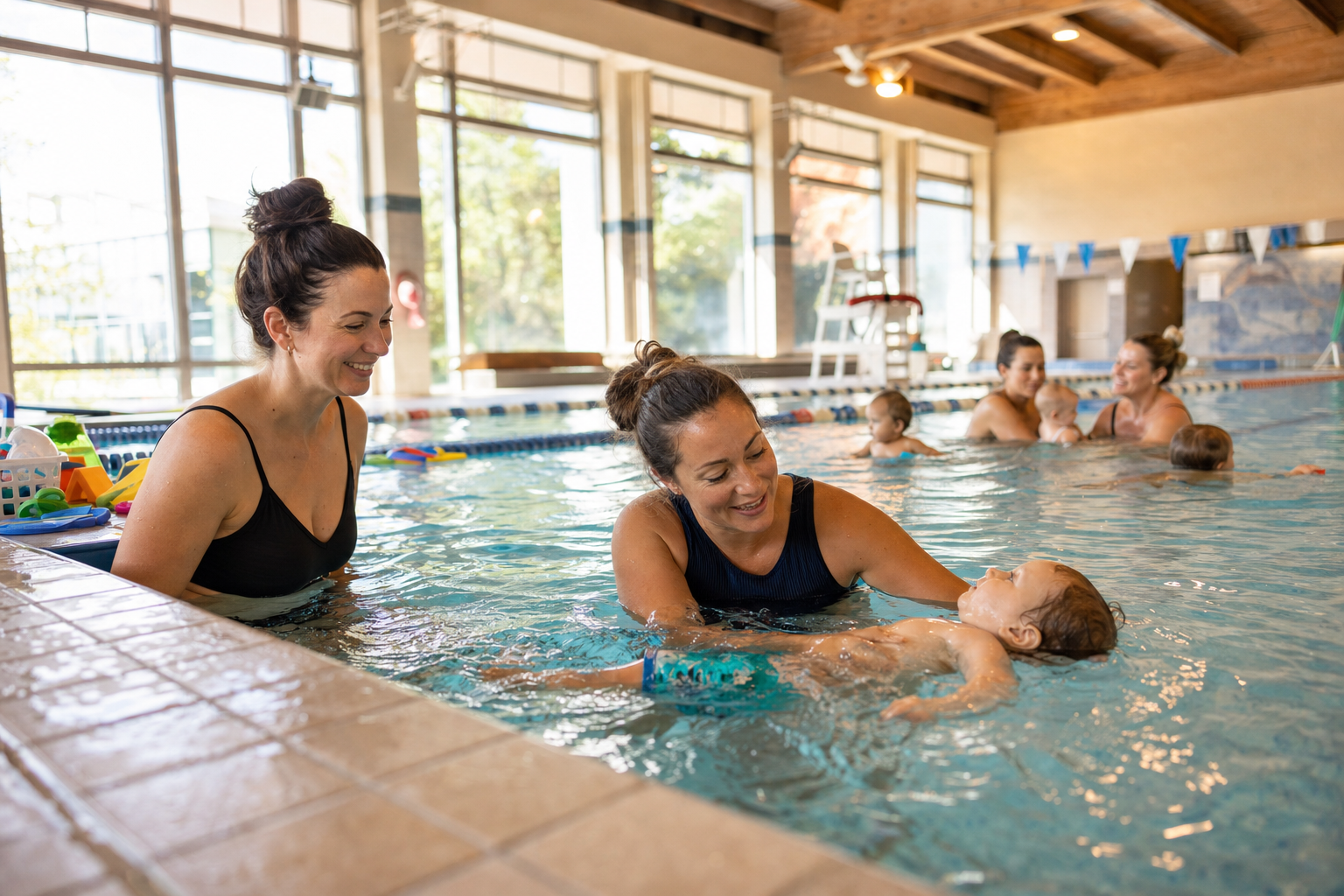
If you’re weighing up parent-baby swim vs survival swim, or wondering what happens in toddler swim lessons, you’re already asking the right questions. The most pressing issue: balancing water safety with enjoyment. Here's what parents need to know to choose the right path between 6–36 months, while keeping safety top priority.
When to Start and What the Experts Say
According to the American Academy of Pediatrics (AAP), swim lessons are a valuable layer of protection against drowning—it’s just one of several, alongside supervision, pool barriers, life jackets, and CPR training. The updated AAP guidance from mid-2026 makes plain that formal swim lessons are recommended after a child turns 1 year old, not before, since infants under age 1 are not developmentally ready. (healthychildren.org)
That doesn’t mean infants can’t benefit from water exposure. Parent-and-baby or water-play classes can introduce comfort and trust around water, but claims that these lessons make babies “drown-proof” are misleading. (healthychildren.org)
Parent-Baby vs Survival-Focused Lessons: What’s Different
Parent-and-baby lessons generally focus on enjoyment, water acclimation, gentle games, paddling with a caregiver, blowing bubbles, and getting used to the pool environment. These classes build comfort and confidence, social skills, and often cost less per session. They’re great for younger toddlers who may be shy or unsure.
Survival-focused programs—like infant self-rescue or ISR-style lessons—teach water survival skills. Starting sometimes around 6 months, they aim for taught behaviours like rolling to a back float, floating unassisted, breath control, and eventually the swim-float-swim sequence to reach safety. (swimy.org)
However, these are intense, often one-on-one, frequent, and require strong consistency and realistic expectations. No method, even survival lessons, makes a child invulnerable. Adult supervision, life jackets, barriers, and CPR are still nonnegotiable. (healthychildren.org)
Matching Lessons to Age, Temperament, and Water Risk
If your child is around 6–12 months old, parent-and-baby lessons tend to work better. Early survival programs may stress the infant and risk negative aquatic experience if the baby isn’t ready. Comfort and trust go a long way. For children 1–3 years old, survival skills become more feasible: the AAP recommends swim lessons starting after the first birthday because by then children become mobile, increasing risk near water. (healthychildren.org)
You don’t have to choose one extreme. Many families blend both types across time. For example, your toddler might start with parent-baby fun classes, especially before age 1, then shift toward survival-first programs around 1–2 years, especially if water access or risk is high. Some parents use a structured plan like swimy.org’s 10-Week Plan https://www.swimy.org/10-week-plan which mixes swim familiarization, safety lessons, and skill progression over time. This gives both confidence and safety without pushing too fast.
Temperament matters: if your child is anxious or sensitive, beginning with playful classes helps. Once they have water confidence, survival-based skills can be introduced if it fits your family’s exposure. If you have a backyard pool, frequent travel near water, or live by lakes or beaches, survival-first curricula may make sense.
[[ctababy]]
Budget also becomes key. Survival-intensive programs often cost more upfront and require many short sessions. Traditional parent-baby and toddler group lessons tend to spread cost with weekly sessions over longer terms.
What Actual Lessons Teach: “What Happens in Toddler Swim Lessons”
In toddler swim lessons (roughly ages 1–3), expect a mix of skills being taught:
- Water entry and exit: how to get in and out safely, either with help or independently
- Floating: front and back floats, breath control, turning over if tipped from front to back
- Breath work and submersion: gently letting their face in, holding breath, brief submersion in safe manner
- Kicking and arm movements: early stroke work begins, often without focus on perfection
- Pool safety habits: always swimming with supervision, petitions before entering water, wearing life jackets in open water, getting to safety if something unexpected happens
These lessons usually happen in warm water (around 87-94°F) for children under 3, involve parent participation for young toddlers, have small class sizes or lots of instructor interaction, and gradually build stages of independence. (healthychildren.org)
How to Combine Fun and Survival: Practical Plan
Use repetition and consistency: a two-week or month-long session that includes survival skills and fun builds progress. Ensure instructors are qualified, with training in early childhood development, lifesaving methods, first aid, and CPR. Always observe a class before enrolling, check whether children seem engaged or distressed, and see how instructors respond.
Common Pitfalls Parents Should Avoid
First, fear-based marketing promising “drown proof” children: these claims mislead. The AAP clearly says no lesson style—survival or fun—makes a child totally safe. (healthychildren.org)
Second, expecting independence too soon. Even toddlers who master floats and swim-float-swim sequences need several refresher courses and still must be supervised near water. Skills don’t stick without practice.
Third, ignoring enjoyment. If a child hates the water, forcing survival lessons too early can backfire. Confidence and trust are built when lessons feel fun and supportive.
Safety Layers That Must Stay in Place
No class replaces the basics. Wherever your child is on the spectrum between fun classes and survival swim lessons, you still need:
- Constant, attentive adult supervision
- Four-sided pool fencing and gate locks
- Properly fitted life jackets in natural bodies of water
- CPR knowledge for caregivers and parents
These remain essential according to the latest drowning prevention policies. (healthychildren.org)
Final Thoughts
Balancing playful parent-baby classes with survival-focused lessons isn’t about picking one over the other. It’s about understanding when each is appropriate, for which child, and with what goals. If you start with fun, build water confidence, then layer survival skills as your child grows and exposure increases, you get the best of both worlds. Always remember: swim lessons save lives, but only when paired with strong supervision, safe environments, life jackets when needed, and CPR readiness. Your child’s safety is built by many layers, not just one class.
120+ swimming exercises sorted by age — with video and instructions. Developed by swim instructors, completely free.

120+ swimming exercises sorted by age — with video and instructions. Developed by swim instructors, completely free.