Pool Alarms: Helpful, Not Enough for Baby and Toddler Safety
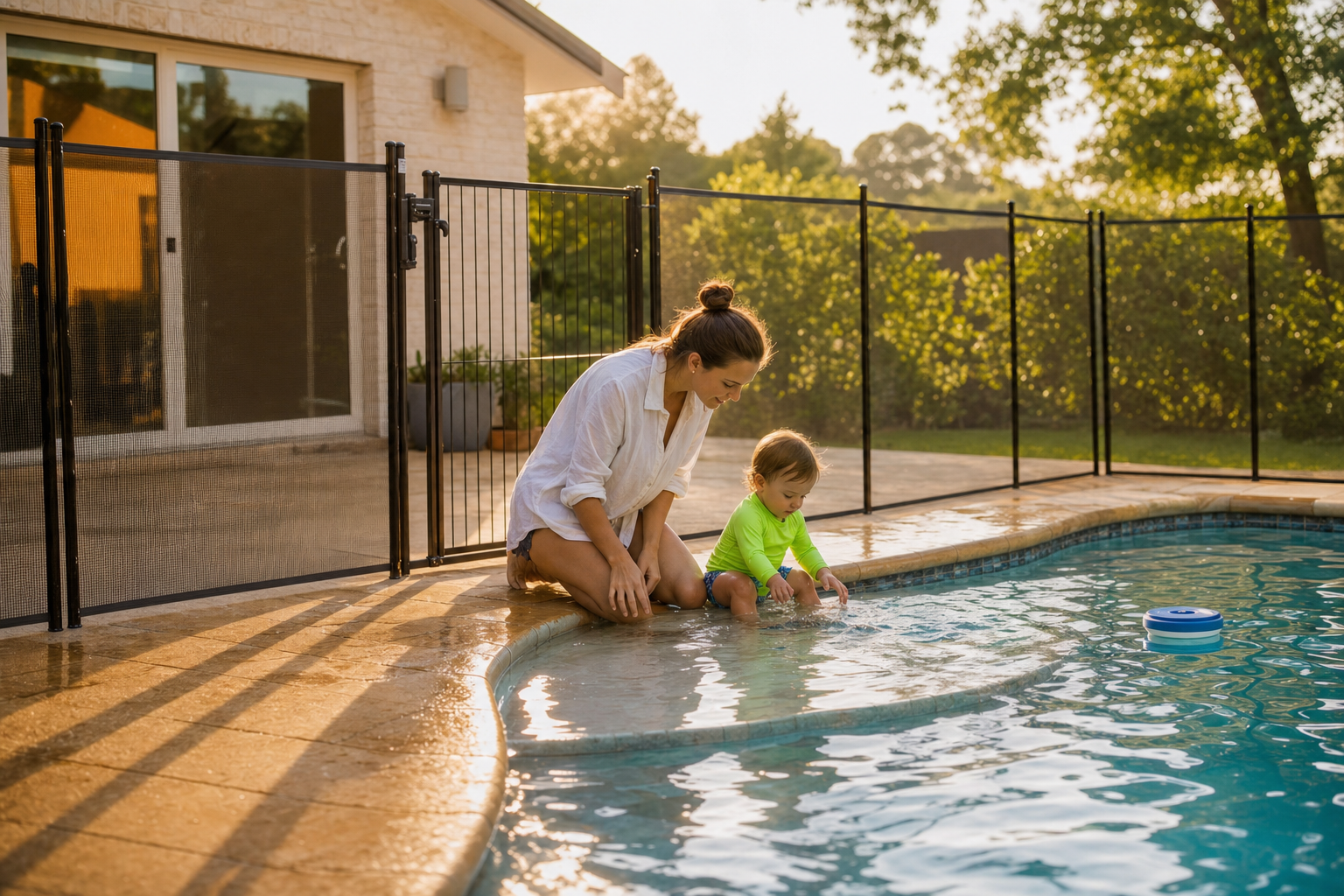
If your baby starts rolling, crawling, or walking—especially anywhere near water—then pool alarms, door alarms, and gate alarms are likely on your mind. They can save precious seconds, but they aren’t a complete safety solution for babies (0-36 months). Below you'll learn what these alarms can and cannot do, why you still need strong barriers and adult supervision, and which maintenance missteps make alarms unreliable.
What Alarms Can Do—and What They Can’t—for Babies and Toddlers
When babies become mobile, they explore, pull themselves up, and sometimes find paths to water when adult eyes are elsewhere. Door alarms and gate alarms alert you the moment a door or gate is opened. They work especially well when your house forms part of the barrier between your child and the pool. Water-entry or pool alarms (surface, subsurface, floating, or attached at the pool edge) trigger when someone or something enters the water. These give you a warning after a potential slip or fall. They’re all valuable layers in a safety plan. (beltwaypools.com)
But they also come with serious limits. Door and gate alarms don’t prevent access—they only alert once the barrier has already been breached. Pool alarms react only after water intrusion, meaning a child must already be in the water before you’re alerted. Neither type replaces the strong physical barrier that stops the child before reaching the risk zone. Alarms can help in those split seconds, but alone, they’re no safeguard. (beltwaypools.com)
How Alarms Fit into a Layered Safety Plan
Safety experts like the CDC and the American Academy of Pediatrics (AAP) say drowning is quick and often silent. Recommended steps include a non-climbable four-sided fence that fully encloses the pool, a self-closing and self-latching gate, and constant supervision when a baby or toddler is nearby. Door and gate alarms, plus water alarms, join other barriers as safety backups—not replacements. (poolsafely.gov)
For families with babies becoming crawlers or walkers, start with mapping out access points: front/back doors, sliding doors, windows, pool gates. Have a gate alarm on every entry leading to the pool, keep the pool fenced and covered when not in use, and consider a wearable immersion alarm for use during times when supervision might be split. Surface or subsurface pool alarms give you another backstop, just in case something or someone makes it past all the other layers. (babyproofme.com)
If you want a structured way to build water confidence at home, the 10-Week Plan guides you step by step.
Around mid-way through building your safety system, caregivers may want to follow structured plans like the 10-Week Plan of swimy.org to build awareness, skills, and safety habits alongside installing alarms and barriers. This gives you time to get everything in place before the baby is fully mobile.
[[ctababy]]
Expert advice confirms that no single device guarantees safety. But putting the fence, gates, alarms, covers, and supervision together makes drowning far less likely. Advice from Beltway Pools summarizes why pool alarms matter: they react fast, but are always reactive, not preventive. The fence must exist first. (beltwaypools.com)
What Parents Must Know Before Trusting Alarms Too Much
Even a high-quality pool alarm will fail if it isn’t installed, used, and maintained correctly. For starters, many alarms are battery-powered, and a dead battery disables the device completely. Some alarms chirp when battery power is low but go unheard or ignored in a busy household. (poolpatrol.com)
False alarms are another problem. Wind, rain, pool cleaning activity, pets, or leaves hitting surface-wave sensors can trigger alarms. So many false alarms make people turn them off—or ignore them. Once that happens, you’ve lost your warning system entirely. Balancing sensitivity is key, but always reset alarms after storms or major outdoor activity. (safekidswatersafety.com)
Alarms can also be defeated by simple behaviors: areas of your house left open, self-closing gates not properly latching, doors propped open, or turning off the alarm “just this once” when hosting friends. Each small shortcut chips away at your safety layers. (poolpatrol.com)
Built-in regulations or standards, like ASTM F2208 for pool alarms and UL 2017 for door/gate alarms, exist for a reason. Buying certified gear means manufacturers have verified detection thresholds, sound levels, and fail-safe measures. Without those certifications, you’re relying on marketing claims. (beltwaypools.com)
Key Takeaways: What to Prioritize Now
If your child is close to rolling, crawling, climbing, or walking, here’s what to do immediately. Make sure your pool is surrounded by a four-sided fence with a self-closing, self-latching gate that is out of reach of toddlers. Equip every door and gate that leads to the pool area with alarms—door, gate, and water-entry alarms. Check that every alarm installed has clear documentation meeting ASTM or UL standards. Use a wearable immersion alarm for the child when they are near the pool, but only as an additional safety layer, not the main one. And above all else, provide constant adult supervision whenever the child is near the pool.
For questions like “are pool alarms safe for babies,” the truth is: safe if used correctly and if you don’t rely on them alone. The best alarm system means fewer blind spots, louder warning sounds, checked batteries, and one more adult paying attention.
Alarms buy seconds. Barriers buy minutes. Eyes that never leave the baby until older still matter most.
120+ swimming exercises sorted by age — with video and instructions. Developed by swim instructors, completely free.

120+ swimming exercises sorted by age — with video and instructions. Developed by swim instructors, completely free.