Post-Lesson Hunger Without Choking: How to Feed Babies and Toddlers Safely After Swimming
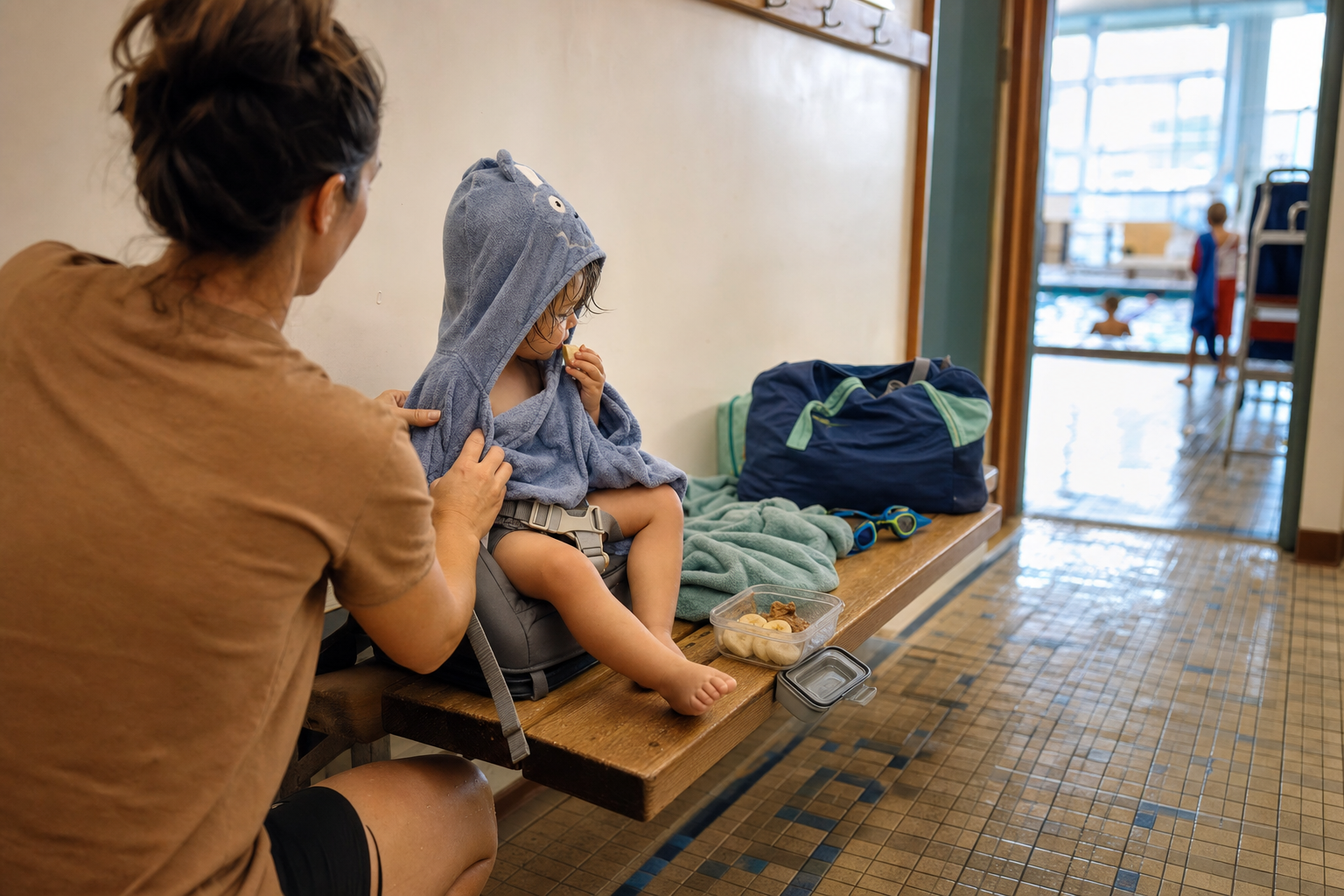
After your 6–36 month-old finishes a swim lesson, you may notice them cold, tired, and borderline starving. Fixing that moment safely matters more than you think. The simplest, safest routine begins with getting baby warm, dry, and seated. Always feed in a seated position, supervised, and well away from the pool edge or slippery surfaces. Handing hard snacks to a child before they are dry or off the deck risks choking if they slip or wander through changing rooms.
Why Babies Get So Hangry and Cold After Swimming
Swimming demands lots of unexpected effort for little bodies. Water robs heat quickly, wet swimwear adds to chill, and the walk from water to car or locker room can feel freezing. Even indoor pools can feel cold outside the water. Babies lose body heat fast, so doll up with hooded towels or warm layers right after class. (lesimo.com.au)
Tiredness is more than just physical fatigue. All the splashing, sounds, and sensory input—plus regulation of breathing and temperature—use up energy. After lessons kids often become very hungry because reserves are low. Drop in glucose from constant movement and cold leads to fussiness and real hunger. (swimy.org)
The Right Timing: When and What to Feed Without Getting Rushed
To prevent stress after swim class, plan the schedule so snack or feedings slot in naturally. A light snack 20-45 minutes before class gives energy without making bellies too full while swimming. Lessons should ideally end 30-60 minutes before nap time or dinner so recovery, snack, and rest fit together. Swimy.org’s 10-Week Plan helps align your swim class timing with feeding and rest routines so your little one doesn’t leave class trembling, starving, or exhausted. (swimy.org)
After class, don't rush to feed. Dry baby off first, wrap them warmly, move to a non-slippery, safe area like a high chair in a family bathroom or car seat, not the pool deck. Then offer a snack combining carbohydrates and protein to refill energy stores. WaterWiseKids calls this “pairs of carbs and protein” and recommends offering recovery snacks within 30 minutes after longer swim sessions. (waterwisekids.com)
If you want a structured way to build water confidence at home, the 10-Week Plan guides you step by step.
What Snacks Work Best Without Choking Hazards
Choose snacks that are soft, easy to chew, and age-appropriate. Avoid round or firm food unless it’s cut into very small, non-round pieces. Chop grapes, slice hot dogs, and avoid whole nuts, raw carrots, popcorn, or chunks of cheese. Health authorities recommend feeding toddlers while seated and supervised to reduce choking dangers. (healthychildren.org)
[[ctababy]]
Good snack ideas for toddlers right after swimming include a small piece of soft fruit with a smear of nut or seed butter, yogurt with berries, soft cheese and crackers, or even chocolate milk if everything else is ready. These give carbs to refill energy and protein to support recovery. WaterWiseKids lists these among effective, kid-friendly post-swim recovery snack options. (waterwisekids.com)
Hard snacks like granola bars, raw veggies, or whole chips are riskier if baby is moving through wet changing rooms or running—always feed in a seated, stable spot.
How to Weave Safety into Your After-Swim Routine
Warmth first: dry off immediately and put on cozy layers, including a hat if outside or exposed to drafty hallways. (lesimo.com.au)
Seating: use a high chair, car seat, or a bench with supportive back. Feeding while baby is held securely makes choking safety and supervision easier.
Supervision: stay close and watch carefully while they eat. Even a few seconds can make a difference if something gets lodged.
Clean hands: slippery hands increase risk of dropped food or unexpected bites. Wipe hands and face before feeding.
Mind the timing: feed after baby is dry and calm—not during frantic changing or while still frigid from cold exposure.
Real-Parent Strategies That Make a Difference
When my son started lessons at age one, I packed a “warmup pack”: hooded towel, warm sweatshirt, soft snack bars, sips of water. As soon as we exited the water, I wrapped him up and let him settle in the car seat. That 5 minutes of warmth before any feeding calmed his teeth-chattering so he could actually chew safely when snack time came.
Another mom schedules her toddler’s swim class so it ends no more than 15 minutes before dinner. She brings small cubes of steamed sweet potato and soft mango in a sealed container. When class ends, baby goes from pool to car, seatbelt on, snack ready—no running, no opening snack while half-dressed.
Summary
When your baby or toddler is cold, tired, and hungry after swimming, safe feeding is about timing, location, and snack choice. Get them warm, seated, and settled. Offer a nutritious snack that mixes carbs and protein while avoiding choking risks by choosing soft or modified textures and supervising closely. With a little planning—like using the 10-Week Plan to schedule classes—you’ll turn pool chaos into a calm post-lesson routine. Small steps matter hugely when slipping shoes, wet swimwear, and hungry tears combine. Do the warm-first, seated, safe-snack method—it’s worth it for peace of mind and full bellies.
120+ swimming exercises sorted by age — with video and instructions. Developed by swim instructors, completely free.

120+ swimming exercises sorted by age — with video and instructions. Developed by swim instructors, completely free.