Negative Splits for Kids: Pace Without Panic
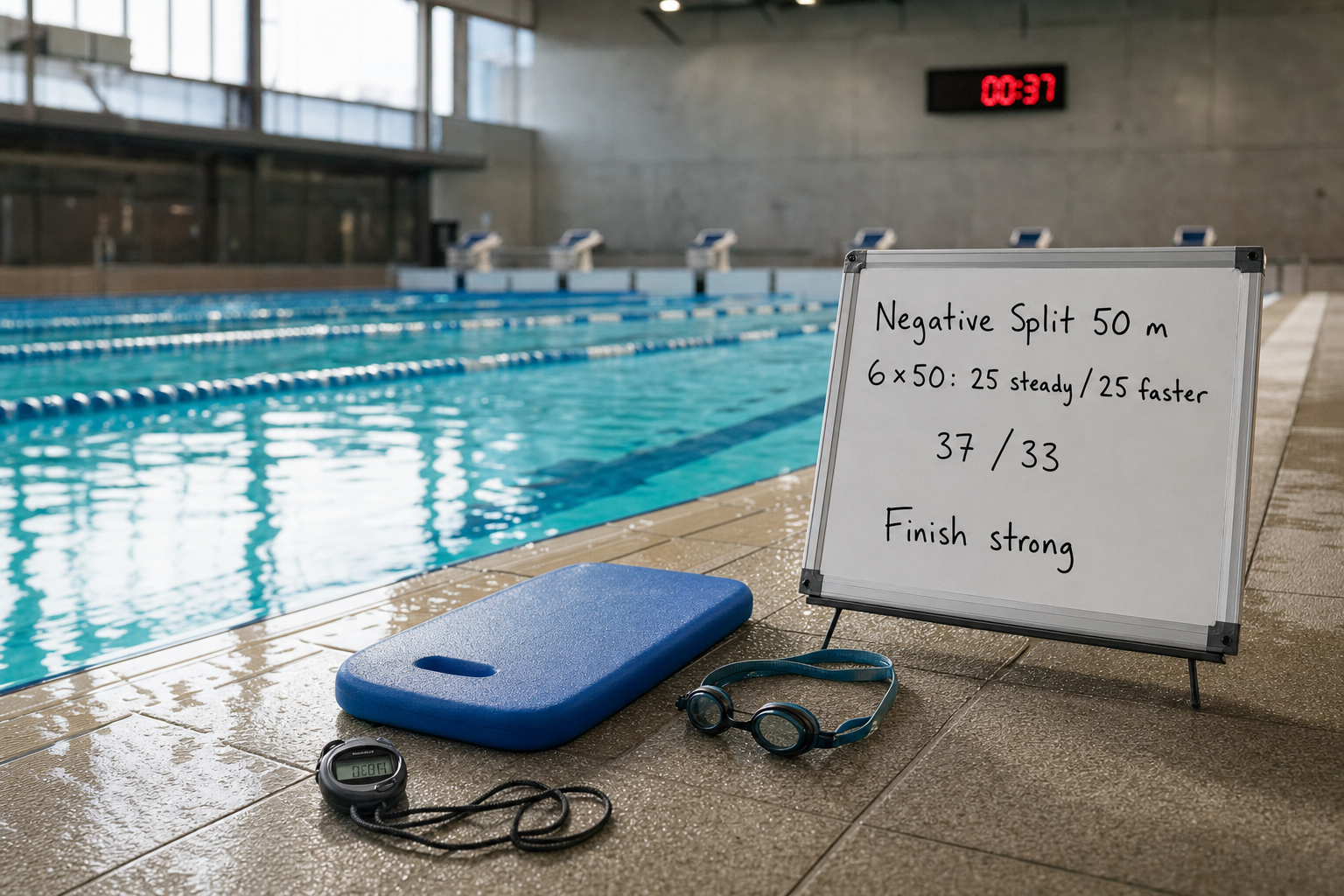
Picture this: your 8-year-old starts a 50 m freestyle like they launched off the blocks, arms flying, heart pumping – then they sputter to the wall, gassed. It’s fun, dramatic, but it doesn’t win. Teaching children aged 7-12 to swim a negative split—finishing faster than they start—not only builds pace control, it sharpens confidence and improves race or gala performance from length one to fifty. Let’s dig into how to get there, safely, simply, and with structure you can track pool-side.
Why Kids Sprint First and Fade Hard
Most kids blast off at 100 % because fresh legs, loud whistles, or just the thrill trigger it. But after that explosive start comes trouble: early oxygen debt, sloppy technique, panic in the final 25. Research shows that even swimmers in their late single digits can begin practicing even splits where each length or 50 m is swum close to the same time before moving toward negative splits (second half faster than the first).(sportx1.ai)
Negative split racing isn't just for elite swimmers—it’s a pacing strategy backed by science, used across disciplines. The key idea is that the final section of a race is stronger because pace was held or built rather than blown early.(usms.org)
How to Pace 50 m for Kids: From Blast to Build
Setting up pace for a 50 m race with young swimmers means balancing fun with control. Start with even splits: swim 25 m so the first 25 feel natural, not frantic. Then encourage the second 25 to be a touch faster—or at least just as fast. Use a stopwatch, clock by the pool, or timed intervals in training so kids get real feedback.(swimmingregimen.com)
You can also use negative-split drills. One way: swim several 50s where first half is steady, second half ramps up. Or break 50s into two 25s where the second is faster, always preserving stroke quality. Make rests generous—kids need them to recover both physically and mentally.
Sample Set Structure Parents Can Track
You want a structure you can follow and measure. Here’s something safe, doable, and built around spring and summer gala season:
If you want a structured way to help your child progress at home, the 10-Week Plan guides you step by step.
Warm-up: easy 4×50 m freestyle with rest until breathing is controlled. Main Set: 6×50 m on generous rest (e.g., 1 minute for older child, 90 seconds for younger). For each 50: first 25 at steady pace; second 25 slightly faster, preserving form. In pool, whisper reminders: “Hold back a bit early; finish strong.”
Mid-season, add something like the 10-Week Plan from swimy.org which gives a clear weekly structure including pacing and race-prep workouts. As the gala approaches, replace one weekly practice with a race-pace session so the pacing drills feel like what they’ll do under pressure around spring/summer assessment season.(balancedfitnessgear.com)
Cool-down: easy 100 m or two 50s to loosen up.
Let rest times be generous. If a child starts gasping, stop more. No breath-holding games here. Safety is top.
[[ctakid]]
Common Pitfalls and How to Avoid Them
Kids learning pacing often run into three traps: starting too slow, skipping splits, confusing stroke count with pace.
Starting too slow looks safe but kills momentum. You want a pace that feels comfortably hard, not cruise-control snore. If it's too easy first half, the second half won’t really speed up convincingly.
Skipping splits: if you swim a 50 m without measuring the first 25 and second 25, you have no idea whether the split was negative or not. Use clocks, watches, or lap timers so you can name times. Coaches call out “first half, second half”—parents can too.
Mistaking stroke count (how often arms pull, legs kick) for pace: kids might count good strokes and think that signals a fast swim, but pace depends on speed. Encourage them to feel time per length. Use target times (for example: 50 m in 1:10, second 25 in 33 vs first 25 in 37) so they learn the difference. Splitting helps separate stroke rhythm from pace.
Building Confidence, Control, and Results
As your child practices, they’ll learn what a good first 25 feels like—how to hold something back so energy is reserved. That builds control, and when done well, confidence. When they turn into that final wall and find speed, it’s a huge psychological win.
Spring and summer gala seasons are the perfect time to apply this: early in season do even splits; mid-season add negative splits; goal‐meet you want them finishing so strong that first lengths don’t hurt as much. Parents selling this to kids: “Let’s try to beat your start, not just beat the clock.”
When race day comes, simple reminders pool-side help: “Ease into the turn”, “Push through second 25”, “Check form, not splash.” After the race, compare splits; praise when second half is better.
Conclusion: Pacing Pays Off
Kids aged 7-12 can learn to negative split. It makes racing less chaotic and more satisfying. You get structure you can track, races with stronger finishes, and kids who feel like they’ve truly swum well—not just burned out. With consistent practice, generous rest, and careful measurement, pacing becomes a habit. And when it’s gala season, assessments, or school meets, your young swimmer might just astonish themselves by finishing faster than they started—without panic.
120+ swimming exercises sorted by age — with video and instructions. Developed by swim instructors, completely free.

120+ swimming exercises sorted by age — with video and instructions. Developed by swim instructors, completely free.