Mouthy Babies: Safer Pool Sensory Play
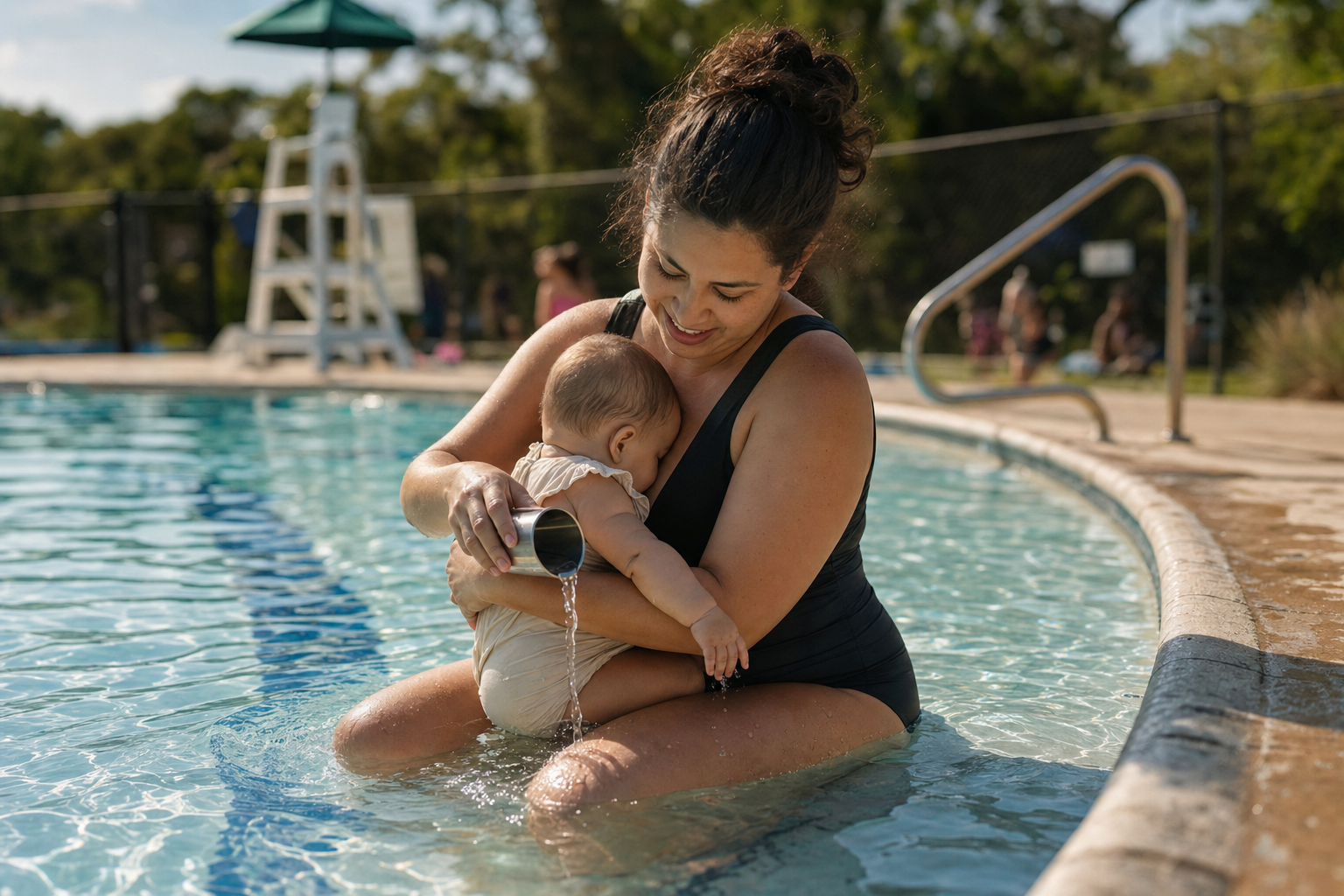
Babies aged 4–18 months explore the world by mouthing everything—which means “baby mouthing pool toys” is a real issue if you’re relying on shared plastic toys or floating objects. For parents, the safest pool sensory play keeps those mouths happy, the water clean, and the learning real. Here’s how to build water confidence and motor skills without unsafe objects, shared toys, or encouraging your baby to drink pool water.
Why Avoid Shared Toys & Floating Objects
Traditional pool floats or plastic toy sets may seem harmless, but recent safety alerts show otherwise. For example, the “Relaxing Baby” Swim Floats have been recalled because they can flip and drown an infant.(cpsc.gov) Neck floats are another risky accessory too; the American Academy of Pediatrics notes at least two infant deaths tied to neck floats between 2019 and 2024.(healthychildren.org) Small detachable toy parts, shared chewable pool toys or inflatables can carry germs, contaminants, or even chemical residues like phthalates. A 2026 study revealed that mouthing fabrics or stuffed toys results in exposure to PFAS chemicals via saliva, a serious concern.(nature.com)
By ditching those floats, toys, and shared chewables, and instead leaning on your hands, face, voice, cups, and guided movements, you give the same sensory stimulus—temperature, water resistance, motion—minus the risks. You’ll help your baby build motor skills like reaching, splashing, and kicking in an environment you largely control.
Hands-On Water Play Ideas
Parent-Led Movements
Use your body as a tool. Hold your baby facing you, with their back supported by your hand. Rock slowly side to side, dip toes in first, then knees, then shoulders. Sing softly with each motion: your voice, facial expressions, and closeness help build emotional safety. When baby feels trust, introduce incline slides on your arms, gentle dips, or roll-overs onto your chest.
Cups, Bowls, & Pouring
Use rinse cups or stainless-steel bowls (large enough to avoid choking) to scoop and pour water over baby’s tummy, arms or hairline. First hold still, let them watch the water flow. Next, encourage baby to grip the cup, pour into your hand. These actions build grasp strength, eye-hand coordination, and predictability for the senses.
If you want a structured way to build water confidence at home, the 10-Week Plan guides you step by step.
Splash & Song
In shallow water, splash rhythmically to a song. Clap hands under water, tap water softly with fingers, or stomp lightly. Use familiar tunes, stretch out “splash” words, hold your baby’s hands and help splash. This supports rhythm, sound sense, and awareness of cause and effect.
Face & Ear Comfort
Many babies dislike water on the face or ears. Avoid using large floating rings that force submersion. Instead, when washing hair or splashing, stand behind, let cool water from sponge or cup roll down slowly. Use your voice: “Cold water on ear, lovely!” If baby tenses, pause and comfort until they relax again.
The 10-Week Plan & Developing Safety Habits
When you want to structure your pool time, a phased approach works well. Using something like the “10-Week Plan” from swimy.org gives parents step-by-step guidance in different scenarios—pools, open water, safety prompts—so babies gradually learn with fun and real safety habits.(swimy.org) These gradual routines promote motor confidence, face waters safely, and practice skills like holding on to the pool edge, tipping under briefly, or exiting chest first.
Beyond structured progress, remember everyday safety layers: always keep the supervising adult within arm’s reach (touch supervision), never leave the baby alone or with other children, and ensure the pool is fenced or gated.(healthychildren.org)
[[ctababy]]
What Experts Recommend
Both the CDC and American Academy of Pediatrics stress eliminating floating aids that can mislead parents into thinking babies are safer than they are. “Arm wings” or inflatable floats are not proven to protect from drowning—they may give a false sense of security.(cdc.gov) Clean water is just as important. Inflatable kiddie pools often lack filtration and can spread germs quickly, especially when babies put everything into their mouths. The CDC recommends emptying them daily, rinsing off debris, and letting them air-dry.(cdc.gov)
Mouthing behavior also raises chemicals concerns: toys (or floats) can leach PFAS or phthalates when chewed. Even soft toys meant for teething stages aren’t free of exposure—this was shown in recent scientific analysis of stuffed toy materials.(nature.com)
Putting It Into Practice
Start small. One splash session per week, focused on your voice, warm water, gentle touching, no toys. Over time, build in new movements: rolling, upright positioning, pouring. Watch closely for signs of overstimulation—turning away, fussiness—then pause. Rinse off baby after each session; keep towels nearby. After water play, gently massage skin to keep cheeks, ears, and skin barrier healthy.
Encourage water familiarity—this is the foundation for later infant swimming games—again, without relying on floats or shared toys. Later, when baby is ready (often around 6–12 months depending on development), short led-by-parent games like reaching for bubbles, touching tiles in the shallow end, or locating poolside handholds are safer and effective elements in swim classes.
Bottom Line
Safer “baby sensory water play” is simple: fewer toys, more you. Your face, your hands, your voice create connection, safety, and rich sensory input without the risks. Skip shared chewables, floating husks, or toys with small parts. Use clear, clean water, supervise constantly, and follow doctors’ advice. Confidence in water grows not from what you buy, but from consistency, closeness, and clear, joyful guidance.
120+ swimming exercises sorted by age — with video and instructions. Developed by swim instructors, completely free.

120+ swimming exercises sorted by age — with video and instructions. Developed by swim instructors, completely free.